Robert and his wife had one day left in town. They had seen a house they wanted to visit, found Lisa Da Silva’s name on the yard sign, and called. She arranged the showing. They liked the place, looked at other options with her help, and returned to their original choice. Then came the part of the purchase that a photograph of a handsome house tends to leave out: making it work when the buyers live somewhere else.
In Robert’s account, Lisa helped with questions throughout the purchase and connected them with local vendors afterward. It is a modest story by the standards of property advertising. Nobody needs a helicopter. Yet it gets close to the reason someone might choose her. A house can be admired from a distance; getting things done there usually requires a person within reach.
Lisa founded Signal House Group at Compass and works between Martha’s Vineyard and Southwest Florida. Her business brings together residential property, second homes, investments, and the coordination that accompanies buying or selling from afar. The two destinations supply the scenery. Her earlier career supplies a more revealing clue: on the Vineyard, she operated a concierge service with the wonderfully direct name “Let me do that!”
Four words before the yard sign
A business name can spend a great deal of money saying very little. This one arrived with a verb. It offered help in language a busy person could understand before finishing a cup of coffee. There is a family resemblance between that promise and Lisa’s present work, where preparing a property, arranging access, and finding the right local professional can matter as much as the first viewing.
Her path to the island began with a business education. She earned a bachelor’s degree in Finance and Real Estate at Temple University’s Fox School of Business in Philadelphia. Before settling on Martha’s Vineyard, she traveled the eastern seaboard as a vice president of a publicly traded company. Corporate responsibility came before the concierge business and the brokerage practice.
On the Vineyard she raised three children and ran the service. Those are concrete parts of her biography, and they give the later career an intelligible shape: a financial education, executive experience, a local service business, and then a property practice. The settings changed. The work continued to involve money, people, and arrangements that had to survive contact with an actual calendar.
- PhiladelphiaFinance + real estate at Temple
- Eastern seaboardCorporate vice president
- Martha’s Vineyard“Let me do that!” concierge service
- Florida + MassachusettsSignal House Group at Compass
A life with two sets of keys
Since 2014, Lisa has divided her life between Massachusetts and Florida. Today she is a broker licensed in both states. Her geographic focus pairs Martha’s Vineyard with Southwest Florida, including communities around Naples and Fort Myers. She also works through the Compass network for clients whose plans extend beyond those core markets.
That arrangement gives her a direct connection to the experience she serves: keeping a life in more than one destination. A seasonal home is easy to picture when the windows are open and everyone has arrived. Its less photogenic hours still need an owner’s attention. Someone has to arrange access, answer a question about the property, and decide what should happen before the next visit.
The continuity is personal as well as commercial. She has lived the movement between New England and Florida for years. It helps explain why long-distance ownership occupies so much space in Signal House’s public material. The recurring subject is the practical distance between choosing a place and having it ready for the life imagined there.
A life divided between the two since 2014.
The house has a committee
Property decisions often arrive with more than one decision-maker. Lisa’s work includes helping family members and other stakeholders clarify priorities, weigh alternatives, and reach agreement. The transaction needs a direction even when the people involved want different things. A floor plan is wonderfully obedient; a collection of preferences has rather more initiative.
Her financial background belongs in that conversation. She works with primary residences, second homes, investment properties, and land, categories that can carry very different intentions. The useful first question concerns what a purchase or sale is meant to accomplish. A home for regular family visits and a property bought for income may attract attention for entirely different reasons.
Lisa describes her work in terms of helping people through change. One concise line captures the emphasis: “Real estate is never simply about a property.” The statement fits a practice in which the building is only one part of the assignment. Timing, competing wishes, preparation, and the next stage of the client’s life all arrive at the same table.
“Real estate is never simply about a property.”
Lisa Da Silva
When the owner is somewhere else
A work relocation gave Charlotte Jones a reason to sell her Gateway home. Having moved several times for her husband’s work, she expected the familiar burden of handling details herself. In her June 2023 review, Jones described Lisa and her team helping with staging, offering suggestions, and listening to her concerns. The help was specific enough to change what she had expected from the sale.
Another buyer, reviewing a 2024 purchase in Iona, described help narrowing a search and identifying what mattered during viewings. Local contacts and coordination also figured in the account. These are individual client experiences, rather than a prediction of every transaction. They are useful because they put ordinary actions behind a word as generously used as service.
There is a difference between saying a property will be ready and agreeing who will open the door for the person preparing it. Lisa’s business gives those arrangements a place in the process. Signal House includes preparation, staging, inspections, contractor coordination, and closing in its description of the work. For an absent owner, such details can become the main event.
The less glamorous reading list
By late summer 2026, Signal House’s journal was addressing precisely these questions. Its August guide to selling from out of state begins with organizing property information and establishing access. It goes on to preparation, vendors, belongings, showings, and closing logistics. The sequence has the appeal of a well-packed suitcase: the value lies in having thought about the awkward items before departure.
The journal’s comparison of Florida and Massachusetts second homes takes a similarly practical route. It asks readers to consider their calendar, the full trip to the property, the kind of ownership involved, and the responsibilities of maintaining it from elsewhere. Weather gets company. So do the holiday photographs. The actual pattern of use belongs in the decision.
A September guide to Martha’s Vineyard turns to the purpose of the purchase and the differences between island locations. It also raises access, property features, inspections, and care after closing. Together, the pieces show which questions Signal House chooses to put in front of prospective clients: how they will use a home, what work it entails, and who will attend to it.
There is an editorial consistency here. Each subject follows the property beyond the moment of attraction. A viewing can establish that someone likes a place. The questions in these guides concern living with the choice. That is familiar ground for a broker whose earlier business was built around taking care of tasks for other people.
A listing has a life beyond its photograph
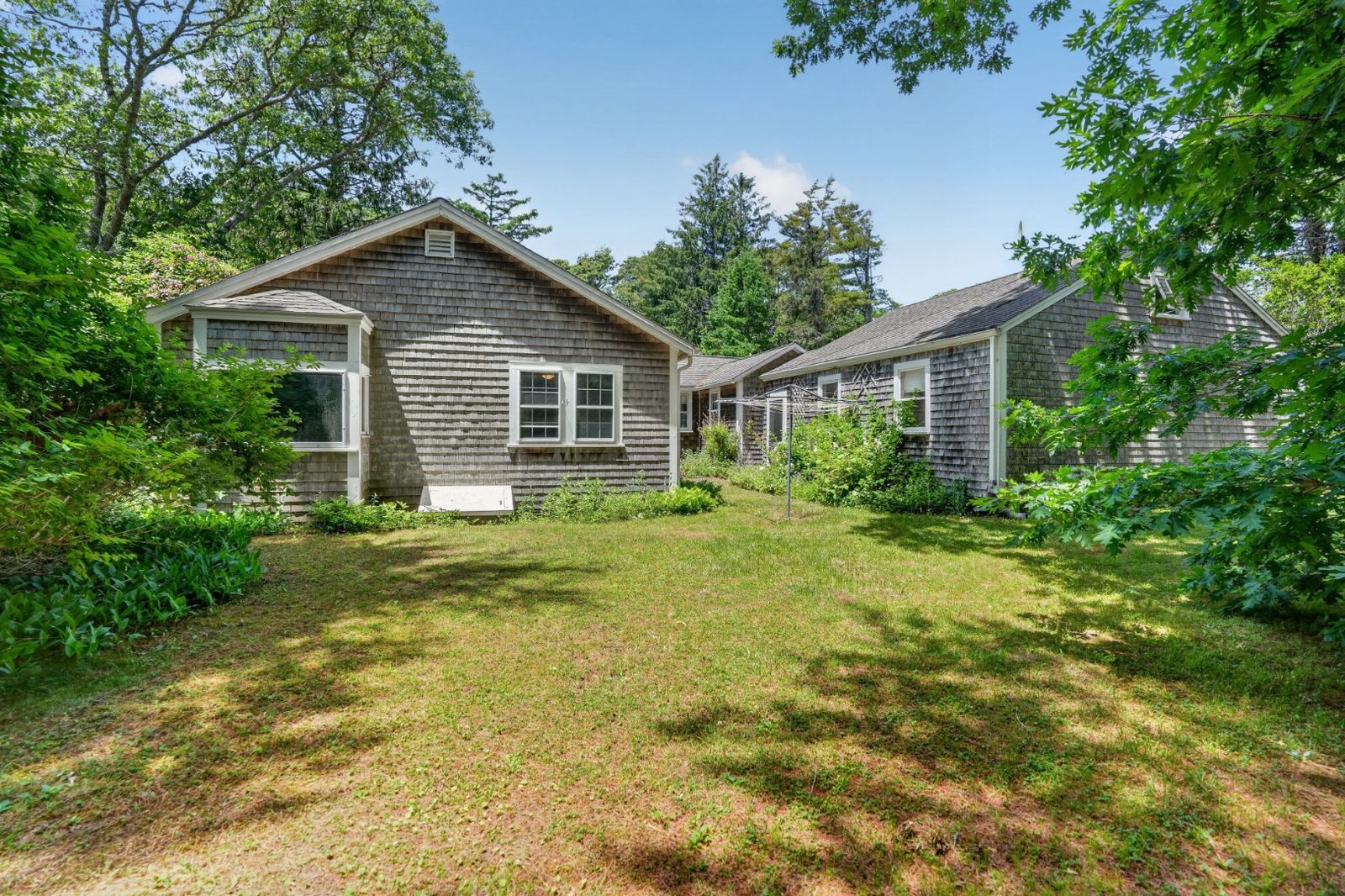
One example of her work is 132 South Road in Chilmark, a property presented with gardens, patios, and tree-lined privacy on a 1.9-acre site. The listing describes a home built in 1950 and a guest cottage. It leaves room for buyers to consider updates and their own use of the place. The photograph is an invitation; the property itself offers a set of decisions.
The setting belongs to the Vineyard side of her practice. Southwest Florida brings another collection of homes, including condominiums and waterfront properties. Signal House’s stated specialties encompass fine homes, residential real estate, and investment properties. Those descriptions give the range, while individual addresses supply the details that a buyer actually has to assess.
Lisa speaks English and Portuguese. The language detail sits neatly alongside the rest of her working biography: a financial qualification, experience managing a business, familiarity with two states, and a service practice that depends on communication. None replaces local judgment. Together they explain the particular combination she brings to conversations about property.
The next visit
Away from work, Lisa’s published biography describes time with family, walks with her dogs, beachcombing, sunsets, restaurants with friends, and volunteering with local organizations. The list is pleasantly recognizable. Someone who spends working hours helping other people arrange their time also enjoys the unremarkable luxury of deciding how to spend her own.
Her stated professional ambition is to earn a continuing place as a client’s real estate advisor. That is a longer horizon than an accepted offer. It makes the quieter parts of the job consequential: an answered question, a useful introduction, a preparation plan that can be followed from another state. A client may remember those acts well after forgetting the listing’s adjectives.
Robert’s story ends with help turning the property into a home. It is a fitting place to leave Lisa’s story for now, between the purchase and the next arrival. The career has passed through corporate work, an island concierge business, and a brokerage practice spanning two states. Its most economical explanation still fits on an old business card: let me do that.