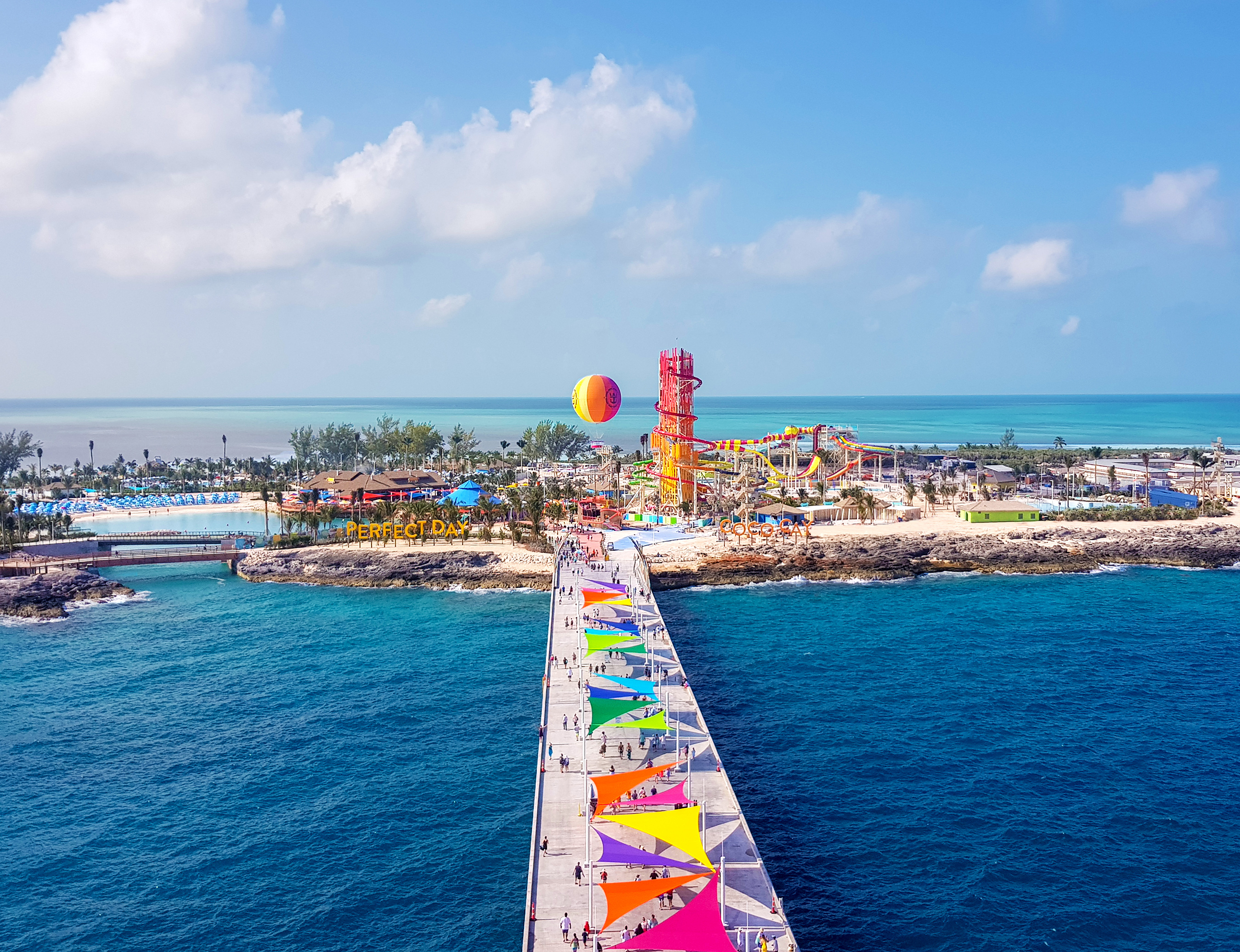
At the end of a pier in the Bahamas, a cruise passenger encounters a peculiar kind of freedom. There is a beach, a waterpark, a pool, a balloon. The place is called Perfect Day at CocoCay. Even the name has done some planning on your behalf. For Royal Caribbean Group, the interesting part is the pier: the holiday continues across it, while the company keeps a hand on what happens next.
- Three cruise brands. Royal Caribbean, Celebrity and Silversea serve different versions of the holiday.
- 9.4 million vacations in 2025. Plenty of chances to earn a return visit.
- A $3 billion resort agreement. A proposed half-interest in Sandals and Beaches extends the ambition onto land.
That is the useful way to understand this company. Ships supply the spectacle. The business connects the pieces: getting there, sleeping, eating, being entertained, going ashore and deciding where to go next. Its proposition to the traveler is fewer arrangements. Its opportunity is to earn more of the arrangements that remain.
A holiday built for warm water
The roots go back to 1968, when hotelier Ed Stephan and Norwegian shipping partners created a Caribbean cruise venture. Song of Norway sailed from Miami in November 1970. Its shallow draft helped it reach small island quays. Its open decks suited the weather. The circular Viking Crown Lounge, perched around the funnel, gave the ship a recognizable silhouette.
These were practical choices about a particular customer in a particular place. The early office was a trailer on Biscayne Boulevard. The central idea was already substantial: build the vessel around the vacation. Decades later, Icon of the Seas arrived with seven pools and six waterslides. The scale changed; the design question remained.
Three doors into the same relationship
The group and the Royal Caribbean cruise brand are easy to confuse. The distinction matters. Royal Caribbean International sells an activity-filled holiday to families and other travelers. Celebrity, which joined in 1997, occupies the premium territory of dining, design and destination experiences. Silversea offers smaller-ship luxury and expeditions, including polar journeys.
A separate, half-owned TUI Cruises joint venture serves German-speaking guests through Mein Schiff and Hapag-Lloyd. This portfolio competes with Carnival, Norwegian, MSC and Disney, but also with the resort or theme park that might win the family calendar. Its expertise combines naval architecture, hotel operations, entertainment and the unglamorous logistics of feeding and moving people. A slide alone is an attraction. A reliable week requires all four.
The $5.4 billion beyond the ticket
In 2025, the group reported about $17.9 billion in revenue. Passenger tickets supplied $12.5 billion. Onboard and other revenue supplied $5.4 billion, roughly 30% of the total. Drinks, specialty restaurants, excursions and connectivity help explain why the fare is only the beginning of the economics.
CocoCay makes that logic visible. The May 2019 opening announcement put its transformation at $250 million. Beaches and pools sit alongside paid attractions and cabanas. Owning more of the destination experience lets the company coordinate the day and sell additional choices. For guests, the practical question is the total bill: compare what the fare includes, then add the extras your party will actually use. The brands and packages differ.
Then the engine stopped
The vulnerability appeared brutally in March 2020. Cruise operations suspended as the pandemic spread. Demand and permission to sail disappeared before the fleet’s financial obligations did. Royal Caribbean Group reported a $5.8 billion annual net loss. Its filings described delayed private-destination openings and a reassessment of beach-club timing to conserve liquidity.
The evidence supports a change in spending priorities, rather than a tidy conversion story about executives suddenly discovering discipline. A ship remains expensive when nobody is buying the holiday. Borrowing, liquidity and the pace of construction became immediate concerns. By 2025, reported net income had recovered to about $4.3 billion. The recovery does not remove the dependence on uninterrupted operations, willing travelers and access to capital.
Let the loyalty grow up
A family’s first cruise need not resemble its tenth. Children grow up. A couple wants a quieter trip. Someone becomes curious about Antarctica. A portfolio loses much of its usefulness if changing brands means abandoning the recognition earned on earlier holidays.
In 2024, the group introduced loyalty Status Match across its three wholly owned brands. Points Choice, available for eligible departures from January 30, 2026, lets travelers direct earned points toward another group program under conversion rules. The programs retain their identities. The relationship becomes easier to carry. Starlink follows a similar practical instinct: a trial aboard Freedom of the Seas preceded the 2022 fleetwide broadband announcement. Remove an irritation, then make the improvement repeatable.
“turning the vacation of a lifetime into a lifetime of vacations.”
Jason Liberty · September 2026
Three billion dollars on dry land
In September 2026, the ambition became especially concrete. Royal Caribbean Group agreed to acquire 50% of Sandals and Beaches Resorts for approximately $3 billion, backed by committed debt financing from Morgan Stanley. Closing was expected in early 2027, subject to approvals and conditions. An agreement is not an operating result.
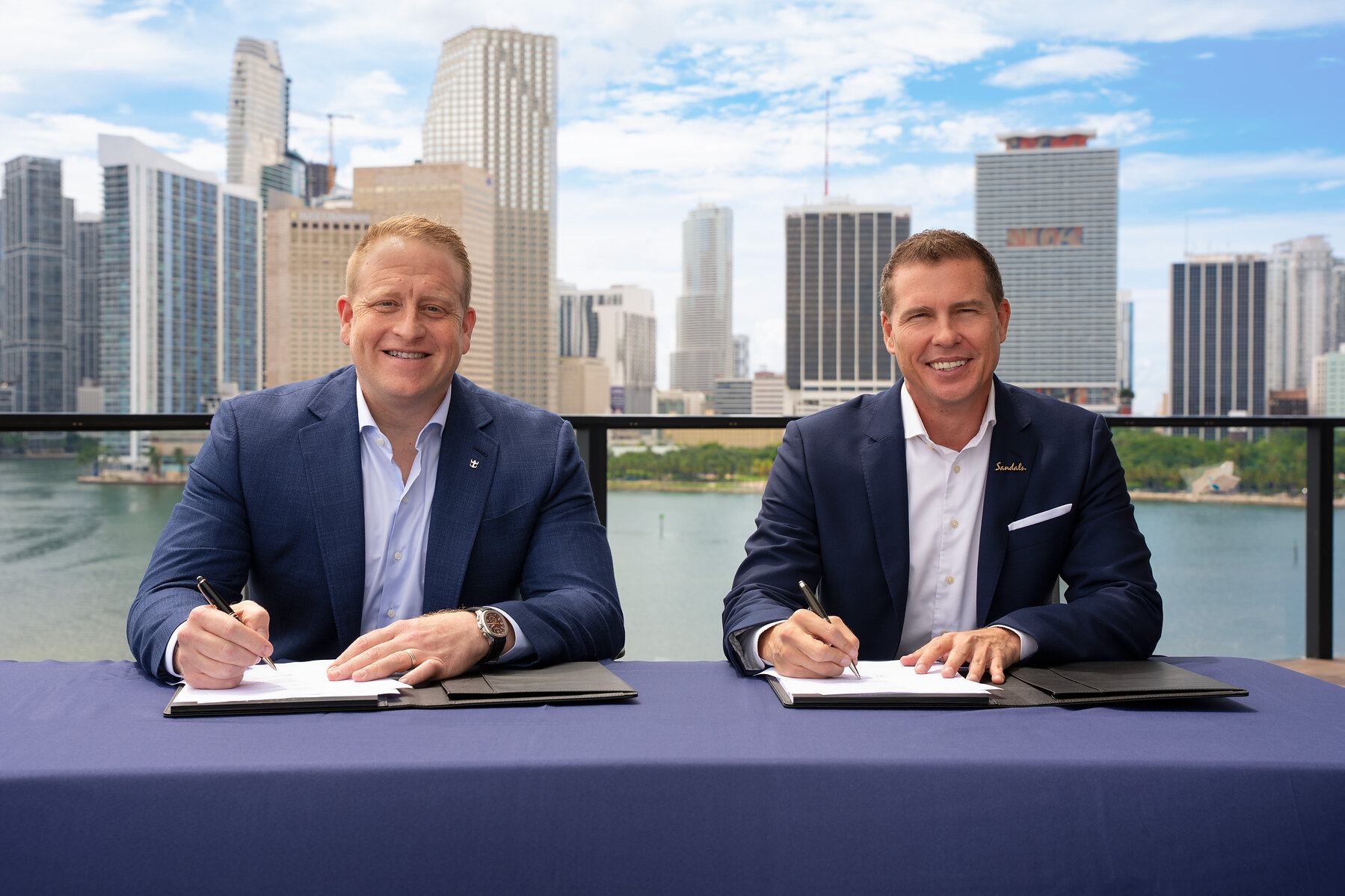
The company’s September investor presentation estimated it captured only 20-25% of its guests’ vacation spending. That estimate explains the attraction of resorts and planned Celebrity river cruises. The question becomes how much of a traveler’s year the group can serve, beyond the week already booked at sea.
Copy the handoffs
The transferable lesson is to study where customers must start over: a new booking, a transfer ashore, a different loyalty program. Improve those transitions. The expensive part is owning the assets behind them. This approach needs repeat demand, financing and guests who value coordination. Travelers seeking independent exploration may prefer looser arrangements. Weather, public-health restrictions and strained household budgets can disrupt the whole chain. Royal Caribbean Group’s bet is that enough people will happily let someone else connect the dots.