A prescription is a remarkably small document for something that depends on so many people. A doctor writes it. A pharmacist fills it. Somewhere behind that transaction, someone must solve the chemistry, pass the inspection, make the batch and arrange the delivery. Amneal Pharmaceuticals has built a business around those intervening steps. Its story starts with a pharmacist who could see the problem from the other side of the counter.
- Complex generics, specialty brands and distribution serve different parts of healthcare.
- Formulation expertise can improve a familiar medicine’s delivery.
- Affordability depends on factories, approvals and access to buyers.
Before founding Amneal with his brother Chirag in 2002, Chintu Patel worked as a pharmacist. The company’s account describes patients struggling to choose between food and medication. Their father, Kanu, had been a pharmaceutical regulatory inspector in India. The brothers brought different experience: Chintu in pharmacy, Chirag in technology businesses. The question they took on was practical: how could more people get the medicines they needed?


The trouble with being cheaper
There is a catch in selling affordable medicines. The forces that lower prices for buyers can make life uncomfortable for manufacturers. Amneal’s combination with Impax in 2018 expanded the business. By July 2019, it was announcing a restructuring intended to remove approximately $50 million from its annual cost base. Management cited pressure from concentrated buyers, additional generic competition, supply uncertainty and delayed approvals and launches.
The interesting failure was a mismatch between commercial expectations and operating reality. A promising pipeline could not pay today’s bills if approvals arrived late. The Patel brothers returned as co-CEOs in August. Their stated priorities included reviving generics and injectables, growing specialty medicines, reducing costs and improving cash flow. Read together, those decisions suggest a broader approach to affordability: earn enough, reliably enough, to keep supplying it.
“We make healthy possible.”
Amneal’s mission, with a factory-sized assignment attached.
Three routes to the same patient
Today, Amneal’s business has three distinct pieces. Affordable Medicines covers retail generics, injectables, biosimilars and international revenue. Specialty sells branded treatments, especially in neurology and endocrinology. AvKARE distributes pharmaceuticals and medical products to federal, retail and institutional customers. One group may be working on a difficult formulation while another navigates government purchasing requirements. Both can affect whether a medicine reaches its destination.
The buyers matter. Wholesalers, pharmacies and institutions purchase products; clinicians influence prescribing; patients live with the results. AvKARE’s federal business includes Veterans Affairs and Defense channels. Buying a majority interest in that distributor in 2020 gave Amneal another route to market. Against generic competitors such as Teva and Sandoz, its positioning rests on this combination of product complexity, manufacturing and distribution. The competition still changes from medicine to medicine.
MedicinesGenerics · Injectables · Biosimilars
The specialty shelf also includes UNITHROID, a levothyroxine treatment, and BREKIYA, a dihydroergotamine autoinjector for acute migraine and cluster headaches in adults. These products require different conversations from a generic supply contract. A clinician weighs suitability; a patient needs workable access. Amneal’s support resources include assistance for eligible patients. Availability and eligibility depend on the product and program. The website helps people find those routes, while prescribing and dispensing remain with healthcare professionals.
International expansion adds another choice: which work to keep and which to share. Zambon licensed IPX203 for the European Union, United Kingdom and Switzerland in 2024. In June 2026, the companies announced a positive CHMP recommendation for the treatment under the name Hopledo. A recommendation is a regulatory milestone, rather than a sale. The arrangement lets Amneal’s formulation travel through a partner’s commercial organization, illustrating how access can depend on relationships as much as ownership.
The clock inside a capsule
CREXONT makes the engineering tangible. This Parkinson’s treatment combines immediate-release granules with extended-release pellets of familiar medicines, carbidopa and levodopa. Timing is the point. In the pivotal trial, CREXONT delivered an additional half-hour of daily “Good On” time compared with immediate-release carbidopa/levodopa, with average dosing three times daily versus five. “Good On” describes symptom control without troublesome involuntary movements. Nausea and anxiety were the most common adverse reactions occurring more often than with the comparator.
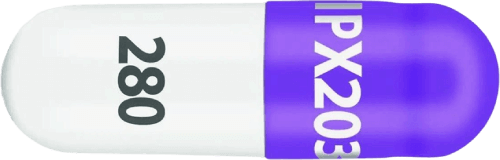
Approval did not follow a straight line. In July 2023, the FDA requested additional pharmacokinetic information because the scientific bridge supporting carbidopa’s safety was inadequate. Amneal said the letter identified no efficacy or manufacturing issues. Approval arrived in August 2024. That distinction matters: evidence of clinical benefit and the evidence required for approval are related, separate assignments. A company needs the resources to finish both.
The bill for getting closer
The strategy has a substantial invoice. Amneal reported approximately $186 million in research and development expense in 2025. Net revenue reached $3.02 billion, with $72 million in GAAP net income attributable to the company. Revenue measures the size of the business; profit shows how much remained after its expenses. Confusing those numbers would miss much of the difficulty of this industry.
Roughly $2.40 in net income for every $100 in revenue.
In August 2026, Amneal completed its acquisition of Kashiv BioSciences, bringing more biosimilar research, development and manufacturing under the same roof as commercialization. Announced consideration included $375 million in cash and $375 million in equity at closing, plus up to $350 million tied to regulatory milestones, possible royalties and operating funding through closing. This bought capabilities. Future approvals, launches and customer adoption still have to produce the return.
Copy the discipline
There is a useful operating lesson here: find the particular obstacle between your product and its user, then invest in removing it. Sometimes that means a release mechanism. Sometimes it means a distribution network. Within Amneal, employee feedback and career-development programs support the people doing that work. The company describes quality as everyone’s responsibility, a claim whose value depends on everyday execution.
The limits are concrete. In March 2026, Amneal voluntarily recalled one magnesium sulfate lot after a pouch was found containing a different medicine’s IV bag. It reported no related adverse events at announcement. Integration cannot eliminate mistakes, buyer pressure or regulatory delay. Patients can use Amneal’s product information and support resources with their healthcare teams; purchasers can assess its portfolio and supply capabilities. For everyone, the useful test is the same: does the medicine arrive, correctly, when it is needed?