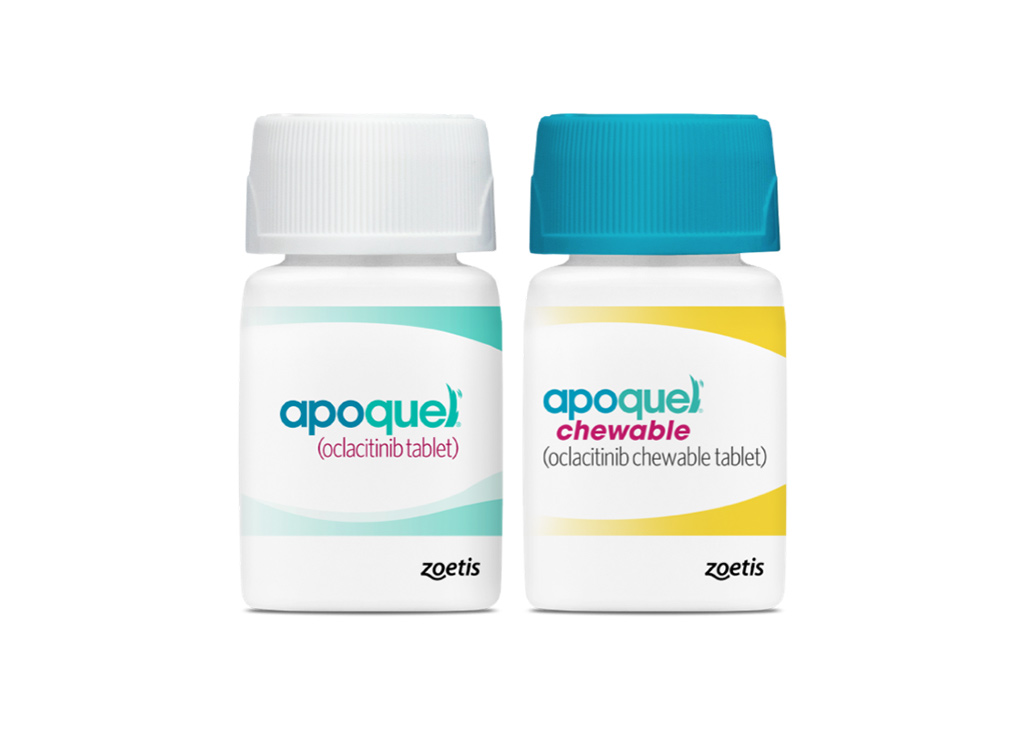
In January 2014, Zoetis introduced Apoquel, a medicine for dogs with allergic itch. Then it ran into a peculiar problem: veterinarians wanted more than the company could supply. Here was a product whose appeal was wonderfully easy to understand. A dog scratches. A household loses sleep. Someone finally offers relief. The trouble appeared between the laboratory and the medicine cabinet.
- Zoetis makes medicines, vaccines and diagnostics for pets and livestock.
- Roughly 70% of its animal-product revenue comes from companion animals.
- Its advantage depends on research, reliable supply and veterinary relationships working together.
- Safety questions and household budgets can still interrupt the plan.

An itch, then an empty shelf
The shortage was consequential enough to appear in Zoetis’s regulatory filings. Manufacturing difficulties limited how much veterinarians could buy and delayed launches in some markets. In 2016, the company reported that it had doubled raw-material suppliers and manufacturing plants, refined specifications and invested in equipment. The lesson was expensive in effort, even without a published repair bill: demand is useful only when you can fill the order.
Zoetis had inherited industrial experience. Pfizer formed an Animal Agriculture division in 1952. The Zoetis corporation arrived in 2012; public trading and full separation followed in 2013. It was an established business given its own balance sheet. At the IPO’s close, Pfizer had sold approximately $2.57 billion of shares. Zoetis received none of those offering proceeds. This was a corporate separation, with an existing product portfolio and customers already waiting.
Two customers on four legs
Today, Zoetis develops and supplies veterinary medicines, vaccines and diagnostic tools in more than 100 countries. Veterinarians, distributors and livestock producers are commercial customers. Pet owners influence demand and pay for care. The animal, awkwardly for anyone designing a customer survey, cannot explain the problem. Observation and diagnosis do much of the translating.
The scale is substantial: reported 2025 revenue was $9.467 billion, with $698 million in research and development expenses. About 1,700 colleagues worked in R&D at year-end. That expertise spans veterinary medicine, biological research, diagnostics and regulatory work. It helps explain why reproducing a successful animal-health business requires more than copying a pill. The commercial consequence is a broader set of recurring relationships.
The portfolio answers recognizable complaints. Apoquel and Cytopoint address canine allergic itch. Simparica Trio combines parasite protection in a monthly chewable. Solensia treats osteoarthritis pain in cats; Librela addresses it in dogs. Livestock vaccines and therapeutics serve a different calculation: preventing disease protects animal welfare and the productivity on which a producer’s livelihood depends.
Rounded shares; excludes contract supply and human-health revenue.
That roughly 70/30 split matters. A household deciding on a pet treatment and a farmer protecting a herd face different budgets, incentives and disease risks. Recurring prevention, chronic treatment and testing can generate repeat business, but each purchase still requires a reason. A broad portfolio lets Zoetis participate in several decisions across an animal’s life.
The boundaries also change. In October 2024, Zoetis sold its medicated feed-additive portfolio and related assets to Phibro. It described the move as sharpening its focus on higher-growth, higher-value areas. Livestock care remained a substantial business, even as particular products and factories moved to another owner.
Buy the diagnosis, build the capacity
In 2018, Zoetis paid approximately $2 billion to acquire Abaxis, a maker of veterinary diagnostic instruments. The strategic logic is straightforward: before a clinician chooses a medicine, someone must identify what needs treating. Diagnostics gives the business a role earlier in that sequence, as well as instruments and tests to sell.
Vetscan Imagyst makes that idea tangible. The platform combines digital imaging with AI analysis for supported sample types and access to expert review. A collaboration with Techcyte added urine-sediment analysis in 2024. Its practical appeal is an answer delivered inside a clinic’s workflow. Interpretation still belongs within veterinary care; a supported test is not a universal diagnosis machine.
- 01PredictRisk assessment
- 02PreventVaccines & parasite control
- 03DetectDiagnostic testing
- 04TreatMedicines & antibodies
Zoetis calls this a continuum of care. Its stated purpose is “to nurture our world and humankind by advancing care for animals.” The business interpretation is less lyrical: build expertise at several points where care can stall. Against Boehringer Ingelheim Animal Health, Merck Animal Health and Elanco, it competes in medicines and vaccines. In diagnostics, IDEXX is an alternative.
People have to connect those capabilities. Zoetis describes a culture organized around customers, accountability and collaboration, supported by mentorship and colleague resource groups. Those are employer commitments. The practical test is whether a question from a veterinary clinic can reach the people who design, manufacture and support the product.
There is a physical price for making that proposition credible. Zoetis disclosed a $590 million investment in a Georgia manufacturing site in November 2025, with operations expected in 2029. That schedule exposes a persistent mismatch. A prescription can be written today. New capacity takes years. The Apoquel experience makes that gap particularly easy to appreciate.

The calendar becomes a product feature
Another obstacle lives at home. Giving a cat regular oral medicine can be difficult; repeated clinic journeys create their own friction. In July 2026, Zoetis announced Canadian and European Union launches of Lenivia for dogs and Portela for cats. Both are injectable antibody therapies designed to provide up to three months of osteoarthritis pain relief. Longer duration changes the treatment routine as well as the product.
Convenience does not settle safety or suitability. The FDA has described adverse events reported after Librela treatment, including neurological signs and, in some cases, death or euthanasia. Reports require evaluation; their existence alone does not establish that a drug caused every outcome. Britain’s regulator advises veterinarians and owners to agree an individual treatment programme. Products, approvals and appropriate patients differ across markets.
The bill still matters
In August 2026, Zoetis supplied a reminder that affection has a budget. Second-quarter U.S. companion-animal sales fell 11%. Management pointed to fewer clinic visits, price sensitivity and competition, and reduced its full-year revenue outlook. Kristin Peck, CEO since 2020, said the company was adapting its commercial strategy. A broad portfolio offers options; it cannot compel a veterinary appointment.
“lower clinic visits and pet owner price sensitivity reduced demand”
Kristin Peck / second-quarter 2026 results
The transferable idea is to examine everything that happens after invention. Can the factory supply it? Can the clinician identify the need? Can the owner follow the schedule and afford the bill? Zoetis’s history suggests these deserve the same attention as the discovery itself. For the animal waiting at the other end, a promising molecule becomes useful only when those ordinary problems are solved.