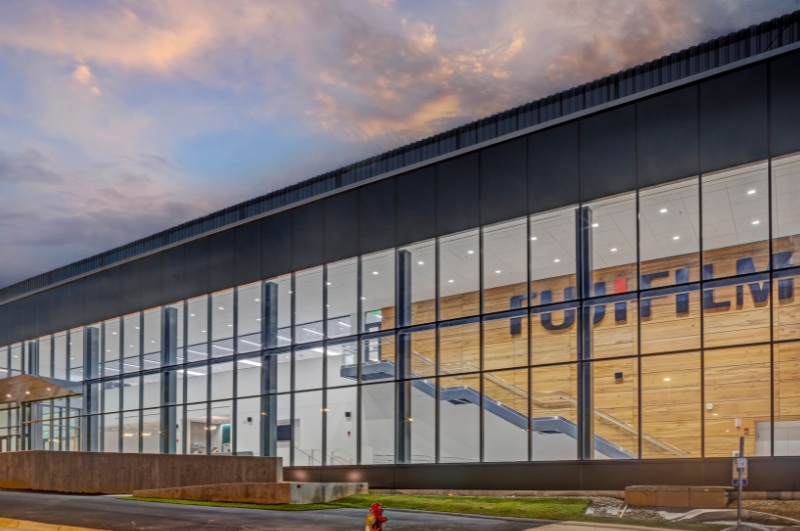
In Holly Springs, North Carolina, a drug factory has a peculiar relationship with Denmark: it borrows a blueprint. The first expansion of FUJIFILM Biotechnologies’ Hillerød site supplied the design for its American counterpart. Equipment, processes and procedures were meant to line up. In an industry devoted to discovering something new, here was a company spending heavily on making something familiar.
- Fujifilm develops processes and manufactures medicines for other drugmakers.
- Its kojoX approach repeats factory designs and operating systems across sites.
- Commercial expansion and pressure on smaller biotech customers coexist.
The Holly Springs site celebrated its opening in September 2025. Its first phase had eight 20,000-liter mammalian cell culture bioreactors. The planned overall investment, including expansion, was $3.2 billion. These are large numbers for a business whose most interesting proposition is quite modest: perhaps the next factory should not have to learn everything from scratch.
The business between discovery and delivery
FUJIFILM Biotechnologies is a contract development and manufacturing organization, or CDMO. Pharmaceutical companies bring it a molecule, a development program or an existing manufacturing process. It helps turn that work into material suitable for clinical trials and commercial supply. Customers buy scientific expertise, production capacity and the considerable discipline required to make a biological product consistently.
The business took shape under Fujifilm ownership in 2011, when the group acquired Merck’s BioManufacturing Network, including operations in Billingham, England, and North Carolina’s Research Triangle Park. In June 2025, it shortened its brand from FUJIFILM Diosynth Biotechnologies. The announcement said its legal names would stay unchanged. This was an identity refresh for an established operation.
Its services extend from cell line development through process engineering, analytical testing and manufacturing. ApolloX supplies a mammalian cell development platform; Paveway PLUS develops microbial strains for therapeutic proteins. Separate capabilities cover vaccines, cell therapies and gene therapies. The customer needs the right biological system before it needs a bigger vessel.
For a developer, that means discussing manufacturability early: how the protein will be expressed, purified, measured and eventually produced under current good manufacturing practice. A promising laboratory result becomes a different assignment when every batch needs documented evidence of quality.
The useful part is the repetition
Fujifilm calls its organizing idea kojoX. The company links “kojo” to the Japanese meanings of factory and improvement. Beneath the name sits a practical ambition: harmonize facility designs, equipment, quality systems, processes and data so that moving work across the network involves fewer avoidable differences.
Think of the handoff as the product. A process developed in one place is more useful if another suitable production line already speaks a similar operational language. The company argues that this reduces friction in technology transfer and makes supply more adaptable. The promise concerns equivalent lines and appropriate processes, rather than universal interchangeability.
Drugmakers have alternatives. Lonza and Samsung Biologics also provide development and manufacturing services. Fujifilm’s case rests on how its particular network, platforms and teams fit a customer’s program. Comparing tank totals alone misses the purchase decision: can this partner run this process, in this geography, on the required schedule?
Regeneron supplied a substantial vote of confidence in April 2025: a ten-year U.S. manufacturing agreement valued above $3 billion. Johnson & Johnson and argenx are also named Holly Springs customers. The Regeneron figure is a contract value over time, distinct from annual sales or money invested in the plant.
The bottleneck moved
The tanks are photogenic. Purification is where the story gets wonderfully fussy. Producing a protein leaves another problem: separating the desired material from everything accompanying it. Complex microbial proteins can require customized downstream processes, adding development work before manufacturing can advance.
In March 2026, Fujifilm introduced ShunzymeX, developed with the University of Edinburgh. The approach uses an affinity tag to help capture a protein, then an engineered protease to remove the tag without leaving a scar on the native protein. It is designed to simplify purification. Whether it belongs in a particular program still depends on that product’s requirements and regulatory strategy.
The tank cannot create demand
Expansion has a less comfortable companion. In April 2024, Fujifilm announced a restructuring of its Small Scale Business Unit that could affect up to 240 employees. Its explanation pointed to reduced venture investment in early-stage research, particularly cell and gene therapies. The pressure came from the customers’ financing environment.
That distinction matters. A manufacturing network can address capacity constraints and still face weak demand in another segment. Standardized equipment cannot finance a customer’s next trial. The lesson for anyone copying this approach is to pair repeatable infrastructure with credible demand, while recognizing that different parts of the market move at different speeds.
There is a regulatory timetable, too. In July 2026, Holly Springs was selected for the FDA’s PreCheck pilot, which encourages earlier engagement around manufacturing readiness. The company also updated its schedule: a drug product line in early 2027, followed by finished goods, and an accelerated capacity expansion targeting late FY2027. Those are plans, not completed capabilities. For a prospective customer, the useful conversation therefore starts with the required service and its available date. A campus opening, a manufacturing line becoming ready and a medicine reaching patients are separate milestones.
Now comes the running
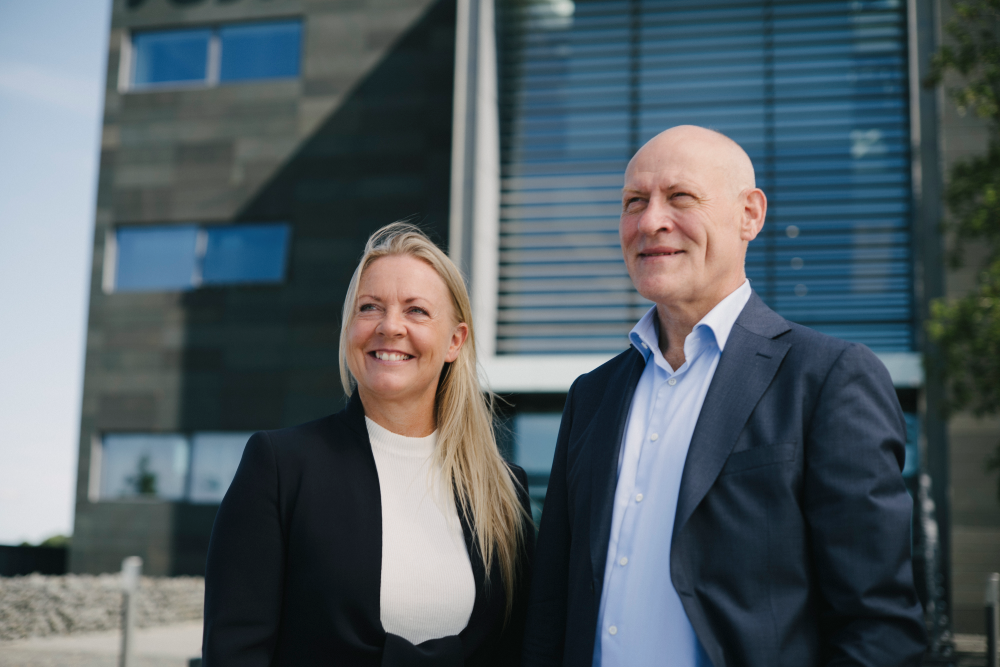
In August 2026, Maja Pedersen became president while retaining her chief operating officer responsibilities. Lars Petersen moved out of the president and CEO role. The stated emphasis was operational excellence and delivery from the network already established.
“Our strategy remains unchanged.”
Maja Pedersen · August 2026
Fujifilm describes its culture through trust, transparency and Genki, or enthusiasm. Its quality program includes electronic quality management and continuous improvement. Those commitments matter most when they survive ordinary production decisions. The reader’s copyable idea is concrete: agree on the equipment, documentation and handoffs before multiplying locations. For Fujifilm, the next test is whether a familiar factory can keep delivering a dependable medicine.