In January 2026, Organon received the kind of news a medicine company ought to celebrate. American regulators extended the approved life of Nexplanon, its contraceptive implant, from three years to five. A woman could go two additional years before needing a replacement. Then came the first-quarter results: U.S. Nexplanon sales fell 28%. Organon named delayed reinsertions after the new approval as one reason, alongside uncertainty about federal funding. Improving the product had changed the rhythm of the business.
- Organon sells contraception, fertility treatments, biosimilars and established medicines.
- Older brands supply the largest share of revenue behind its women’s health mission.
- Sun Pharma’s pending acquisition puts a new owner behind the next chapter.
That small scheduling change is a useful way into this unusual company. Organon’s task is to turn a large inherited medicine cabinet into a business organized around women’s health. The patients, the products and the financial calendar do not always move together.
01 Older medicines, newer purpose
Organon became independent from Merck on June 3, 2021. Its name reached back to a Dutch pharmaceutical business founded in Oss in 1923. The modern company inherited women’s health products, biosimilars and established brands. It also began with financial obligations: $9.5 billion of debt was issued in connection with the separation, and $9 billion of the proceeds went to Merck.
The proposition was understandable. Familiar medicines could generate cash while a focused company invested in overlooked health needs. Organon’s definition extends beyond reproductive medicine to conditions affecting women disproportionately or differently. Today its portfolio includes more than 70 products across over 140 markets. This is an international pharmaceutical operation with a particular lens.

02 The business behind the prescription
For patients, Organon appears as individual products: Nexplanon and NuvaRing for contraception, Follistim AQ for fertility treatment, or a familiar prescription for another condition. VTAMA, acquired with Dermavant, adds a steroid-free topical treatment used for adult plaque psoriasis and for atopic dermatitis in adults and children aged two and older.
Behind those prescriptions sit several customers. Doctors choose therapies; clinics and pharmacies help deliver them; wholesalers buy inventory; insurers and public systems influence access. Organon earns revenue from products moving through these channels. Its expertise includes registration, manufacturing, local commercial relationships and the unromantic work of getting medicines onto shelves.
Biosimilars make that division of labor especially clear. Under its expanded Australian agreement, Samsung Bioepis retains development, manufacturing and regulatory responsibilities; Organon receives exclusive local commercial rights. A partner brings the science and supply. Organon brings a route to market.
The older brands do the heavy lifting.
A practical example arrived in 2024, when Organon added HADLIMA and NuvaRing to Mark Cuban’s Cost Plus Drugs pharmacy. It was a change in the path to the customer, using products the company already had. For a reader, the useful starting point is Organon’s product directory: it connects individual medicines with prescribing information and patient materials. What is available, covered or appropriate still depends on the country, the product and the person.
The mix matters. Established brands produced roughly 59% of 2025 revenue. Women’s health supplied about 28%; biosimilars about 11%. Organon competes with other contraceptives, generic versions of older medicines, originator biologics and rival biosimilars. Its distinguishing feature is the combination of a women’s health focus and a broad commercial network. Price competition still reaches nearly every part of the portfolio.
03 Buying growth, selling room
Consider two transactions. In 2024, Organon agreed to buy Dermavant with $175 million upfront, a $75 million regulatory milestone and up to $950 million in commercial milestones, plus royalties. The advertised ceiling was about $1.2 billion. Those milestones spread payments across future achievements; they did not remove the work or expense of building demand.
Then Organon sold JADA, the device used to control and treat abnormal postpartum uterine bleeding or hemorrhage. The Laborie agreement provided $440 million at closing, subject to adjustments, and up to $25 million more tied to revenue targets. The sale closed in January 2026. Organon said net proceeds would reduce debt.
A product can serve the mission and still leave the portfolio. The stated priorities had shifted toward financial flexibility and women’s health biopharma. That is the practical constraint behind the strategy: cash used to service debt cannot simultaneously fund every promising addition.
04 Orders are not patients
There was also a failure of discipline. In October 2025, Organon disclosed an internal investigation finding that certain U.S. wholesalers had been asked to purchase more Nexplanon than needed near several quarter ends. The board deemed the practices improper. Kevin Ali resigned as CEO, and Joseph Morrissey became interim chief executive.
The company said the findings then available did not require revising its previous financial statements. Even so, the distinction matters: a shipment to a wholesaler does not establish patient demand. For another business studying Organon, this is a concrete lesson about what to measure - and what incentives can obscure.
“We are authentic and transparent.”
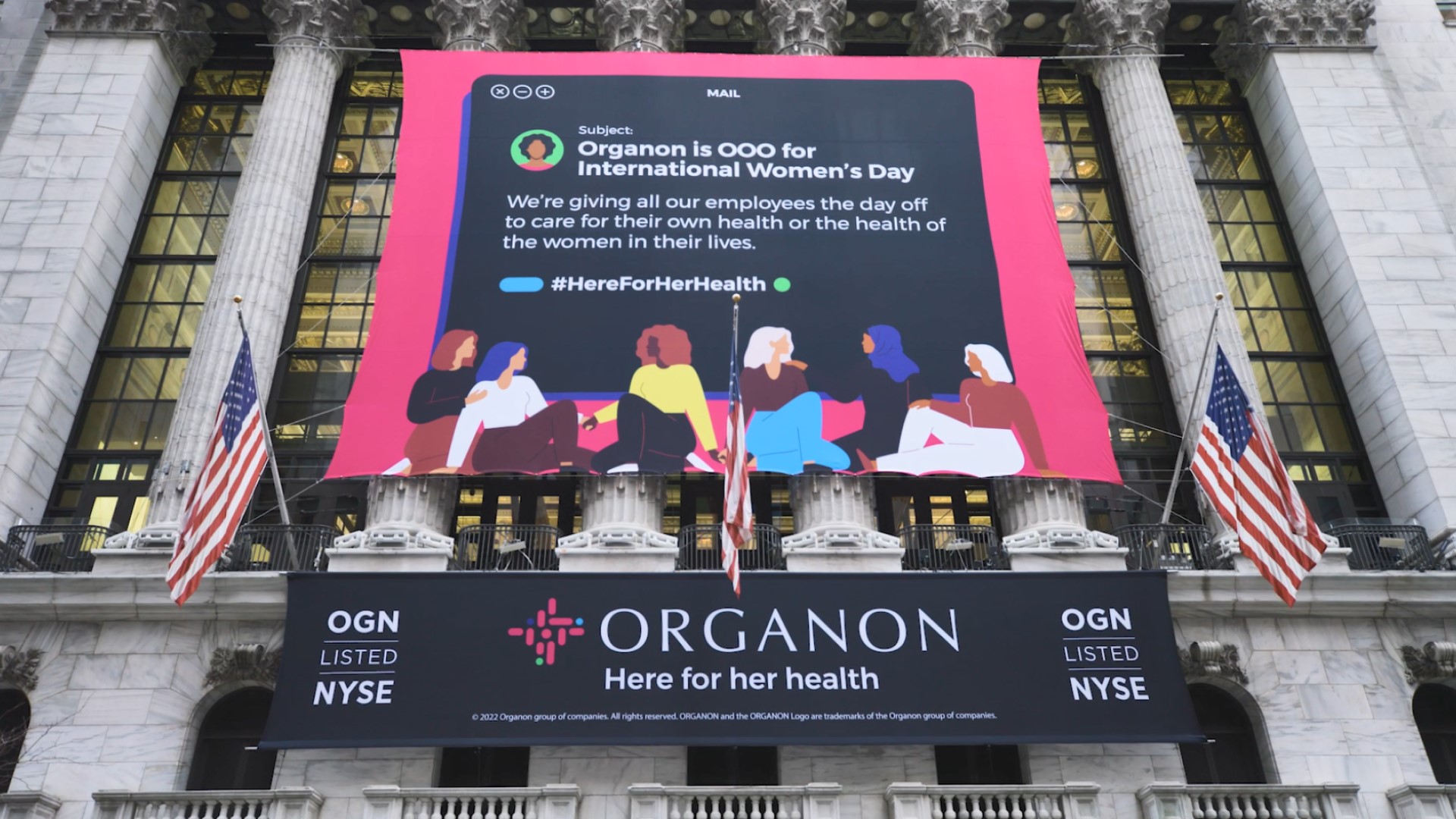
Organon’s stated value, “Be real”
05 A longer game, under a larger roof
In April 2026, Sun Pharma agreed to acquire Organon for $14 per share in cash, at an enterprise valuation of $11.75 billion. Shareholders approved the merger in July. The announced closing timetable is early 2027, subject to remaining conditions. The deal offers another structure for the same collection of medicines and relationships.
The price needs careful reading. Enterprise value accounts for the business’s financing structure; it is different from the cash paid for its shares. The shareholder offer is $14 a share. Sun Pharma describes the attraction as complementary portfolios and geographic reach, including an entry into biosimilars. Read that as the buyer’s rationale, rather than a guaranteed outcome. The commercial question is whether the combined organization can put those relationships to better use while preserving the focus that justified Organon’s separation in the first place.
Product work continues. Organon completed a global license for Sebela’s hormone-free MIUDELLA IUD in June. In October it announced interim study results through six years; the approved U.S. duration remains three years, with an extension under FDA review. Clinical evidence, approval, provider training and access remain separate jobs.
The transferable idea is to connect an underserved need with a distribution system already built. It depends on durable cash flow, reliable partners and payment systems that let patients obtain the medicine. Eroding prices or restricted coverage can undo the arithmetic. Nexplanon adds one final complication: sometimes the product improves, and the next sale simply has to wait.