On December 7, 2024, a baby girl was born in Lima, Peru. Her arrival followed an unusual detour: before fertilization, her mother’s egg had matured outside the body alongside engineered ovarian support cells. Gameto, the company behind those cells, announced the birth nine days later. A laboratory proposition had acquired a birthday.
- The product: Fertilo helps retrieved eggs mature in the laboratory.
- The promise: a shorter period of hormonal stimulation.
- The route: fertility clinics and their embryologists.
- The test: an ongoing U.S. Phase 3 trial, with no FDA marketing approval.
There is something revealing about where Gameto intervenes. Conventional IVF generally asks the patient to spend roughly two weeks preparing eggs for retrieval through hormone injections. Fertilo retrieves immature eggs after a shorter stimulation period and gives the laboratory more responsibility for finishing the job. The innovation sits between the patient’s calendar and the embryologist’s dish.
A baby changes the question
Gameto was founded in 2020 by physician-scientist Dina Turner, then known as Dina Radenkovic, and entrepreneur Martin Varsavsky. He had founded Prelude Fertility; she brought medical training and research experience in aging. Their interests met at an organ whose decline can begin while its owner is otherwise healthy: the ovary.
The company developed its cell-engineering platform through a research agreement with George Church’s laboratory at Harvard Medical School. Its lead application became Fertilo. The first reported birth followed treatment through Peruvian partner Pranor/Concebir, with delivery at Santa Isabel Clinic. That established a consequential possibility. It did not establish the probability of success for every patient.
An egg needs a neighborhood
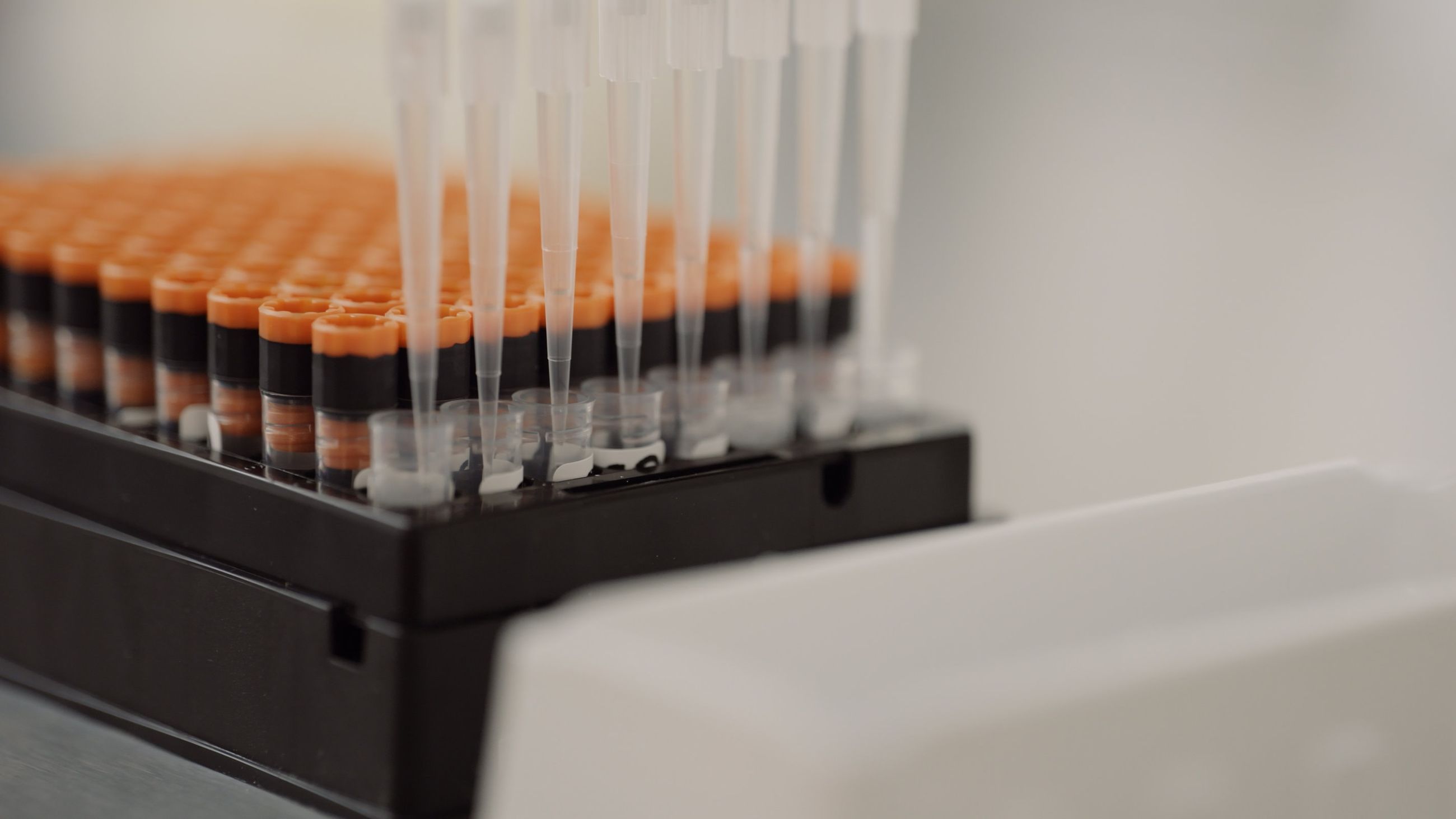
An egg does not mature alone. Ovarian support cells participate in the signals and surroundings that help it develop. Gameto uses induced pluripotent stem cells, or iPSCs, to manufacture cells that perform supporting ovarian functions. REPROCELL supplies clinical-grade starting cells. Fertilo brings that engineered supporting cast into contact with the patient’s retrieved eggs.
This distinction matters: Fertilo does not create the patient’s eggs from stem cells. It changes their maturation environment. Gameto’s clinic protocol describes oral medication plus one to three days of gonadotropin injections before retrieval, followed by laboratory co-culture. Mature eggs then proceed toward fertilization or freezing. A shorter stimulation period still leaves the rest of the fertility journey ahead.
- 01StimulateShorter injection period
- 02RetrieveCollect immature eggs
- 03MatureSupport cells in the lab
- 04ContinueFertilize or freeze
The missing number is the comparator
In 2023, a study published in Human Reproduction assessed eggs collected from 67 participants after abbreviated stimulation. Gameto reported 1.5 times the maturation rate and more than 2.5 times the formation of chromosomally normal embryos relative to commercially available in vitro maturation media. Those are encouraging laboratory findings, with a very particular comparison.
These are relative results against IVM media, not pregnancy rates or a comparison with conventional stimulated IVF.
The study does not show Fertilo beating conventional stimulated IVF. Nor is a chromosomally normal embryo the same thing as a baby. Fertility has several gates: maturation, fertilization, embryo development, implantation, pregnancy, birth. Improving passage through one gate leaves the others to be measured.
The U.S. FIRST trial compares Fertilo with MediCult IVM, a standard maturation-media system. Its September 29, 2026 registry update lists recruitment, an estimated 500 participants, and primary completion expected in May 2027. The randomized, masked study measures ongoing pregnancy as its primary outcome, with live birth among secondary outcomes. Fertilo remains investigational in the United States.
A February 2026 paper in Cell Stem Cell addresses another necessary transition: developing ovarian support cells as a clinical-grade product for IVF. Manufacturing belongs in this story because cells must arrive with dependable properties. A promising dish in a research laboratory and a product used by different clinics are different engineering assignments.
A clinic is the route to market
Gameto’s immediate commercial audience is the fertility clinic. Patients encounter the technology through clinicians and embryologists, rather than ordering a vial for themselves. The company supplies protocols, training, and ongoing support. Its published training offer includes 32 lessons. For a biological product, knowing what happens on Tuesday morning in the laboratory is part of knowing what the product is.
Its availability page lists Australia, Argentina, Peru, and Mexico. A partnership with IVFAustralia, part of Virtus Health, extends that clinic-based approach. Conventional IVF remains the established alternative; Lavima Fertility’s CAPA-IVM is another approach to laboratory maturation. Gameto’s distinguishing choice is to use engineered support cells within that environment.
“Patients have been the biggest advocates of this technology.”
Dina Turner / February 2026 interview
Capital buys experiments, not certainty
The financing is substantial: a $33 million Series B in May 2024, followed by a $44 million Series C led by Overwater Ventures in August 2025. Together with earlier rounds, those disclosures total $117 million in venture capital. A separate $10 million ARPA-H award supports menopause research. These figures describe money raised, not the price of treatment or the cost of a successful pregnancy.
Turner has described skepticism from physicians despite patient interest. Her observation suggests a useful lesson for builders: listen to the person bearing the inconvenience, then make adoption practical for the professional delivering care. Gameto’s clinic training gives that lesson a concrete form. Patient enthusiasm, however, still has to meet clinical evidence.

There is a second lesson in the sequence of its programs. A broad platform needs an application with a visible customer and a measurable result. Fertilo has both: a clinic can use the cells, and a study can follow pregnancies. Deovo and Ameno preserve the wider ambition while fertility supplies the first practical test.
The ovary has more than one job
Gameto’s other programs widen the premise. Deovo develops ovarian organoids for disease modeling and drug research. Ameno, still preclinical, explores cell-based restoration of responsive hormone production around menopause. In January 2026, Gameto licensed additional Harvard intellectual property involving early meiosis, extending its research platform. Early meiosis is a research capability, not a clinical supply of newly manufactured eggs.
For patients, the practical question is whether a participating clinic offers Fertilo and whether they qualify. FIRST recruits a selected population aged 18 to 35 with specified ovarian-reserve criteria; its findings cannot automatically answer questions about older patients or low reserve. Gameto’s proposition becomes useful precisely where the biology, clinic skills, and patient circumstances fit. The dish can take on more work. The evidence must follow it.