The first consumer brand built entirely around the part of IVF nobody designed for: the injection.
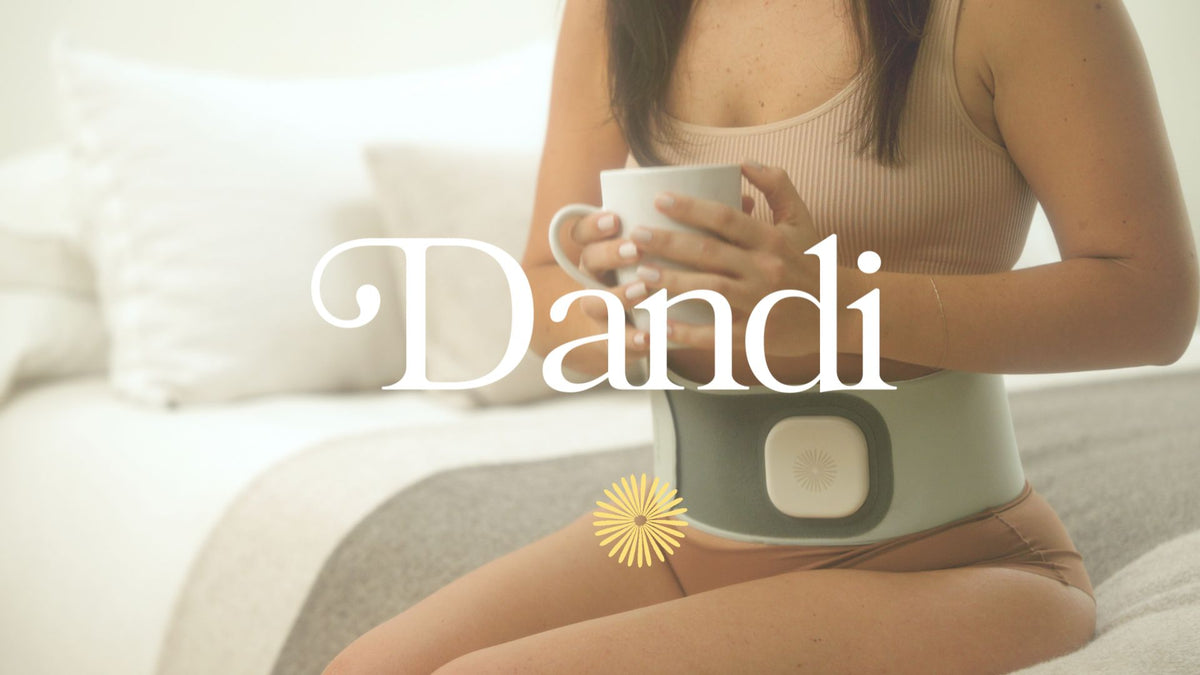
She is holding a warm mug and wearing a device most people will never see - a hands-free belt that keeps a heating pad exactly where the next progesterone shot has to go. The calm is the product.
There is a strange gap in the multibillion-dollar fertility industry, and Dandi Fertility found it by reading the fine print. The drugs are engineered. The clinics are gleaming. The diagnostics are venture-funded. And then, at the end of all that sophistication, a patient is handed a syringe, sent home, and told to inject herself with hormones every night for weeks - alone, in a bathroom, hoping she got the angle right.
Dandi's founders looked at that arrangement and asked the question that tends to precede a company: why is the hardest part of fertility care the part nobody bothered to design? Their research put a number on it. In their patient studies, 86% of people named injections as their single biggest pain point. Separately, they found that roughly 70% of clinics list after-hours calls as a major operational headache - and more than 90% of those calls are about, yes, injections.
That is not a marketing problem to be soothed with softer copy. It is a product specification. So in 2021, registered nurse Leyla Bilali - who had spent a decade watching patients panic over their evening shots - teamed up with CEO Jake Kent and co-founder Marni Katz Zimmerman to build for the moment people dread most.
The result is a company that behaves like two companies stapled together, in a good way. One half is a consumer-products business selling a physical kit. The other half is a telehealth service putting a registered fertility nurse on a video call at exactly the moment a patient's hands start to shake. Both halves address the same overlooked minute of the fertility journey: the one where the professional support has gone home and the patient is on her own.
It is a narrow bet, and that is rather the point. In a hot market, the crowded lanes are the obvious ones - the clinics, the drugs, the egg-freezing plans. The opportunity, more often, is in the part of the journey no incumbent wants to own. Dandi decided to own the needle.
The company is named, sincerely, after a dandelion: a small bud that becomes a golden flower, then a white puff whose seeds scatter on the wind to make new life. It reads as branding whimsy until you are the person mid-treatment, and the name quietly reframes waiting as growth. Naming, it turns out, can be a feature too.
Patent-pending and designed with fertility doctors: a heating pad with a dedicated progesterone-vial pocket, a cooling pad to numb the site, shot targets for accuracy, a hands-free supply belt, and a massage ball to disperse progesterone clumping. A TIME Best Invention of 2024.
Simple guides that help patients find the correct injection location and hit it with confidence - the small design detail that turns dread into repetition.
A digital platform offering live video calls with registered fertility nurses licensed across all 50 states. When most people would Google their fear, Dandi hands them a nurse instead.
Specialized fertility nurses dispatched to a patient's door, now available in 20+ U.S. cities through a network of roughly 32 nurses.
Here is the twist that most direct-to-consumer health brands miss. Dandi sells to patients, yes - but roughly 60% of its revenue comes from fertility clinics buying the kits for their own patients. The happiest customer, it turns out, is not always the end user. Sometimes it is the professional who is tired of fielding panic calls at 2am.
That makes Dandi a hybrid: D2C and B2B2C at the same time. A patient can buy the Care Kit directly, or receive it because her clinic decided that a calmer, better-supported patient is a cheaper patient to serve. Both roads lead to the same overlooked minute, and Dandi collects at both ends.
The R&D behind the product earned the endorsements rather than the other way around. Over two years, Dandi worked with more than 100 fertility patients and doctors from leading clinics including Weill Cornell and CCRM. Only after the product was real did the recognition arrive: a TIME Best Invention, a Dezeen Awards longlist, Innovation by Design honors, and public raves from figures like reality-TV star Whitney Port. Olympic gold-medal figure skater Tara Lipinski, herself a fertility patient advocate, joined as Head of Community.
The funding matched the philosophy. Dandi raised $1.3M - not a moonshot valuation, but a tightly scoped bet on a real, felt pain, in a market where you can point to exactly whose evening you made less awful. Canada is flagged as the next market, with employer partnerships and expanded insurance coverage on the roadmap.
"Everything in nature grows at its own pace."The dandelion, and the idea Dandi built a company around
A registered nurse with a decade in fertility care. She stood next to the problem every night before she built the company to fix it.
Leads Dandi's consumer and commercial strategy, and its pitch: make the fertility journey more supported, comfortable, and less lonely.
Part of the founding team that turned patient research into a product line.
Olympic gold-medal figure skater and fertility patient advocate, connecting Dandi to the community it serves.
Founded after working with leading clinicians and hundreds of patients to understand the scope of the injection problem.
Launches publicly with $1.3M in funding. Six-figure sales follow within the first two months.
The Dandi IVF Care Kit is named one of TIME's 200 Best Inventions of 2024.
Expands at-home fertility injection service to 20+ U.S. cities with a network of ~32 nurses.
Recognized on the Dezeen Awards Product Design Longlist and in the Innovation by Design Awards 2025.
The massage ball in the kit exists for one very specific reason - dispersing painful progesterone "clumping knots" that form under the skin. It is the kind of detail you only include if you have actually listened to patients.
Sources: dandifertility.com · TIME 200 Best Inventions 2024 · Forbes · FemTech Insider · Beauty Independent · AlleyWatch · The Hollywood Reporter · Well+Good · Crunchbase. Figures are company-reported and approximate.