The Fertility Nurse Who Turned a Broken Vitamin Aisle Into a Women's Health Company
A fertility-clinic nurse kept getting asked the same question about vitamins she couldn't answer well. So she built the answer - a personalized supplement company with a clinician on the other end of the chat.
Suzie Welsh Devine had the answer to the wrong problem. She was a nurse in Penn Medicine's fertility clinic, standing next to women at the most vulnerable moment of their lives, and the questions she got most often were not about IVF protocols or hormone panels. They were smaller and more human: Which prenatal should I take? Is this probiotic safe? What actually does anything? The clinic had no good place to send them. The drugstore aisle was a wall of guesses.
So in 2016, while enrolled in a healthcare entrepreneurship program at Wharton and studying for her master's at Penn, she built the place to send them. She called it BINTO - short for "Bun In The Oven," a name she has admitted came to her at the last minute. Nine years on, that scrappy little idea covers the entire arc of a woman's body: menstrual cycles, fertility, pregnancy, the fog of postpartum, and the long tail of perimenopause and menopause.
01What BINTO actually does
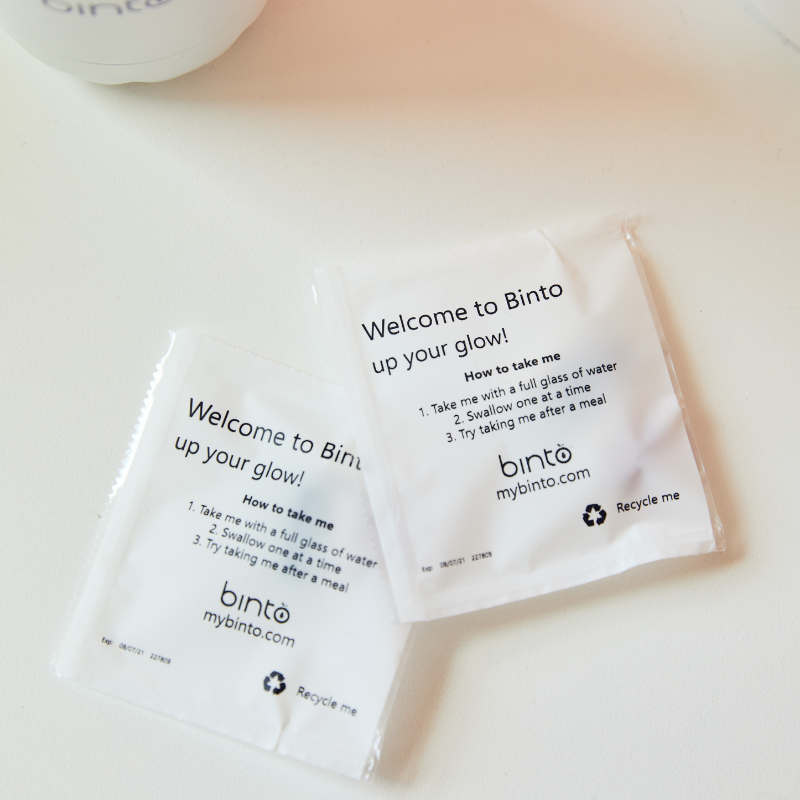
The mechanics are simple enough to explain at a dinner party. A customer takes a health quiz - one written by licensed women's health providers, not marketers - and BINTO builds a set of dose-specific daily packets in response. Each packet is printed with the customer's own name, their ingredients, and their doses, then shipped every month. It is personalization taken literally: not a single "women's multivitamin" for everyone, but a routine assembled per person.
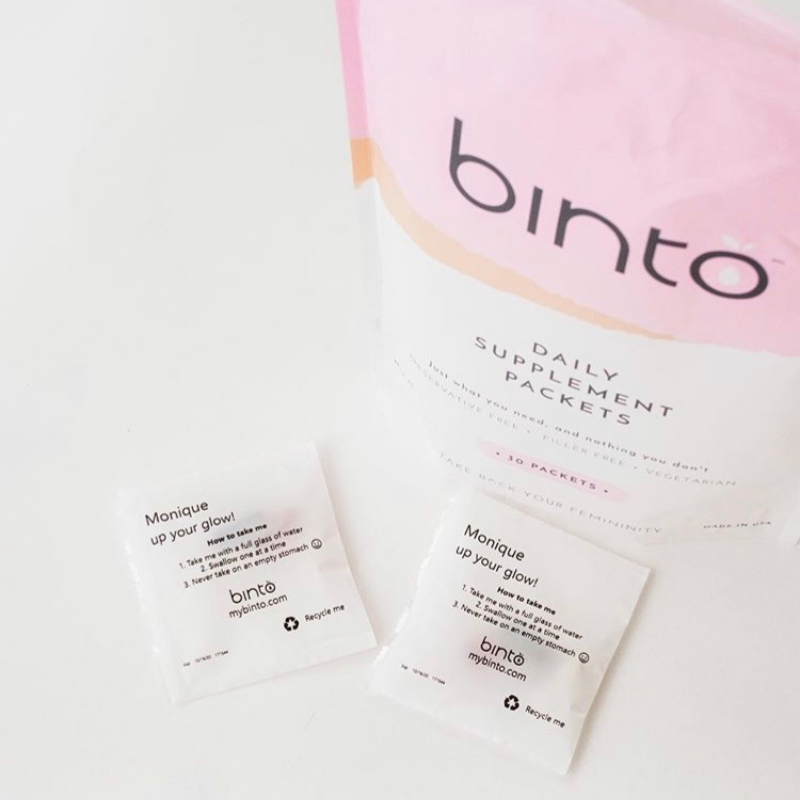
Prefer to skip the quiz? You can build your own kit, or buy the pieces individually - bottles, powders, a 13-strain synbiotic, inositol for hormonal balance, algae-based DHA, a vaginal probiotic. But the packet is the flagship, because the packet solves the problem the drugstore never could: it removes the decision.
FIG. 1 — ONE BRAND, FIVE LIFE STAGES. BINTO IS DESIGNED TO FOLLOW A CUSTOMER FOR DECADES, NOT A SINGLE PURCHASE.
02The part competitors can't cheaply copy
Here is where BINTO stops being a supplement brand. Bundled with the products is on-demand access to licensed women's health providers - telehealth consults for the questions a label can't answer. That is the piece Welsh Devine cares about most, because it is the piece the fertility clinic was missing. Anyone can print a nicer bottle. Fewer companies will staff a clinician to sit on the other end of a chat window.
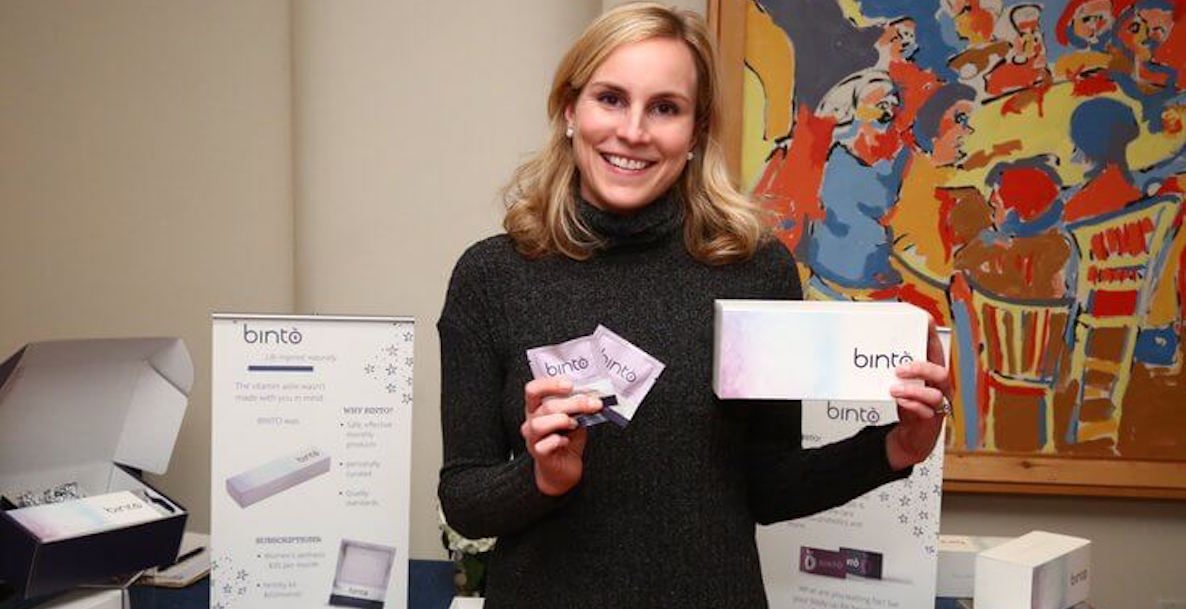
The founders are their own credibility. Welsh Devine is an RN with a master's in nursing from Penn; co-founder Andi Schmerin is a PA-C in women's health. Both have lived the lifecycle they sell into - fertility, pregnancy, postpartum. It makes BINTO one of the rare direct-to-consumer brands where the people building the product are simultaneously the target customer and the medical authority.
03Who it's for, and the problem it solves
The customer is a woman somewhere on the reproductive-and-hormonal timeline: trying to conceive, newly pregnant, six weeks postpartum and running on no sleep, or navigating the confusing on-ramp to menopause. The problem is the same at every stage - American healthcare is built to treat crises, not prevent them. Welsh Devine watched patients arrive already in trouble. BINTO's whole bet is on the boring, upstream work of prevention, sold in a format people will actually stick with: a subscription.
04How it's different from the shelf
Personalized supplements are a crowded shelf - Ritual, Persona, Thorne, Gainful, Thesis all live there. BINTO's wedge is deliberately narrow and deep: women's health only, formulated with clinicians, doses personalized by quiz, and a provider attached. It is a lesson in winning by shrinking your market on purpose. Where a general brand sells one product to everyone, BINTO asks who you are first.
FIG. 2 — DEPTH OF WOMEN'S-HEALTH + CARE FOCUS (ILLUSTRATIVE). BINTO TRADES BREADTH FOR A SINGLE, WELL-DEFINED CUSTOMER.
05The business model
BINTO sells direct to consumers on Shopify: a monthly subscription for the personalized packets, one-off purchases for the individual products, and telehealth consults on top. A quietly important detail - many products are FSA/HSA eligible, which reframes a supplement subscription as a legitimate healthcare expense rather than a lifestyle splurge. Manufacturing is outsourced to certified U.S. labs, with pre-batch, in-batch and third-party post-batch testing.
- Sell the boring thing like a product. Prevention is a hard pitch; a named, personalized packet makes it tangible.
- Attach a human. The telehealth provider is the retention engine a competitor can't copy overnight.
- Be the customer. Founder credibility here isn't marketing - it's two clinicians who lived the lifecycle.
- Use the tax code. FSA/HSA eligibility turns a "splurge" into a healthcare expense.
06Where it came from
The origin runs deeper than a business-school class. At 16, Welsh Devine traveled to Malawi on a mission trip, saw women's health crises up close, and contracted malaria herself - an experience she credits with pointing her toward women's health for good. The company's first money, reportedly around $120,000, came from a group of Wharton investors who happened to be all men, before BINTO ever built a women-focused product line. Later support came from Ben Franklin Technology Partners, Pennsylvania's early-stage funder.
07Where it fits
BINTO sits at the intersection of three markets that all happen to be growing - personalized nutrition, women's health, and telehealth - without trying to dominate any one of them outright. It is a small, women-owned company with a big surface area: the same customer can, in theory, stay with the brand from her first cycle-tracking supplement through conception, pregnancy, postpartum recovery, and menopause. That is a decades-long relationship dressed up as a monthly box. The question in front of the company now is the one facing every focused consumer-health brand - whether depth and trust can outrun the scale of louder, broader competitors.
For a company born from a question a nurse couldn't answer, it has built a fairly complete reply. Take the quiz, get the packet with your name on it, message the provider when something feels off. The vitamin aisle was a guessing game. BINTO's contribution was to stop guessing.