Twelve minutes is an awkward amount of time. Too long for pleasantries, too short for a founder to explain every glorious feature of an app. Which may be precisely its virtue. In April 2023, CELA invited founders worldwide to apply for office hours with Morgan Stanley Inclusive Ventures Lab. Ten would be selected. Each would meet four mentors, individually, for twelve minutes each. The introductions were matched to the company. Even networking had acquired an editor.
- CELA builds accelerator programs and arranges founder access.
- Its Westchester work combined education, mentors and recurring check-ins.
- The useful habit to borrow: match the person to the problem.
- Since its WEVE merger, the business operates as QUAY.
The office-hours format offers a compact introduction to CELA's business. A founder has a question; somebody elsewhere has relevant experience. The company handles the arrangement. Its expertise lies in designing the machinery around those encounters: selection, curriculum, mentor matching and the occasions when a startup must show its work. A crowded reception may supply conversation. CELA's proposition is to give that conversation an assignment.
April 2023 office hours · 10 selected founders · meeting time excludes transitions.
The app made of index cards
Co-founder John Lynn had encountered the importance of people before running accelerators. In an EIR Live interview, he recalled Curativity, an earlier venture intended to help publishers test unsolicited manuscripts with readers. His team lacked the resources for a full mobile prototype. They drew screens on index cards and watched people swipe through them. It was a product demonstration with the production values of a stationery cupboard.
An accelerator offer followed, he said, but disappeared after a co-founder departed. The departing colleague had been central to the accelerator's interest. That episode illustrates the risk behind an apparently technical business: a promising product can depend on a particular person staying in the room. Lynn also described learning to approach networking through reciprocal help, asking what he could contribute before asking for assistance.
“What is the give I can make?”
John Lynn · EIR Live · on approaching a new connection
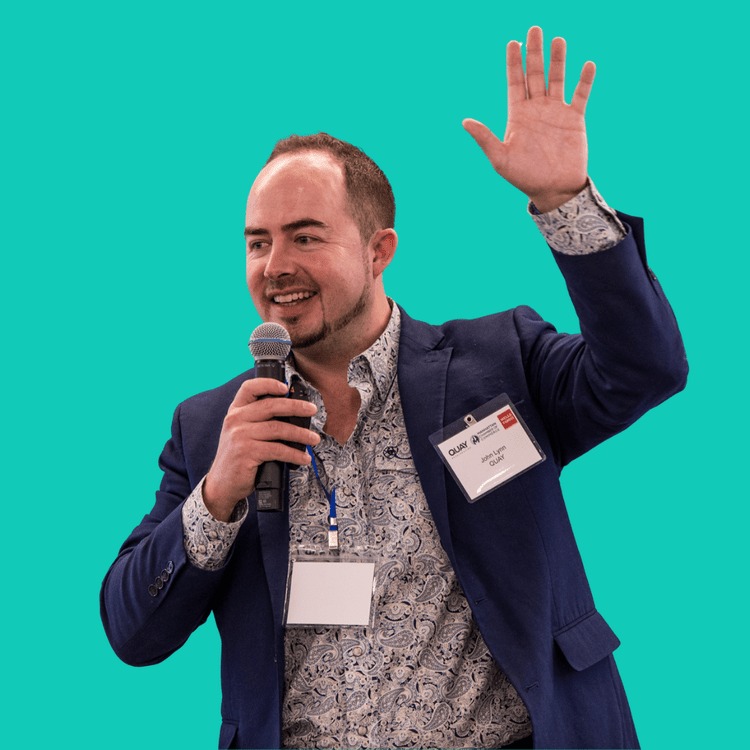
CELA co-founder John Lynn, pictured on QUAY's team page.
Westchester had the ingredients
In June 2022, Westchester County brought CELA into its Element 46 program. The announced redesign turned an incubator into a technology accelerator: initially up to ten startups, ten weeks, a curated mentor network and a final pitch event. County officials described learning from the first three cohorts how much support ventures needed. CELA supplied an operator's answer to that observation.
The name contains a pleasing municipal joke. Westchester has 45 municipalities; the county government becomes the 46th entity. Palladium, element 46, is a catalyst. In practice, the chemistry is less decorative: help with finding customers, making early sales and developing a business model. The institutional partner wants entrepreneurial activity in its community. The founder wants someone useful to answer the next difficult question.
The program's offer includes customer discovery, financial projections, pitch preparation, a dedicated mentor and pro bono professional services. Accountants and intellectual-property advisers belong in this picture. A startup can become stuck on ordinary problems long before it encounters a glamorous one. Peer sessions also let founders discuss struggles with people who have their own versions.
A traffic light for ambition
Element 46's 2022 posts documented weekly one-to-one meetings between founders, lead mentors and staff. They also described a red-yellow-green meeting where founders and staff shared concerns and goals. This is the sort of small operating detail that disappears from grand speeches about innovation. It deserves more attention.
A recurring meeting gives an introduction a second act. Someone hears the concern, sees the goal and returns next week. The interpretation here is simple: structure makes assistance easier to request and progress harder to leave vague. Readers can copy that rhythm without launching an accelerator. Set a regular check-in, name the obstacle, identify who can help, and return to the question.
An editorial adaptation of the documented concern-and-goal routine, not CELA's official script.
The founders served by this machinery are varied. The fall 2023 cohort included Adro, helping international newcomers access financial services, and CheckRare, a rare-disease learning platform. Their needs cannot be reduced to a single industry lecture. Mentor selection is therefore part of the service itself. A university incubator or another accelerator might be an alternative; the relevant comparison is whether its people understand the founder's immediate task.
That distinction matters when choosing support. A good lecture can reach everybody at once; a useful introduction depends on particulars. Which customer is the founder trying to reach? What experience does the mentor bring? A program built around those questions has a different practical appeal from an event that merely promises an impressive guest list. The calendar should serve the business, rather than become another business to manage.
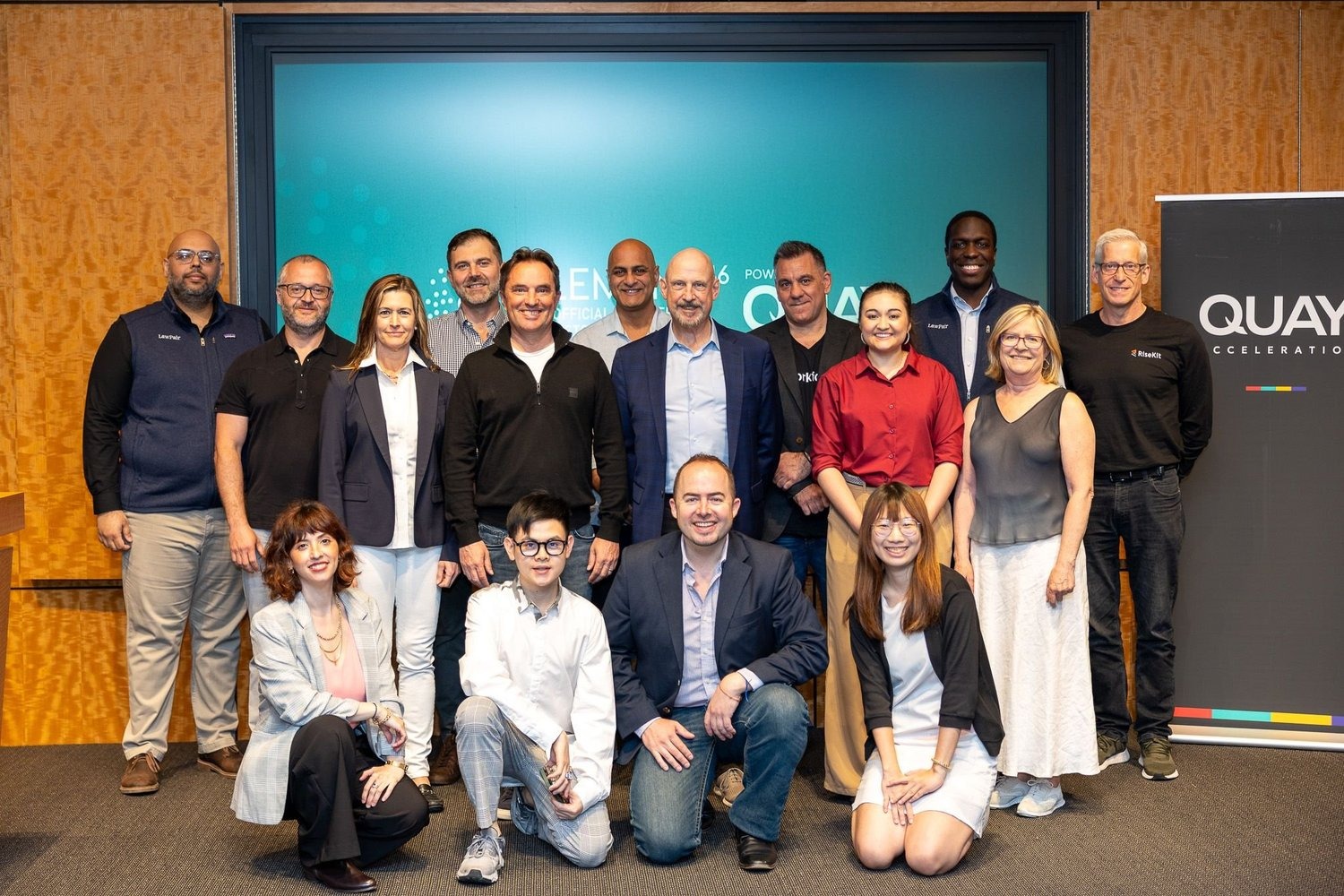
Element 46's Spring 2025 Demo Day, after the move to QUAY.
The name on the door changed
CELA and WEVE joined forces in December 2023, rebranding as QUAY during 2024. QUAY describes the fit as complementary: CELA supported startups across the US; WEVE helped international founders enter the American market. John Lynn and Frances Simowitz now lead the combined business. The merger expanded the kinds of founder journeys one operator could serve.
Today, QUAY markets customized institutional programs, international expansion support and licenses for accelerator processes and materials. That places it in the business of operating and teaching startup support. Its customers include institutions building programs; its users include the entrepreneurs attending them. Those two audiences need different outcomes, even when they share the same room.
CELA's stated mission was to carry the accelerator model into corporate, government and academic institutions. Its profile reports work with Verizon, Barclays, IBM, SAP, Pace and Yale. These are the natural customers for a company whose expertise is arranging a program: organizations with resources, constituencies and a reason to bring entrepreneurs together. The service is the organization of support, with education woven through it.
For price-conscious founders, the February 2026 Element 46 announcement gives a concrete answer: participation is free for Westchester County residents. Time remains a commitment. Eligibility requires a usable prototype or minimum viable product near or in user testing. An idea alone does not qualify. Introductions are most useful when a founder has something specific to discuss, test or sell. CELA's lasting lesson is modest enough to use tomorrow: choose the problem, choose the person, and make the meeting happen.
Meet the network / Watch it work