The first thing to fail was the name. In October 2016, a New York startup released an app called Vigilante. Its promotional film showed people using their phones to thwart an assault. Apple removed the app over safety concerns. A tool designed to tell people about danger had given them the impression they ought to run toward it.
When it returned in March 2017, it was called Citizen. The company’s relaunch announcement made an unusually candid admission: “This was a good thing. We needed to make some changes.” It strengthened its safety messages and described conversations with city officials and community leaders. The screen could remain exciting. The instructions needed to become considerably less so.
- Nearby emergency alerts and community video are the core product.
- Subscriptions sell extra context and access to safety assistance.
- Enterprise tools turn the incident feed into a workplace monitoring system.
- Useful information still depends on coverage, verification and judgment.
“This was a good thing. We needed to make some changes.”
Citizen, announcing its 2017 relaunch
A siren is a very incomplete sentence
Citizen operates in the interval between hearing something alarming and understanding it. The app combines emergency information with a map, incident updates and live video. A resident can investigate a road closure, follow a nearby fire or avoid a block where something is unfolding. The practical reward can be wonderfully undramatic: taking a different route home.
That is what Seattle creator Cliff, known as The Urban Prepper, describes in a review shared by Citizen. A weapon-related alert in Belltown prompted him to change his route. It is one person’s account, rather than evidence of a general safety outcome. But it captures the product’s everyday proposition better than a rescue montage.
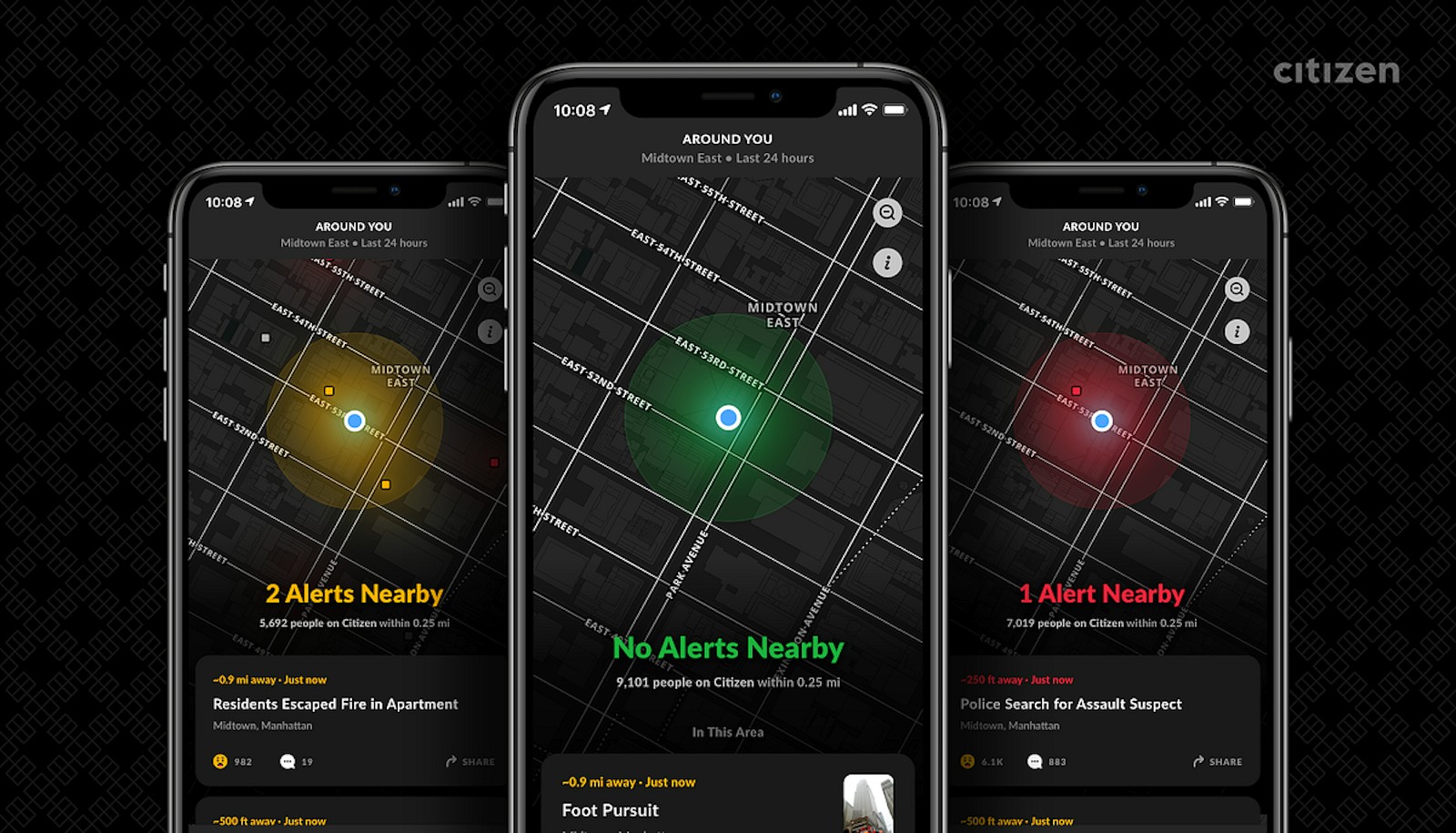
The neighbors supply another ingredient: pictures from the scene. Citizen allows people who are safely nearby to broadcast what they see. A text alert gives an incident a location; video gives it visible dimensions. Neither is an invitation to approach an emergency. The useful audience includes people deciding where to go, as well as those already caught nearby.
The invisible work behind the visible map
Founder and CEO Andrew Frame is the best-known face of Citizen. Contrary Research also identifies Luis Samaniego and JD Maresco as co-founders, dating the company’s origins to 2015. The familiar 2017 date belongs to the Citizen relaunch. Like many seemingly sudden consumer products, this one has several birthdays.
Its expertise is operational as much as technical. Citizen’s careers page describes AI-assisted processing of emergency information, human review of alerts and comment moderation. Expanding into a city means learning its response systems and radio infrastructure. Copying the map would be straightforward compared with reproducing the work that keeps the map supplied.
- 01 Emergency radio
- 02 Processing + review
- 03 Nearby alerts
- 04 Community video
The company advertises ownership and a mission-first culture, with employees drawn from technology and emergency response. That self-description needs a qualification: former workers alleged distress and pressure in 2021; Citizen disputed those accounts. Safety information requires labor, and the people handling it absorb material most users see only briefly.
What does a little reassurance cost?
The basic app is free. In August 2021, Citizen launched Protect at $19.99 a month, after a beta involving nearly 100,000 users. It offered around-the-clock contact with agents who could help assess a situation and connect users with emergency services. This moved the business beyond telling people what was happening nearby toward helping a particular person.
Today, paid offerings also include emergency-radio audio, historical incidents and customizable alerts. Apple’s listing contains multiple prices for Plus and Premium, so an old launch price should not be mistaken for everyone’s current bill. The purchase screen matters. Enterprise plans have custom pricing; the company’s published options cover monitoring, employee alerts and integrations.
Greycroft led roughly $73 million in 2021 financing, including a $23 million convertible note. Earlier backing included Sequoia and 8VC. That money supported a product with substantial work behind it. Citizen says it does not serve ads or sell personal data. Subscriptions and organizational contracts offer other ways to pay for the service.
When speed outruns judgment
The company’s most troubling lesson arrived in May 2021. During the Palisades Fire, Citizen wrongly identified a man and offered a $30,000 reward. It retracted the accusation. A fast network can distribute an error with the same efficiency it distributes a warning.
The lesson for anyone copying Citizen’s approach is concrete: give the audience clear instructions, review claims before amplifying them, and distinguish an unfolding report from an established fact. A map of reported incidents cannot certify a street as safe. Coverage depends on available information; silence on the screen is not proof that nothing is happening.
The crowd gets an official reply
In April 2025, Axon announced Citizen’s integration with Fusus, its real-time operations platform. Participating agencies can receive incident video and communicate back through Citizen. Citizen says only publicly shared videos are available to verified partners, with an option to stop direct partner sharing. Broadcasting to a community can therefore have an institutional audience, too.
New York supplied a revealing example in July 2025: a city-run NYC Public Safety account, announced at no cost to the city, could deliver verified updates to more than three million local Citizen subscribers. The company brought an audience; officials brought a recognizable source of information. The arrangement made the feed a two-way channel.
New metro areas + existing markets with deeper detection in Citizen’s July 2026 coverage announcement.
The enterprise product makes that channel useful to security teams watching facilities and campuses. March 2026 brought employee-email alerting with suggested copy and a review step. September added pinned incidents and keyword alerts. Those changes suggest a sensible direction: help an operator find the incidents that affect their people, then act on them.
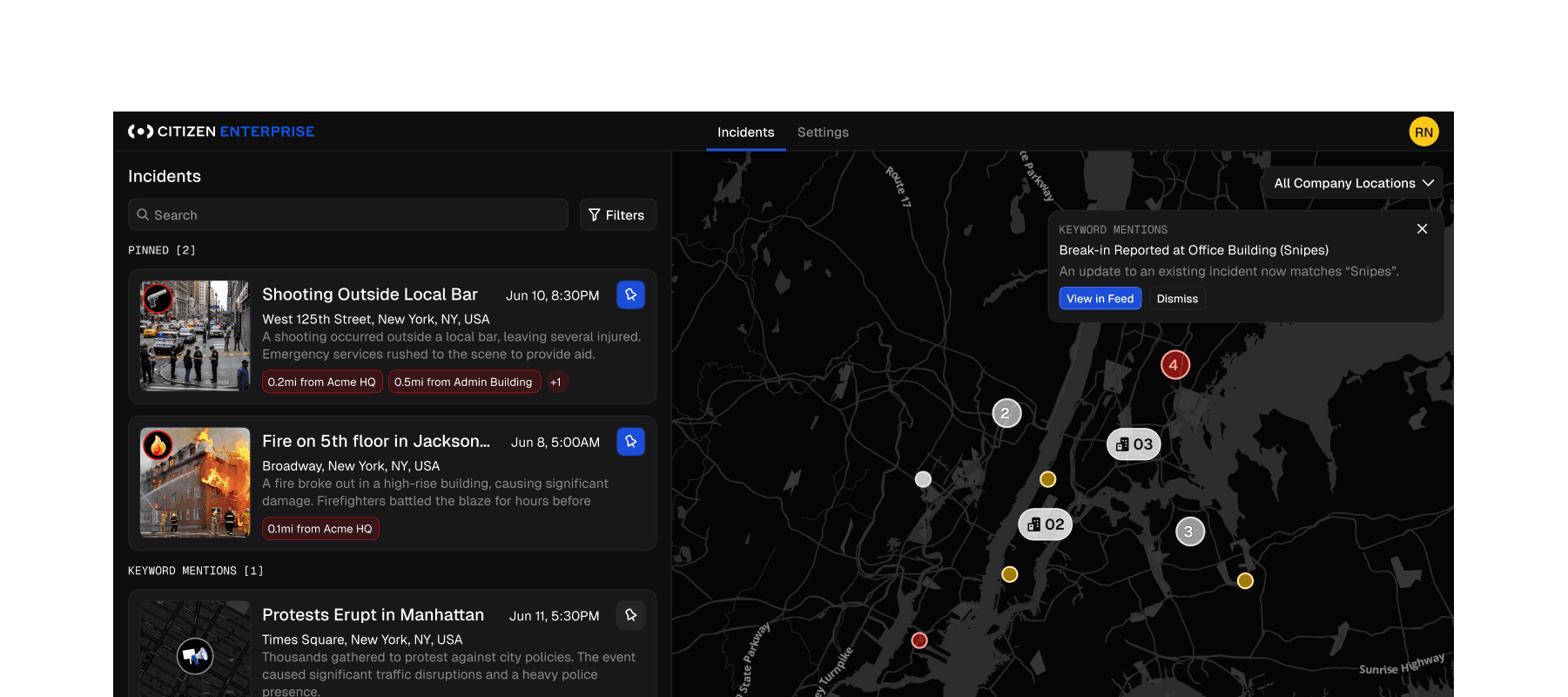
Citizen fits between neighborhood networks such as Nextdoor and Ring Neighbors, local news and professional safety software. Its distinctive combination is the live incident map, community cameras and organizational access. The test remains delightfully plain: did the information help someone make a better decision? A quieter walk home is a respectable answer.