The awkward part of an investigation can be the space between two files. A phone number appears in a call record. A similar identifier appears in an account return. A location has a timestamp that seems to fit. Each item is legible on its own. Whether they describe the same person, at the same moment, is a much less comfortable question.
That gap is Penlink’s business. The Nebraska company builds software for collecting, organizing and analyzing digital intelligence. Its customers include investigators and security teams who must turn a heap of records into something they can act on, explain to colleagues and, sometimes, defend in court. The glamour belongs to the discovery. The work often begins with getting the columns to agree.
- PLX handles evidence and communications; Tangles searches and analyzes web intelligence.
- Acquisitions widened the picture: GeoTime in 2022, Cobwebs in 2023.
- The money is real: Texas DPS signed a reported five-year Tangles agreement worth nearly $5.3 million.
- The difficult question is access: linking information makes both investigation and surveillance more powerful.
The clue is in the handoff
Penlink’s flagship PLX ingests call detail records, social media warrant returns and mobile forensic extractions. It normalizes them for analysis. Penlink says it supports more than 1,000 service providers and file types, a detail that sounds like a procurement footnote until you consider the alternative: an analyst repeatedly translating one provider’s records into another provider’s language.
PLX can accept extractions from tools such as Cellebrite UFED and MSAB XRY. That distinction matters. Extracting information from a device and making sense of information from several sources are different jobs. Penlink occupies the second job and, through its live-collection capabilities, part of the first. The company describes lawful real-time collection of communications, alongside historical analysis.
Tangles approaches the problem from the web. It automates searches and analysis across open, deep and dark web sources, with monitoring and alerts. GeoTime adds the question of movement over time. Together, these products offer several ways into an investigation: a record already obtained, an online lead worth checking, or a pattern whose geography matters.
The attraction is less time spent carrying context between systems. A name found in one view can become a question asked in another. That is a practical advantage for a task force working across departments, or a corporate security team looking at an emerging threat. It also explains why Penlink talks about a platform rather than a single search tool.
Buying the missing pieces
Penlink was founded in 1986. Its recent expansion follows a recognizable sequence. Spire Capital lists an investment in March 2022. In September that year, Penlink announced its acquisition of the GeoTime product line from Toronto-based Uncharted Software. Communications analysis gained a more developed way to show where events occurred and how they unfolded.
In July 2023, Cobwebs Technologies joined Penlink through its investment partner, Spire. Cobwebs supplied web intelligence. CTech reported an acquisition price of approximately $200 million. That figure describes the reported Cobwebs transaction; it is not Penlink’s valuation or a venture funding round. Confusing those categories would make a tidy growth story and a poor balance sheet.
The strategic logic was explicit: connect OSINT with digital evidence. The company’s earlier tools already served a specialized market. The combination expanded what customers could examine within a related workflow. It is a useful business lesson for software companies: an adjacent capability can be valuable because of the work it removes between products.
The $5.3 million question
Penlink sells to public agencies and enterprises. The buying process belongs to the world of contracts, licenses, support and training. GeoTime Live’s terms explicitly describe a software-as-a-service agreement; Tangles training is also sold by subscription. A public agency’s purchase is therefore better understood as an operational arrangement than as an app someone downloads on a whim.
A useful price point comes from Texas. The Texas Observer reported that the Department of Public Safety signed an acquisition plan in 2024 for a five-year Tangles contract worth nearly $5.3 million. The same reporting identified purchases or access among local law enforcement agencies. This establishes a concrete scale of spending, without turning one customer’s agreement into a universal price list.
Nearly $5.3 million over five years for Texas DPS’s reported 2024 Tangles agreement.
The company reports more than 1,000 organizations and operations supported in over 60 countries. Its target markets include law enforcement, national security, defense and enterprise security. Those buyers have different missions, but a shared inconvenience: useful information arrives in incompatible forms, often faster than people can review it.
There are alternatives. Cellebrite Pathfinder consolidates digital evidence for multi-device analysis. Maltego Graph helps investigators examine relationships across data sources. Penlink’s positioning rests on the combination of evidence, OSINT, live communications and visualization. The right comparison is the workflow a buyer needs, including permissions and deployment, rather than a contest over which vendor uses “AI” most frequently.
From asking to assigning
In May 2024, Penlink introduced CoAnalyst, using generative AI for natural-language investigation queries and analysis. Its product material describes semantic search, summaries, pattern recognition and reporting. The appeal is straightforward: a person can ask a question of complex data without first translating every part of the question into a technical operation.
CoAnalyst360, launched in June 2026, extends that idea to coordinated tasks. Penlink describes agents that carry out workflows, synthesize findings and recommend next steps while retaining context. A question becomes a plan of work. The company’s launch announcement emphasizes human judgment and oversight; the significance is in who does the preparatory labor and who evaluates the result.

The August 2026 Chainalysis integration offers a more concrete example of the same ambition. Joint customers can use their Chainalysis API key to bring blockchain intelligence into Penlink and move into Reactor for deeper tracing. Wallet activity gains investigative context from other data. The partnership announcement says customer demand drove the connection.
“Investigative teams are already using our digital intelligence platform and Chainalysis side by side.”
Peter Weber · August 2026 partnership announcement
That remark is unusually revealing for a product launch. Customers had already assembled their own workflow; the vendors were making it less cumbersome. A product team can copy that habit of observation. Watch where users leave the application, what they take with them, and what they must reconstruct when they return. The next useful feature may be sitting in that handoff.
A map is also an argument
The breadth that makes Penlink useful also makes scrutiny necessary. Webloc, sold as an add-on to Tangles, is a particularly contentious example. Citizen Lab’s 2026 research characterizes it as ad-based geolocation surveillance, drawing on commercial data generated through the advertising ecosystem. Its investigation examines customers and the privacy implications of this form of tracking. In its response, Penlink disputed parts of the report as inaccurate or outdated and said it operates under compliance and responsible-use standards.
The controversy predates the combination. Meta took action against Cobwebs in 2021, alleging surveillance activity involving its customers, including targeting activists and opposition politicians. Cobwebs disputed Meta’s account. Penlink later told the Texas Observer that it acquired Cobwebs in 2023 after those issues had been addressed and was unaware of subsequent issues. These are competing accounts, not interchangeable descriptions of proven conduct.
“Strong privacy protections and lawful access to data must coexist.”
Peter Weber · Penlink’s statement on its website
The analytical limits deserve equal attention. A device identifier is not, by itself, a complete account of who held the device. Two events close together on a map do not establish intent. An AI summary can help someone decide what to inspect; it should not spare them the inspection. These are principles for interpreting evidence, and they become more consequential as software makes connections easier to produce.
A connected platform works best when the inputs are relevant, access is authorized, and analysts can test the result against underlying records. It cannot compensate for missing data or an unsupported inference. Its value depends on disciplined use. A beautifully drawn conclusion can still be wrong.
What to borrow from Nebraska
Penlink’s training operation makes a modest but telling point. The company expanded Penlink Academy in October 2025, offering professional learning for its tools and investigative methods. Its Tangles training subscription includes online resources, live classes and in-person instruction. The machine can reduce repetitive work. Someone still needs to understand the work.
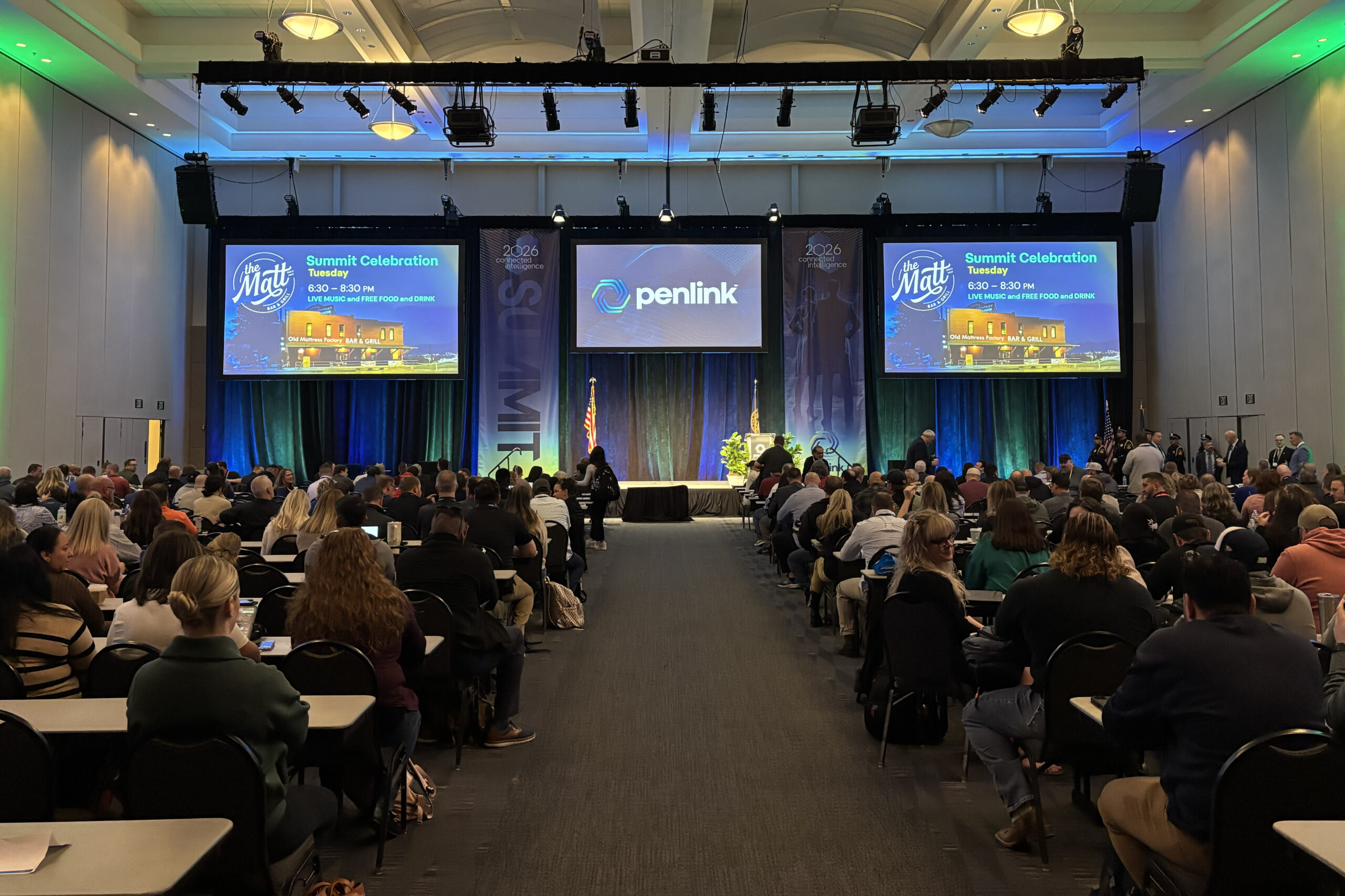
Even its culture has a small surprise. Penlink’s careers page lists goat yoga alongside ping-pong and happy hours. The investigative software business, apparently, has room for livestock. More substantively, the page describes employees with military and law enforcement experience, putting product development close to the kinds of operating problems its customers face.
The lessons worth borrowing are fairly prosaic. Make records comparable before asking for sophisticated answers. Study the transitions between tools. Budget for training as well as access. Require an explanation that survives beyond the screen. Penlink’s products give those habits a commercial form. Their usefulness ultimately rests with people who know the difference between an interesting connection and a conclusion they can defend.