situational-awareness
(24)
Citizen puts the sirens on your screen
A banned app called Vigilante became a live map of neighborhood emergencies. Now Citizen is selling the same street-level awareness to the people paid to keep others safe.

Dataminr Sells the Most Expensive Minutes in the Room
The New York company built a multibillion-dollar business by finding the first credible signal in a very noisy world. Its product is not information. It is the head start before everyone else has it.

Critical Response Group Built the Map for the Moment Everyone Starts Shouting
CRG took a battlefield habit - one shared picture, one shared vocabulary - and carried it into American schools. The hard part was never drawing the map. It was making sure the right map appeared in the right hands when communications began to fray.

Akshay Birla Makes a Career of Asking What Happens Next
From an economics classroom to healthcare technology, a curious interview podcast and the operational edge of emergency management, Akshay Birla has built his career around a deceptively practical question: how do people coordinate when the stakes rise?

Juvare Built the Operating System for the Hour Everything Goes Sideways
When hospitals fill, storms land or a power grid falters, the first casualty is often a shared sense of reality. Juvare sells that shared picture - and a growing stack of tools for acting on it.
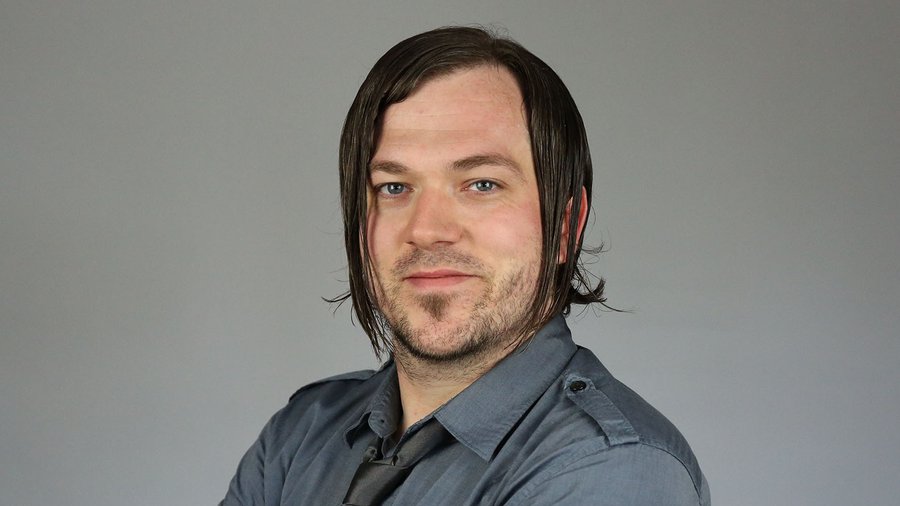
Ryan Litt Is Turning the Fireground’s Two-Radio Problem Into One Clear Picture
A fire chief once held a radio to each ear and listened for panic. Ryan Litt saw a product brief hiding in that impossible ritual - then built FLORIAN to make emergency scenes legible.

The Grid Has a User Interface. Michael Legatt Wants It to Remember the Human.
A quarter-fed dryer, a continent-scale blackout and two doctorates led Michael Legatt to a stubborn idea: the safest power grid is designed around the people watching it.
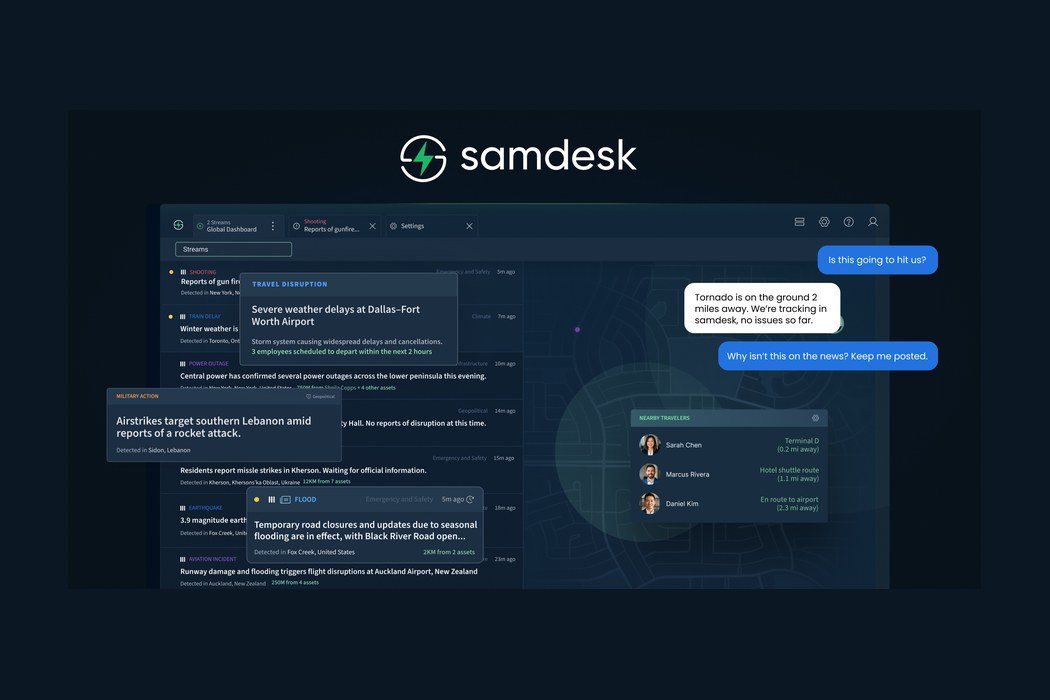
Samdesk Built a Crisis Radar. The Real Product Is 30 Minutes to Think.
Security teams do not need another blinking alert. They need to know whether the fire, flood, shooting, or shutdown will touch their people - and samdesk is betting that AI plus human verification can buy them the most valuable commodity in a crisis: time.

The Danish Earpiece Quietly Wired Into America's Security Details
A Copenhagen audio startup bet that cops and bodyguards deserved better than the earpiece that came in the box. Seven years and five patents later, its 360 sits in the ears of security details who can't afford to miss a word.

The Fire Chief Had Two Radios and Still Couldn’t See His Crew - 3AM Built the Missing Map
A volunteer firefighter saw crews tracked with magnets and radio calls. The Buffalo company he co-founded spent a decade turning that blind spot into FLORIAN - and learned why emergency technology has to fit the incident, the budget and the procurement system.
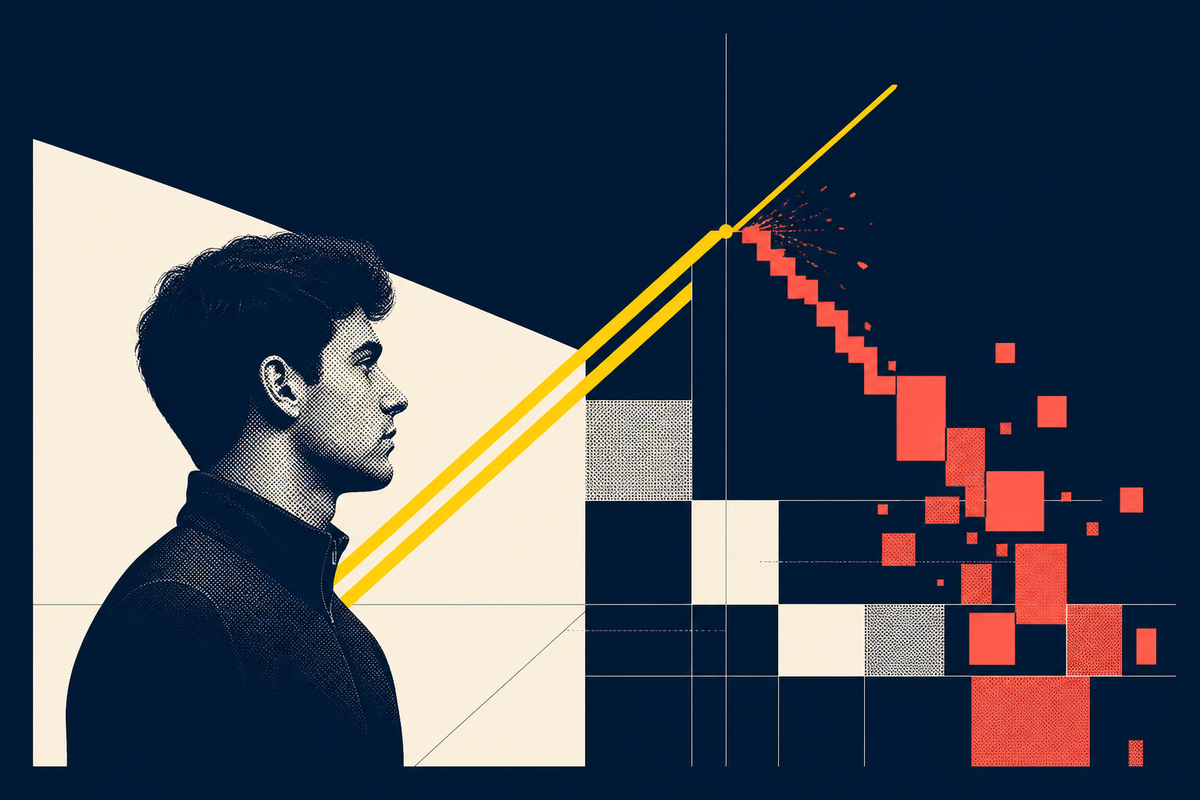
The Hedge Fund That Bet Twice on the Same Future
Leopold Aschenbrenner built an AI fund around one sweeping conviction. When both sides of the trade moved against him, leverage turned a brilliant thesis into a forced sale.

Bulzi, Inc.
Bulzi, Inc. (styled Bulzī, pronounced 'bulls-eye') is a dual-use technology company that uses edge-AI and Internet of Things (IoT) sensors to deliver situational awareness, security, and safety solutions. Originally built to measure out-of-home advertising audiences by passively detecting nearby mobile devices, Bulzi adapted its RF-sensing platform for defense and public-safety missions with roughly $2M in SBIR funding from the U.S. Air Force and Army. Its products span passive C5ISR sensing (SAFER), base access control (z-BASE), and medical-grade vital-signs monitoring (BioSCOUT), serving warfighters and first responders alongside commercial advertising customers.

Intellicene
Intellicene is a Melville, New York-based security software company that builds Symphia, a unified, video-centric platform for physical security operations. Spun out of Verint and Cognyte's Situational Intelligence Solutions business and acquired by Canada's Volaris Group in December 2022, the company connects and correlates data from cameras, access control, intrusion detection and other networked devices so security teams can detect threats and respond to mission-critical events in real time. With roughly 25 years of heritage, it serves retail, airports, transportation, healthcare, safe cities, higher education and industrial customers worldwide.

LineVision
LineVision is a Boston-based grid intelligence company that helps electric utilities get more capacity, reliability, and safety out of existing transmission lines. Its patented non-contact sensors mount on transmission towers - not the live wires - and pair LiDAR-based measurements of conductor position with AI-driven, hyperlocal wind forecasting and computational fluid dynamics to calculate a line's real-time thermal capacity. Through its Dynamic Line Rating, situational awareness, and asset-health products, LineVision typically unlocks 30%+ additional capacity on monitored lines at a fraction of the cost and time of building new transmission, supporting faster renewable integration and a more resilient grid.
Sea Machines Robotics
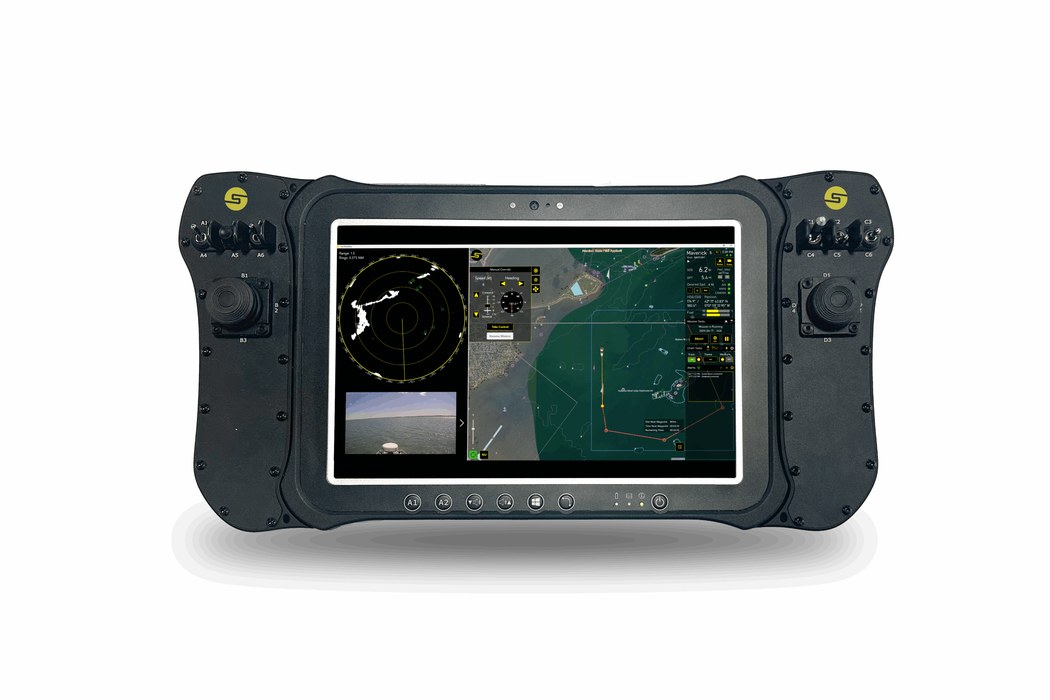
Sea Machines Robotics is a Boston-based company building autonomous command, control, and perception systems for commercial and defense vessels. Its products - including the SM300 autonomous control system, the SM200 wireless remote helm, and the AI-Ris computer-vision sensor - let workboats, tugs, survey craft, and unmanned surface vehicles operate remotely or autonomously while improving safety and crew productivity. Founded in 2015 by marine engineer Michael G. Johnson, the company has deployed systems on four continents and works with customers spanning shipping, spill response, government, and the military.

Zignal Labs
Zignal Labs is a San Francisco-based intelligence software company that turns publicly available information into structured, real-time situational awareness. Founded in 2011 as political-media startup Politear, it pivoted into broader media analytics and now positions itself as a national-security intelligence company delivering AI and agentic tooling. Its platform ingests billions of open-source signals daily across 100+ languages, using machine learning, computer vision, and OCR to detect narratives, track influence, and flag emerging threats for enterprise, government, and defense customers.

SkyGrid
SkyGrid builds high-assurance, third-party software services that safely fold autonomous aircraft, drones, and eVTOL air taxis into shared airspace. Born as a 2018 Boeing and SparkCognition joint venture and now a subsidiary of Wisk Aero, the Austin-based company delivers a real-time digital twin of the low-altitude sky - weather, obstacles, traffic, and vertiport status - plus automation and decision-support tools that route, synchronize, and deconflict flights at scale.

Garrett Smith
Garrett Smith is the founder and CEO of Reveal Technology, a Bozeman, Montana defense-tech company that turns drone video into offline 3D maps and runs mobile biometrics on a phone at the tactical edge. A former U.S. Marine Corps infantry and intelligence officer who still serves in the reserves, Smith built the company he wished he had in combat, where he was making high-stakes decisions off pen-and-paper maps in a digital war. Reveal's Farsight and Identifi platforms are used by U.S. Special Operations, the Army, the Marines, and allied forces in Ukraine, the UK, and Israel. In July 2025 the company closed a $30 million Series B led by Ballistic Ventures.

James Kubik
James Kubik is the co-founder and CEO of Somewear Labs, a San Francisco company building satellite-and-mesh communications hardware and software for teams that operate where cell towers end. A Northwestern product-design engineer and former Intuit product leader, he launched Somewear in 2017 after a childhood friend drowned in a Lake Michigan sailing accident with no way to call for help. Somewear's pocket-sized devices - Relay and the hybrid mesh/satcom Node - now serve every U.S. Department of Defense service, federal agencies, wildland firefighters, and backcountry explorers. The company raised a $13.7M Series A in 2022 backed by a roster of Fortune 500 CEOs.
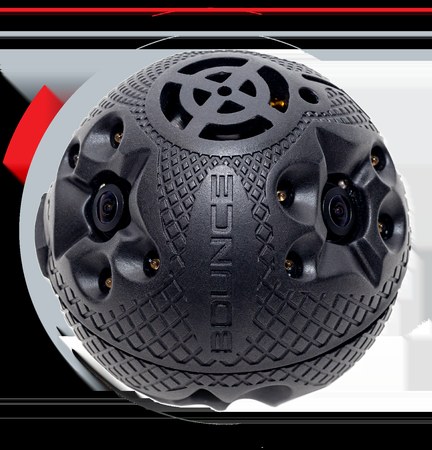
Bounce Imaging
Bounce Imaging makes softball-sized, throwable 360-degree cameras that first responders, law enforcement, and military teams toss into dangerous spaces to see what is inside before they enter. Founded out of MIT and the Harvard Innovation Lab after the 2010 Haiti earthquake, the company builds low-cost, rugged imaging and robotics systems - including the Explorer and the world's first thermal throwable camera, the Pit Viper 360 - that stream real-time omnidirectional video to a phone or tablet. Its devices are used by the FBI, U.S. Marshals, the Department of Defense, and more than 450 state and local agencies.

Reveal Technology
Reveal Technology is a veteran-founded defense software company in Bozeman, Montana, building AI tools that work at the tactical edge - offline, under fire, and in real time. Its flagship products, Farsight (rapid geospatial intelligence from drone video) and Identifi (tactical mobile biometrics), are fielded with the U.S. Army, Special Operations Command, the Marine Corps, and allied forces. The company's pitch is simple: when the cloud disappears, the mission can't.

Somewear Labs
Somewear Labs builds satellite-powered hardware and a software-defined network that keep defense, government, and emergency-response teams connected when conventional networks fail. Its pocket-sized devices automatically route mission data across mesh radios and satellite links, integrate with tactical systems like ATAK, and serve users from helicopter paramedics and wildland firefighters to U.S. special operators.
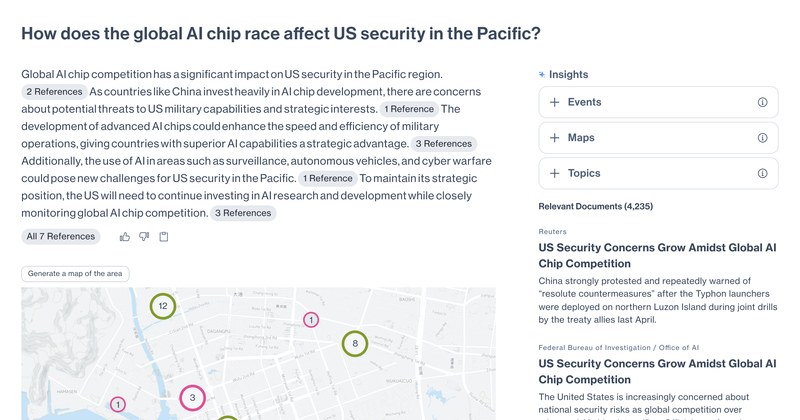
Primer.ai
Primer.ai builds mission-ready AI for defense, intelligence, and national security teams. Its platform turns oceans of unstructured text - news, documents, intercepts, social posts - into traceable, decision-ready intelligence, deployable in air-gapped and cloud environments.
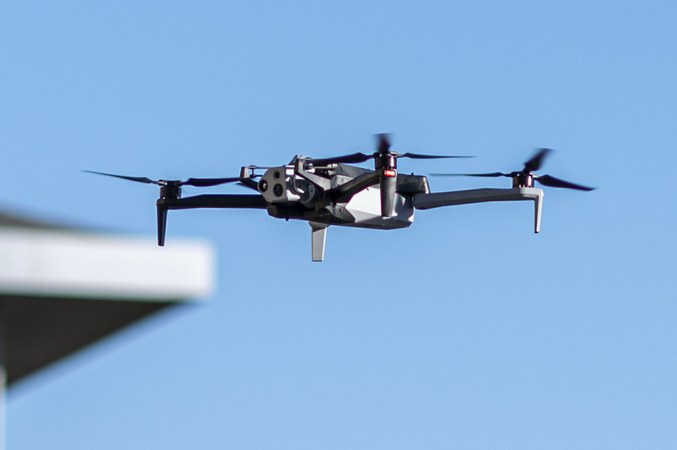
Skydio
Skydio is the largest U.S. drone manufacturer, building autonomous aircraft and software for public safety, defense, and critical infrastructure. Its flagship X10 platform uses AI and computer vision to fly itself in places GPS cannot reach.