Company • Hardware • Public Safety
The Danish Earpiece Quietly Wired Into America's Security Details
A Copenhagen audio startup bet that cops and bodyguards deserved better than the earpiece that came in the box. Seven years and five patents later, its 360 sits in the ears of security details who can't afford to miss a word.
There is a specific kind of misery known to anyone who has worn a radio earpiece for a twelve-hour shift. By hour six the plastic tube is chafing. By hour nine it has worked loose and you are pressing it back in with one finger while trying to look like you are not. For most of the two-way radio world, this was simply the cost of doing the job. N-ear built a company on refusing to accept it.
N-ear is a maker of premium earpieces, push-to-talk microphones and surveillance kits for people whose work depends on hearing every word - police officers, executive-protection agents, dispatchers and government security teams. It started in Copenhagen in 2018, moved to the United States within about a year as demand pulled it across the Atlantic, and now runs out of Tampa, Florida with a team of roughly two dozen. The pitch is narrow and unglamorous, and that is rather the point.
01 / What it actually doesAn earpiece rebuilt from the driver up
The flagship is the 360 line - in-ear earpieces named for the situational awareness they are meant to preserve. Instead of piping sound up a hollow acoustic tube, N-ear puts a micro-speaker in the ear itself, the same category of miniature driver that Denmark's hearing-aid industry has spent decades refining. The signature detail is a bend in the wire, patented, contoured to sit against the head so the earpiece hugs in place and, in the company's telling, disappears.
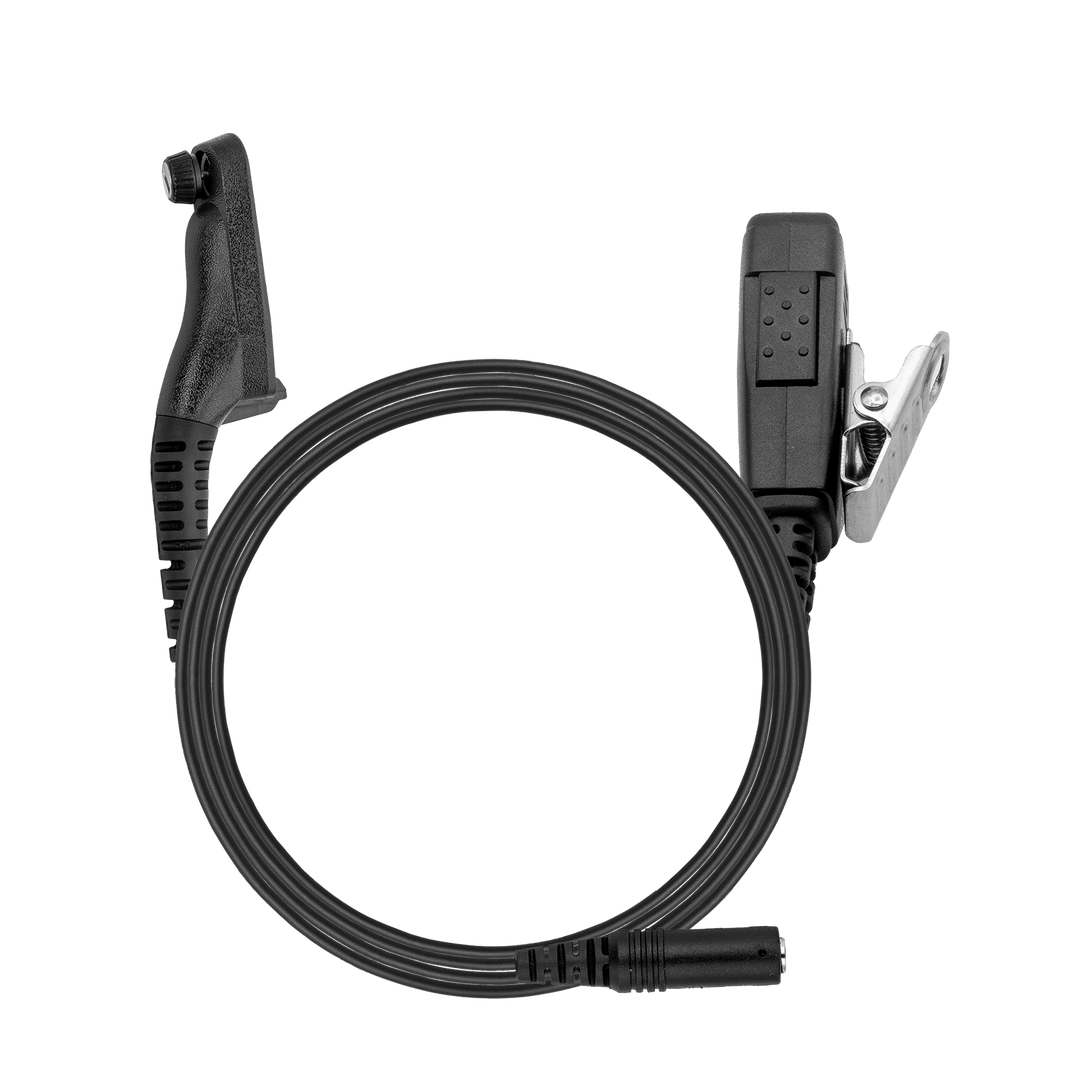
Around that sit the practical touches field operators actually notice. The HIROSE quick-disconnect lets a user detach the whole rig with a single upward tug, no tools. Braided-fiber cables resist the snags of a foot pursuit. Snaplock connectors keep a surveillance kit from becoming a tangle in a jacket pocket. None of it is flashy. All of it addresses a moment when the gear either works or gets in the way.
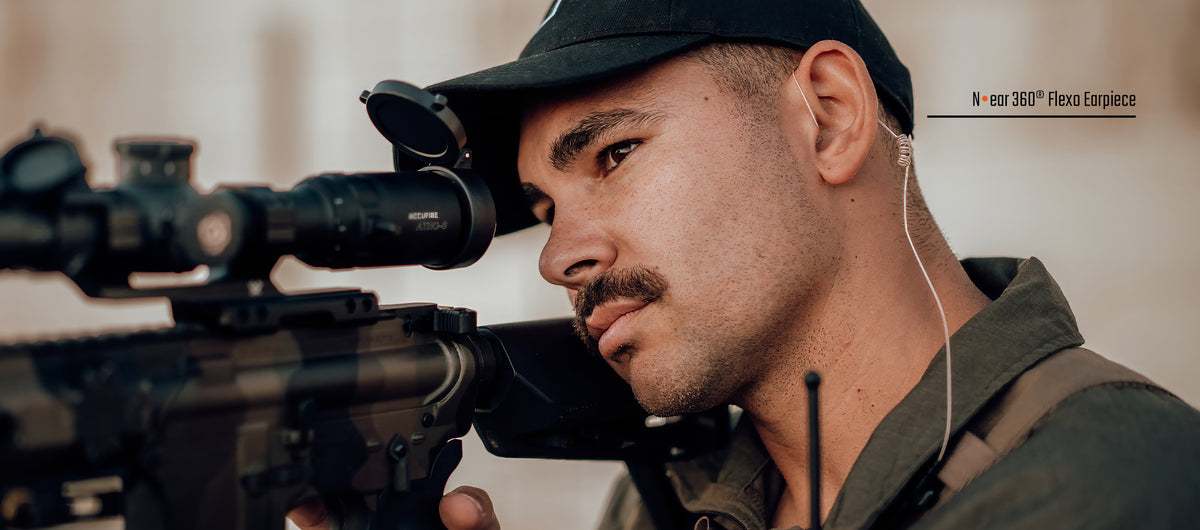
02 / Who wears itThe 1% of ears that can't miss a word
N-ear's customer is not the commuter with a podcast. It is the person for whom a missed syllable is a genuine problem. That makes for an unusually serious client list - the storefront features agency and enterprise security customers spanning government, transit and hospitality, and independent reviewers at outlets like Police1 and Officer Magazine have put the 360 through its paces on the beat.
Law enforcement
Patrol and tactical officers who wear a listen-only or two-way earpiece across a full shift.
Executive protection
Close-protection details that need discreet, snag-resistant covert kits.
Government & transit
Agency and public-transit security teams operating in high-noise, high-stakes settings.
Dispatch & venues
Dispatchers and venue security - from casinos to large events - on all-day comms.
It is a small market by consumer-tech standards, and that is a feature, not a bug. A narrow, high-pain customer is one you do not have to advertise to. You get reviewed by radio nerds, recommended between colleagues, and specified into a department's next order.
03 / Why it's differentThe audiophile option in a boring aisle
Most radios ship with an earpiece in the box, and most of those earpieces are an afterthought - a coiled tube and a foam tip. The incumbents in tactical audio, names like Silynx, 3M Peltor and Otto, tend to compete on ruggedness and platform breadth. N-ear went the other direction and competed on the thing users complain about most: comfort and fit. It treats a police earpiece the way a headphone brand treats a flagship - fewer SKUs, obsessive fit, patented details, a price that signals seriousness.
04 / The catalogEarpieces, PTTs, kits and protection
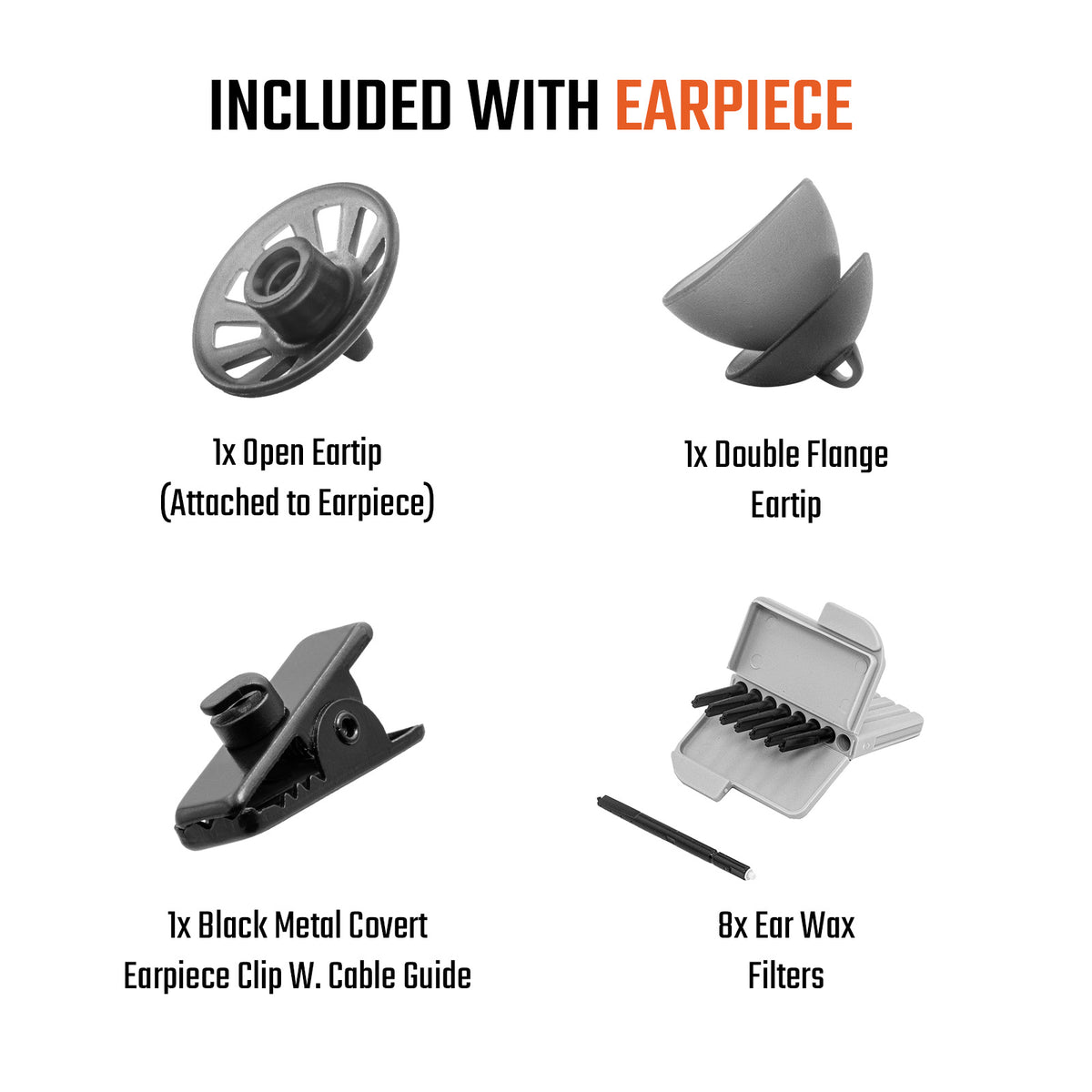
The range fans out from the 360 in a logical way. The 360 Original starts at about $149.99, with Flexo and Flexo Dynamic variants for different driver and cable needs. CHOICE push-to-talk microphones and remote PTTs add the transmit side, with adapters that keep everything compatible across Motorola, Harris and Kenwood radios. Surveillance kits bundle a 1-wire or 2-wire braided PTT with an earpiece for covert work. And Protectr hearing protection - ear molds, plugs and mold kits - extends the line from hearing better into hearing safely.
05 / How it makes moneyDirect, and refreshingly plain
For a company whose gear ends up in serious hands, the go-to-market is disarmingly ordinary: a Shopify storefront and a network of tactical distributors. Buyers can configure a kit and check out the way they would order a pair of running shoes, and dealers like Sheepdog Mics, AAA Police Supply and Dyplex resell into their own channels. Revenue is hardware-led, with a long tail of ear tips, adapters and consumables that bring customers back. There is no public funding record and no disclosed valuation - it reads as a focused, product-driven business rather than a venture rocket.
06 / The expertiseDenmark's ear, America's beat
The founding choice of Copenhagen was not incidental. Denmark is one of the world's centers of in-ear engineering, home to the hearing-aid and micro-speaker know-how that N-ear pointed at a new problem. The team combines engineers, audiological researchers and in-ear specialists, and leans on global suppliers for the miniature drivers and durable materials that go into each earpiece. Take that lineage - decades of making tiny things sound good inside a human ear - and aim it at a police radio, and the 360 starts to make sense.
07 / Where it fitsQuiet luxury for the tactical aisle
Put N-ear on the map and it sits in an interesting spot: not the cheapest, not the biggest, but the one that treated the wearer as the customer. In a category where the giants sell breadth and toughness, a 22-person team is winning attention by sweating a single experience - the eight-plus hours an earpiece spends against a human ear. Whether that stays a niche or grows into a category standard, the bet is coherent. Comfort, for the people N-ear sells to, is not a nicety. It is whether the tool disappears so the job can happen.