The unit of value at Dataminr is not a tweet, a satellite ping or a siren heard through a phone microphone. It is the minute between a credible signal appearing somewhere in public and the moment a person with responsibility understands what it means. That minute can reroute an executive, lock down a store, move a reporting crew, protect a manufacturing line or put emergency teams on the road. Dataminr has spent 17 years making those minutes easier to buy.
The company ingests a comically large stream - more than one million public sources and, by its count, 43 terabytes of text, images and video each day. Its models analyze material in more than 150 languages, group fragments that may describe the same event, judge whether the event is novel or consequential, and send a concise alert to the customers who care. The pitch is simple enough for a watch commander at 3 a.m.: know first, then act faster.
The first wrapper was Wall Street
Ted Bailey founded Dataminr in 2009 with fellow Yale graduates Sam Hendel and Jeff Kinsey. Bailey's founding story reaches back to studying the history of real-time communications and watching the information failures of September 11. The commercial starting point, however, was more prosaic: hedge funds and other finance customers wanted market-moving signals hiding in the young social web.
That narrow framing was the first thing to break. Not because finance had no use for the product, but because a machine that could spot an explosion, resignation or political shock early was useful far beyond a trading desk. In 2011, Dataminr drew attention by flagging reports of Osama bin Laden's death roughly 23 minutes before major news organizations. The alert was a demonstration and an advertisement. Speed had become visible.
The smartest move was not a heroic pivot. Dataminr kept the engine and changed the people waiting at the other end.YesPress analysis
Newsrooms followed. A 2014 arrangement with Twitter and CNN helped establish Dataminr for News. Public-sector work followed that, then humanitarian response and corporate security. Each new market looked different on an org chart but shared the same unpleasant condition: too much incoming material, too few attentive humans and a costly delay before action.
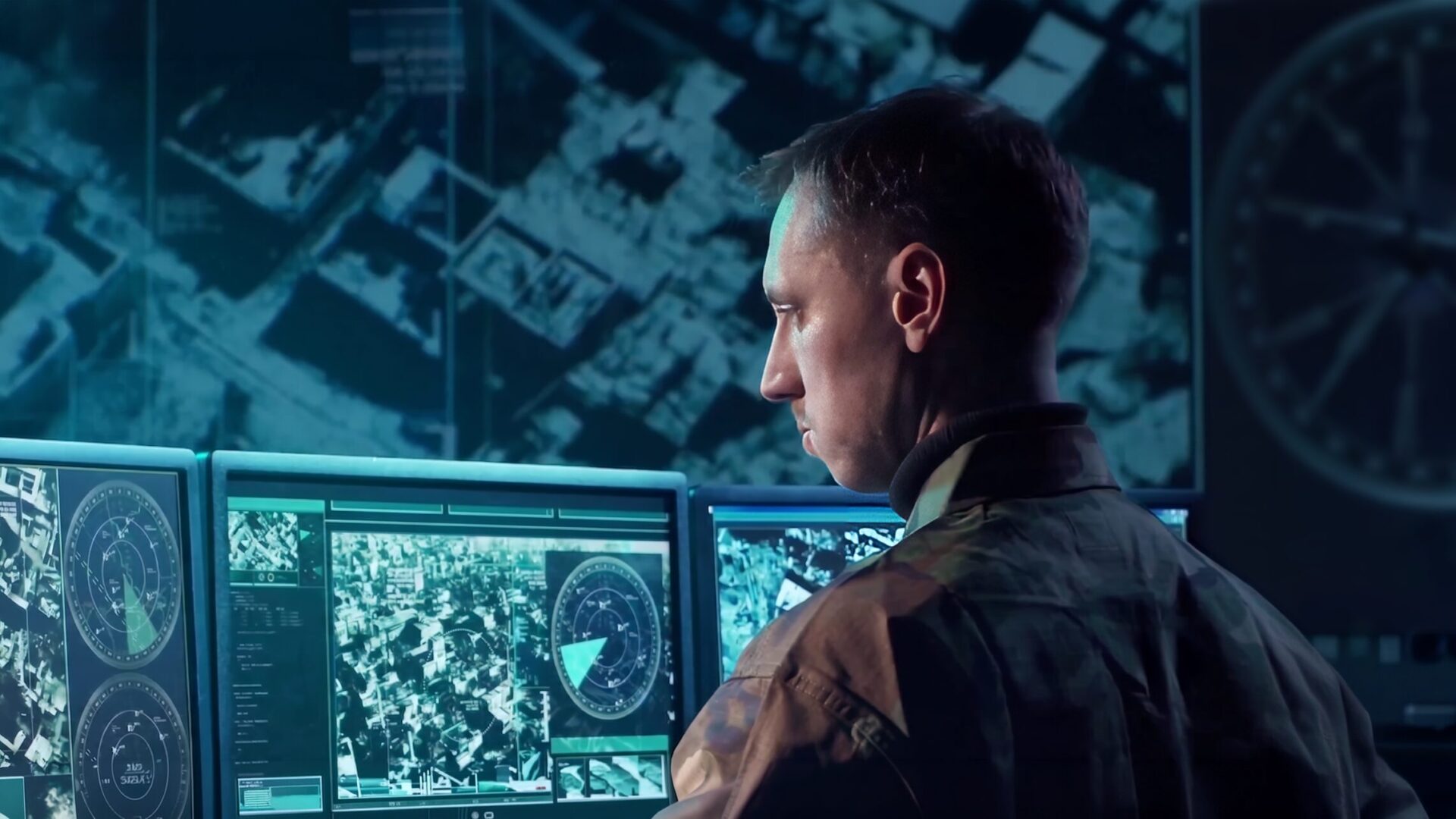
A tiny alert sits on a huge machine
A useful alert looks almost insultingly small compared with the apparatus behind it. The system must notice an abnormal cluster, identify the place and event, check whether different media support the same account, rank relevance for a particular customer and keep updating the story without laundering rumor into fact. Dataminr now describes its stack in layers: Multi-Modal Fusion AI for detection; ReGenAI for live briefs that rewrite as events develop; Intel Agents for added context; and predictive systems intended to describe what may happen next.
The 2025 agreement to acquire ThreatConnect for $290 million exposed the next bottleneck. External data can say that ransomware is spreading or a fire is near an industrial park. It cannot, by itself, know which servers are vulnerable, which plant is critical or what the interruption costs this customer. ThreatConnect brought internal threat and exposure data, prioritization and response automation. Dataminr for Cyber Defense, launched in March 2026, is the combined attempt to join outside foresight to inside consequence.
The price of being early
Dataminr sells enterprise subscriptions rather than a self-serve app. Public pricing is scarce. A 2022 UK government procurement sheet listed standard First Alert pricing from $20,000 a year, paid in advance, with discounts based on licenses, scope and duration. A Forrester study built around a composite customer modeled $267,950 in setup, training and license costs over three years. The other end of the scale is visible in the $318 million U.S. Department of War contract announced in August 2026, which extends First Alert access through 2031.
The number means nothing without the decision. Twenty thousand dollars is extravagant for a dashboard nobody watches. It is trivial if an alert prevents one facility closure, avoids sending an executive into danger or gives a disaster team enough time to position supplies. That is the business-model trick: Dataminr prices software against the expected cost of being late.
Investors have underwritten that bet lavishly. A $475 million round in 2021 valued Dataminr at $4.1 billion. In 2025, it added $85 million from NightDragon and HSBC, $100 million from Fortress affiliates and a later $300 million convertible financing led by Fortress and NightDragon. The company said annual recurring revenue was approaching $200 million in April 2025. A rich private valuation, a large stack of convertible capital and no fresh priced valuation make the precise current value less tidy than the old headline.
The hard reset came before the agents
In November 2023, Dataminr cut about 150 roles, or 20 percent of its workforce. Bailey's memo cited the economic environment, operating efficiency and rapid advances in the AI platform. That was the first public crack in the straight-up-and-right growth story. It also marked a choice: reduce the organization while pushing more resources toward generative and agentic AI.
The subsequent product cadence suggests management did not reverse that choice. ReGenAI arrived in 2024. Context agents and more financing followed in 2025. ThreatConnect added 170 employees and a substantial internal-data platform. By 2026, Dataminr was selling “autonomous real-time intelligence,” not merely alerts. The phrase is grand, but the change underneath is concrete: the company wants software to corroborate, contextualize and recommend, leaving less investigative assembly to the human operator.
Finance customers become the first buyers of public-data signals.
Newsrooms turn the same engine into a breaking-story radar.
UN and public-sector work widen the mission to humanitarian response.
A 20% workforce cut precedes a sharper AI product push.
ThreatConnect, cyber defense and First Alert Advanced add internal context and agents.
The uncomfortable side of the firehose
Dataminr's advantage and its most persistent criticism share a root. The platform can continuously inspect public activity at a scale no individual could match. That helps a newsroom spot an earthquake and a rescue agency understand a flood. Civil-liberties groups and investigative reports have also questioned its use by law enforcement to monitor protests and other protected activity. Public does not automatically mean harmless when observation is aggregated, filtered and delivered to authorities.
Dataminr has maintained that its products use public data for event detection, not surveillance. Buyers still inherit a governance job. They need defined purposes, data limits, audit trails, human review and rules against turning a safety alert into a dossier on people exercising lawful rights. The technology cannot settle that boundary. Procurement and operating policy have to do it.
Being first is worthless if the signal is wrong, irrelevant or delivered to a team with no plan.The operating test
What a reader can copy
The useful lesson is not “train 50 language models.” Start with a delay that already costs a customer money, safety or credibility. Find the observable signals that appear before the bad outcome becomes obvious. Compress them into one decision object. Deliver it inside the system where the customer already works. Then measure time to coordinated action, not data volume or dashboard visits.
Partnerships make that last step real. Dataminr uses Esri to add maps, Splunk and Microsoft to plug into security operations, AWS to simplify buying and Windward to carry alerts into maritime intelligence. The company is different from mass-notification vendors such as Everbridge because it emphasizes discovering the event; from cyber-intelligence firms such as Recorded Future because it spans physical and digital incidents; and from a homegrown OSINT desk because the models, source agreements and years of event history are difficult to reproduce.
When the model does not travel well
- The event leaves little public or digital trace, or connectivity collapses.
- The customer has no trained operator, escalation rule or response authority.
- A false positive is more damaging than a late alert and human verification is unavailable.
- Local law, platform rules or organizational policy prohibit the required collection or use.
- The buyer needs certainty about the future. Dataminr can surface and contextualize signals; it cannot abolish uncertainty.
Dataminr fits best in a mature operation where minutes have an owner. Its product can shorten the search, verification and coordination loop, but it cannot supply the institutional judgment waiting at the end. That is the least glamorous fact in the story and the most important one. The alert may arrive first. Someone still has to know what to do next.
Keep watching the signal
Explore the product, company updates, interviews and the public channels where Dataminr explains its work.