At 10:20 on a Sunday night in 2011, Dataminr sent an alert about reports that Osama bin Laden had been killed. News outlets would report the story twenty-three minutes later. The raw material behind the alert was almost comically small: nineteen tweets. On an internet already capable of producing a great deal of noise, Ted Bailey and his colleagues had found something worth interrupting someone for.
Bailey later explained the mechanics in a presentation. Message volume was one clue. A name that had been comparatively quiet was suddenly attracting attention. Language and emotional reactions supplied others. Nineteen messages, considered together, could say something that a lone message could not. The company was looking at how a story began to move before the rest of the world arrived.
There is a version of the technology business that likes its revelations to arrive wearing a lab coat. Bailey’s route ran through American Studies. He had been thinking about printing presses, radio and television before he started a company that would spend its working life trying to get ahead of the next bulletin. The distance between those subjects turns out to be shorter than it looks.
the alert
The American Studies department of artificial intelligence
Bailey graduated from Yale in 2004. His concentration concerned technology’s impact on society, a subject with the useful habit of refusing to stay in one department. A new means of communication can change commerce, government and ordinary expectations about how quickly a person ought to know something. The machines matter. So do the people waiting at the other end.
Before founding Dataminr, he worked in strategy and product roles in social media analytics, across public-sector organizations, government agencies and technology startups in New York. The sequence matters: his interest in information had both an academic life and a working life before it became the company he still leads.
In a reflection published in 2021, Bailey connected the founding idea to the information gaps of September 11. He returned to the problem of people needing an accurate account of an unfolding event while there was still time to respond. As platforms such as Twitter and YouTube gained adoption, people could broadcast what they were witnessing. Those public observations offered material for a different sort of information service.
Dataminr began in 2009 with Bailey, Sam Hendel and Jeff Kinsey. They were Yale alumni and former college roommates. Hendel studied economics; Kinsey, computer science. Bailey brought American Studies. It sounds like the beginning of an undergraduate argument that has become unexpectedly expensive.
Hendel has described the founding insight in terms of seeing Twitter as a dataset, with information relevant to his work in finance. The three backgrounds make the early company easier to understand. There was a mass of material to interpret, a potential customer who might pay for the interpretation, and a question about how a new medium changed what people could know.
Before the story had a search term
The early commercial audience included financial firms. An unexpected development could matter to a trader before it became common knowledge. Newsrooms had a related problem, with a different deadline and a different reason to care. In January 2014, Twitter and CNN announced a partnership with Dataminr to develop an alert system for journalists.
Twitter’s announcement described the gap between an eyewitness who wanted to be heard and a journalist who wanted to listen. More than 500 million tweets were being sent each day. An abundance of potential witnesses did not make every reporter omnipresent. It made finding the relevant witness a substantial job of its own.
Bailey offered a neatly awkward description of Dataminr for News: “a tool for when you don’t know what you’re looking for.” Search usually begins with some idea of the answer’s shape. The company was trying to notice something before a journalist knew which words to put into a search box.
“a tool for when you don’t know what you’re looking for.”
Ted Bailey, describing Dataminr for News in 2014
CNN helped refine the product as its alpha partner. That arrangement gave Bailey’s team contact with the practical habits of a newsroom, where useful information has to arrive in a form someone can investigate. A discovery tool still needed reporters to make calls, check accounts and work out what had actually happened. Being early only made those next steps more urgent.
For Bailey, the newsroom chapter put his original interest into a particularly legible setting. Communication technology changes who can speak first. A working product has to help someone decide whom to listen to. That requires attention to the first uncertain moments of a story, when its importance may be much less obvious than it will look later.
A report that refuses to sit still
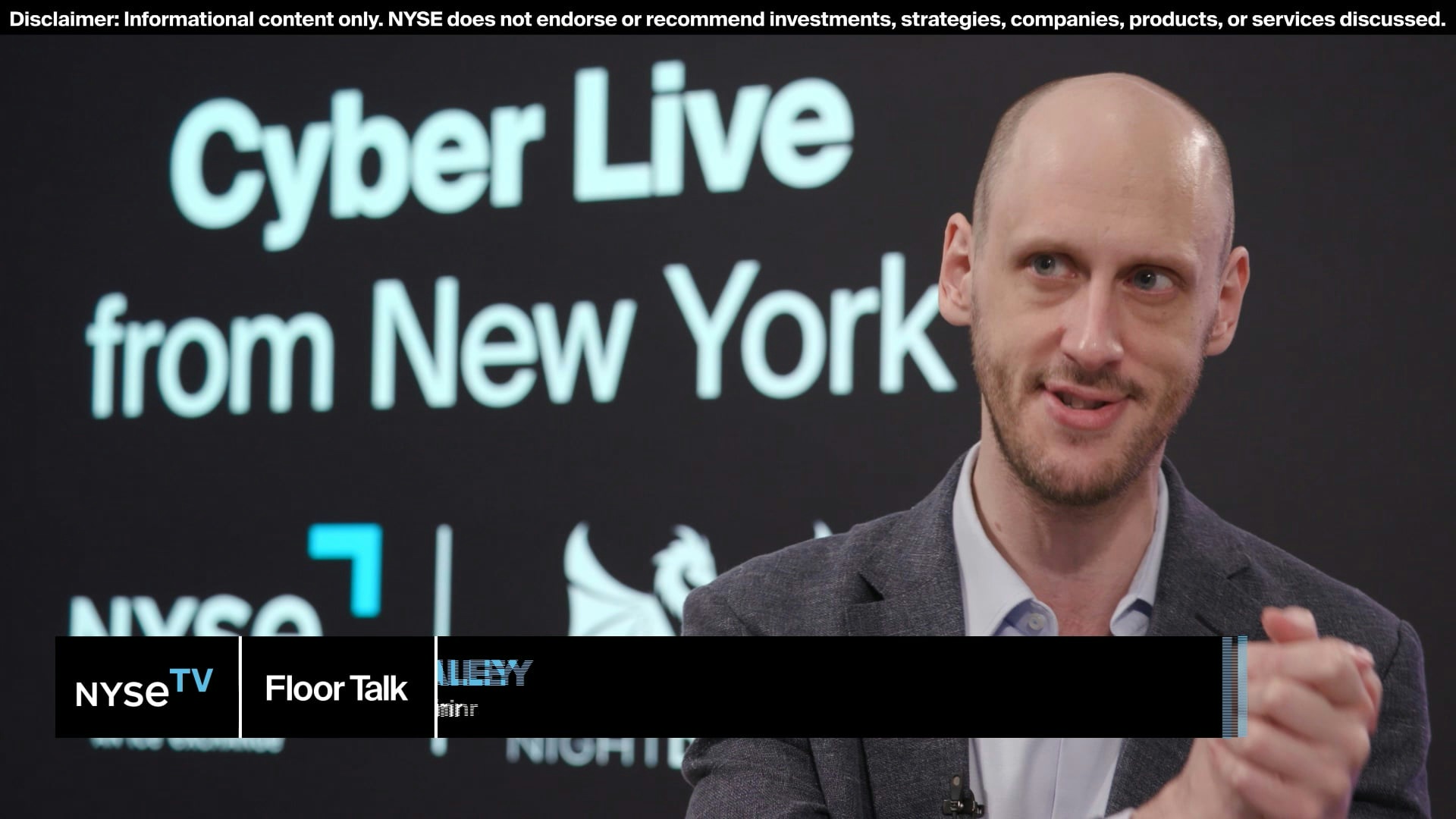
Bailey has continued to explain his work in public, including at Davos, the Aspen Ideas Festival and TechCrunch Disrupt. In May 2024, he joined Judy Khan Shaw on the New York Stock Exchange floor to discuss ReGenAI and the company’s future. In July, a conversation at MIT’s Imagination in Action explored the meeting of predictive and generative AI with growing public data.
Bailey’s work has earned recognition as a World Economic Forum Tech Pioneer, alongside places on Business Insider’s and Crain’s lists of younger business leaders. He has also appeared on CNBC, BBC News and Fox Business News. Those audiences span the territory his company has come to occupy: finance, technology and the business of finding out what is happening. For a founder whose academic interests concerned technology’s effects on industry and government, the range of conversations has a certain continuity. The subjects from college have acquired customers.
These appearances carry a recurring subject: the arrival of information keeps changing the job of understanding it. The first alert answers an immediate question about what has happened. A developing event then produces new facts, revisions and consequences. Anyone responsible for following it must keep assembling the picture.
Dataminr announced ReGenAI in April 2024 to produce event briefs that automatically update as developments emerge. The initial release for Pulse customers was scheduled for April 30. Instead of leaving someone to collect a succession of separate updates, the product would maintain a changing description of the event.
It was a recognizable extension of Bailey’s original concern. A person can receive an early warning and still spend valuable time discovering what has changed since it arrived. An account that keeps updating aims to reduce that second delay. The product’s usefulness depends on the same unfashionable requirement as the first alert: the information has to help someone do their job.
- 01Notice
Find the first public signals.
- 02Follow
Keep the account current.
- 03Relate
Explain the relevance to a customer.
What does this mean for us?
On October 21, 2025, Bailey announced an agreement to acquire ThreatConnect in a transaction valuing that company at $290 million. His accompanying essay described a plan to combine external public signals with internal client data. ThreatConnect brought an intelligence-management platform used to put threats in context and prioritize responses.
The ambition added a more particular question to the original one. A development somewhere in the world might be important, but its significance changes according to the organization receiving the alert. Internal knowledge can help connect the outside event to the customer’s own responsibilities. Bailey described AI agents working across those external and internal environments.
His stated vision extended beyond cybersecurity to physical and digital risks. It was a plan to make intelligence more responsive to the customer’s circumstances, rather than asking each customer to supply all the relevance after an alert appeared. That is an engineering challenge and a product challenge. It also sounds rather like the question an editor asks when deciding whether a story belongs on the front page.
The connection to the founding team remains visible. Kinsey is Dataminr’s co-founder and chief technology officer. Bailey remains founder, CEO and chairman of the board. Across changing product names and new markets, the former roommates have continued to work on the technical and commercial consequences of their original idea.
The next few minutes
By 2026, the applications had widened considerably. In August, Dataminr announced First Alert Advanced for defense and government organizations alongside a five-year, $318 million U.S. Department of War contract for First Alert. The new offering added automated corroboration, context, updating briefs and predictions about how an event might develop.
A September launch brought related capabilities to corporate security. Dataminr described systems that check emerging events, provide context and consider their possible near-term evolution. The change adds another responsibility to Bailey’s enterprise: helping people assess what may happen after the event that first attracted their attention.
Predictions introduce uncertainty of their own. A likely development remains a possibility, and the person receiving it still has a decision to make. The value of the product rests on how well it supports that decision. The progression from finding an event to anticipating its next chapter makes the original promise more demanding.
Bailey leads a company serving thousands of corporate, public-sector and news organizations in more than 100 countries. That scale is far removed from nineteen tweets on a Sunday evening. Yet the small early example remains a useful way to understand his career: he keeps returning to the moment when scattered observations begin to form a consequential picture.
The American Studies graduate has stayed with a question that existed long before the social web. How does news travel, and when does it reach the person who needs it? The technologies have changed around him. His working subject is still that interval, measured in minutes that somebody else might have a use for.
Keep following the signal
- In his own words / 2021Bailey on the origins of Dataminr and its growth financing ↗
- Watch / YouTubeBailey discusses Dataminr’s ReGenAI launch with NYSE ↗
- Watch / NYSE TVA conversation with Ted Bailey ↗
- The early alert / IJNetHow nineteen tweets became a news signal ↗
- The newsroom chapter / WiredFinding stories before they trend ↗
- In his own words / 2025Bailey’s plans for Dataminr and ThreatConnect ↗
- The latest / September 2026Dataminr Advanced for Corporate Security ↗