Eric Shapiro and Adam Fingerman had a perfectly reasonable idea. They would make software for the iPhone, and people would buy it. Some apps might fetch $100. Enterprise software might command several hundred. The two had worked in a world where software came with a respectable price tag. Then the App Store taught them an expensive lesson about cheap things.
- The pivot: build apps for companies whose customers expect a free download.
- The work: connect a useful interface to the systems, devices, and business rules behind it.
- The investment: most ArcTouch projects sit in its published $250,000-$1 million range.
- The lesson: choose a task people need to finish before choosing features they might admire.
The 99-cent education
In their 2019 retrospective, the founders described watching app prices fall toward 99 cents and free. Their original assumptions about paid downloads no longer supported the business they wanted. Games could produce hits, but games were outside their expertise. Shapiro had another useful memory: consulting on Java when that technology was new. Perhaps companies would pay for help with this new platform, too.
“We knew we couldn’t make sufficient revenue to build a business by selling 99 cent applications.”
Eric Shapiro · founder interview, 2019
ArcTouch changed the buyer. A company could give its app away because the app supported something else it sold. The download might help someone board a plane, buy clothing, or use a device. That was a different economic proposition. The software’s value could appear elsewhere in the business, comfortably out of sight of the App Store price.
The current company history dates ArcTouch to 2008. In the founders’ telling, the first engineers joining in February 2009 made it a functioning enterprise. Its earliest commercial insight remains an excellent question for anyone building a product: where does the value actually get collected?
An airline app has one very important day
Consider Hawaiian Airlines. When ArcTouch began working on its replacement mobile app in 2017, the old web-based app had one-star reviews. The airline could deliver hospitality in the air while its software made the trip feel disagreeable on the ground. An app is quite capable of undoing a brand promise before the customer reaches the gate.
The teams organized the 2019 release around the day of travel. Check in. Retrieve a boarding pass, including offline access through Apple Wallet. Receive flight and gate updates. Find the way through the airport. The home screen changed as the passenger moved through the journey. It was a sensible answer to a specific situation: a traveler needs different information before departure and after landing.
Check-in timing
Seat management
Next steps
ArcTouch reported iOS ratings of 3.5 and Android ratings of 4.0 in its May 2019 launch account. Those are historical results, with the useful modesty of numbers recorded at a particular moment. The technology choice was equally practical: Xamarin fit Hawaiian’s Microsoft environment and its developers’ experience. A platform has to survive the handover, not merely look attractive in a pitch.
The expensive part hides behind the screen
ArcTouch sells the work required to make those decisions and build the result. Its services run from product strategy and UX/UI design through apps, websites, back-end APIs, connected-device integrations, and testing. A client can hire a complete team or add specialists to an existing one. It occupies the digital product studio end of the services market, where software engineering and customer experience share the same brief.
For a useful contemporary example, look at SKIMS. ArcTouch built iOS and Android apps and the middleware connecting more than a dozen services. Commerce, editorial content, loyalty, search, and recommendations had to cooperate. The customer sees a product and a purchase button. The engineering team sees a collection of systems that must agree about what happens when the button is pressed.
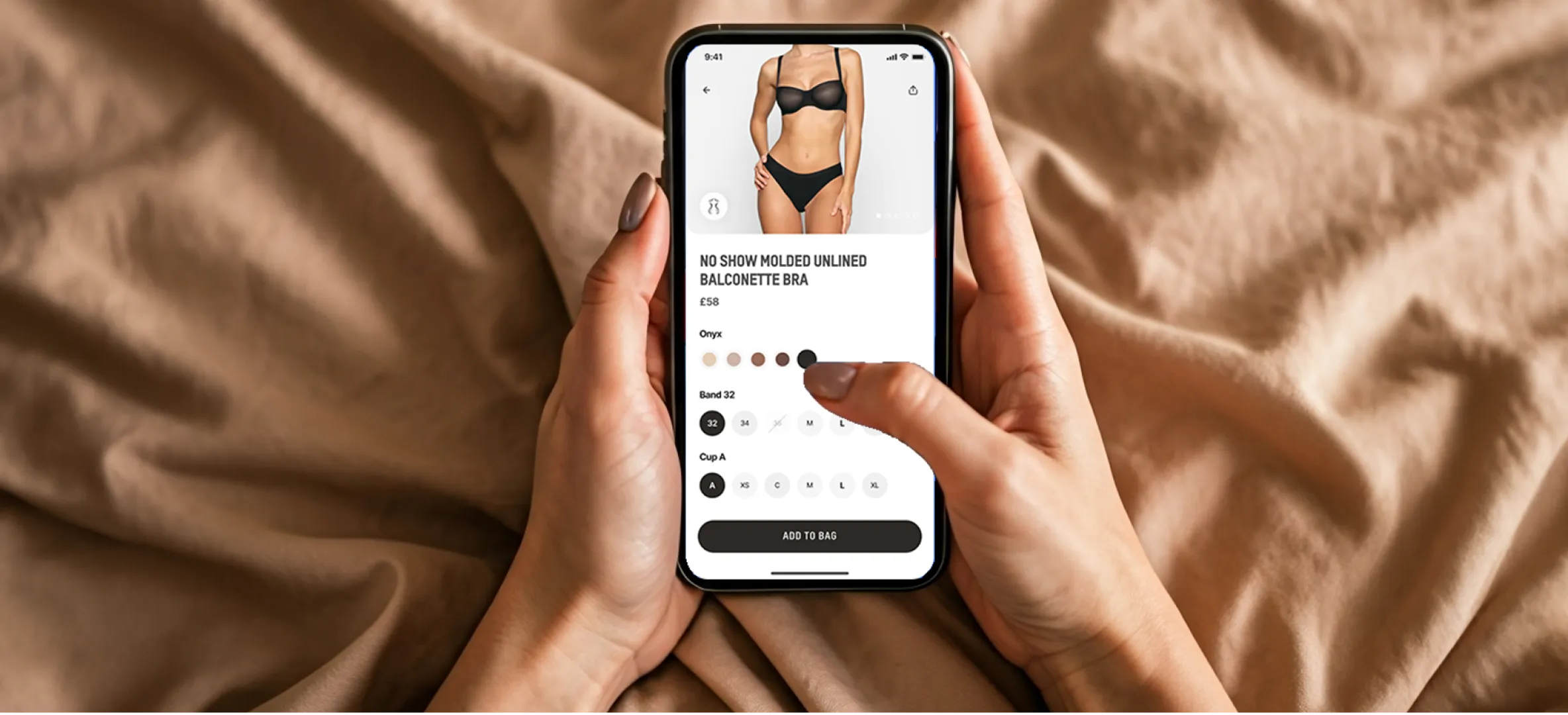
Its Shopify partnership announcement in April 2026 makes the market position clearer. Shopify supplies a commerce backbone; ArcTouch builds tailored experiences and integrations around it. If a standard storefront meets your needs, bespoke engineering may be a lavish answer to a small question. If loyalty, content, native apps, and internal systems must behave together, the integration work becomes the point.
Preliminary design and development ranges for a first release. Scope and dependencies determine the estimate.
ArcTouch publishes those ranges as a starting point. It offers discovery as a fixed-fee engagement to turn an idea into a plan. The budget implications are straightforward: legacy APIs, offline behavior, permissions, compliance, and hardware communication consume real effort. A feature list becomes a more honest estimate once somebody has inspected what each feature depends on.
Brazil was in the first draft
There is a familiar way to tell a Silicon Valley company’s origin story: the founders start locally, then discover a cheaper place to hire. ArcTouch’s account follows a different sequence. Its first engineers were in Florianópolis, Brazil. Paulo Michels and Gustavo Chaurais had worked with the founders previously. The relationship preceded the company.
That early team collaborated over Skype on proof-of-concept apps. Mobile expertise was scarce; the iPhone had only recently opened to outside developers. ArcTouch’s answer was to recruit strong engineers and train them. Its Brazil operation was a permanent team, and the office grew into a substantial part of the business.
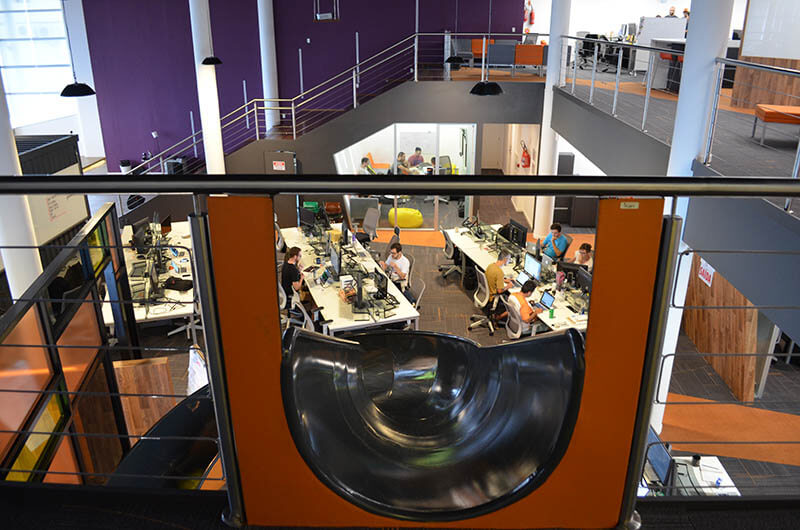
Grey acquired ArcTouch in January 2016. WPP’s announcement recorded 97 employees and approximately $14 million in 2015 gross revenue. Today the company identifies itself as an AKQA studio and reports more than 350 professionals. Its stated values include ownership, collaboration, and inclusivity. For a buyer, the practical question underneath the culture language is whether knowledge stays with the team long enough to maintain the product.
The customer has to finish the journey
ArcTouch uses the phrase “minimum lovable product.” It can sound like the language of a design workshop with very good catering. The useful argument underneath it is about repeat utility: a first release should do something worth returning to. Its McCormick example is nicely concrete. Flavor Maker could recognize the front of a spice bottle as well as scan its barcode, accommodating how people actually look at their cupboards.
Accessibility makes that attention to behavior more consequential. In its 2025 research, ArcTouch assessed 50 popular apps across five industries using four assistive technologies. It found that 72% of the evaluated journeys contained barriers producing poor or failing experiences. The finding concerns that sample and its assessment, not every app in existence.
Journeys rated poor or failing for accessibility in ArcTouch’s 50-app study.
A checkout can have several accessible screens and still block a screen reader user at the last step. Testing the entire task exposes what a collection of screenshots conceals. This is one of the easiest lessons to borrow: observe someone completing the thing your business needs them to complete, using the tools they rely on.
Arcadia, introduced in June 2026, extends that thinking into the building process. The reusable design system foundation includes semantic tokens, component documentation, and accessibility guidance. ArcTouch provides it to clients at no additional cost. Reusing those foundations lets a custom project concentrate effort on the interactions that actually distinguish the business.
Sometimes success means closing the app
Lightship provides a pleasing correction to the assumption that more engagement always means better software. ArcTouch’s app for the electric RV was designed to help people control the cabin quickly, then return to the outdoors. Its dedicated Android tablet handled functions including lighting, climate, and canopy controls. The team chose MQTT while working with Lightship’s firmware engineers on responsiveness and operation away from public networks.
Here, a successful session might be a very short one. The owner wants comfortable lighting and a view of the campsite. Minutes spent tapping through menus would be an odd victory. The appropriate metric follows the customer’s purpose, even when that purpose involves putting the screen down.
ArcTouch is now applying AI to its own delivery process. In March 2026 it described producing a working reservation-app proof of concept by the third day of a discovery workshop and testing it with users before the workshop ended. That is a report about faster validation, with the company itself making the claim. A prototype still leaves production integrations, testing, and operational readiness to resolve.
The recommendation for buyers is consequently quite ordinary, and useful. Define the journey. Test it early. Inspect the systems it must touch. Choose a team and technology that can keep it working. Those habits require access to real users and decision-makers, plus willingness to narrow a first release. Faster tools cannot manufacture that agreement. ArcTouch’s founders learned to change who paid for the app; its client work keeps asking what makes the app worth paying to build.
Go a little further
Explore ArcTouch, its SKIMS work, project budgets, and latest writing. Watch the Lightship app walk-through or browse its YouTube channel.