The map looked fine until someone moved it. In ShiftPass, a marketplace connecting restaurants with nearby workers, panning across the city made job markers blink. Each refresh persuaded the map that it had received a different set of jobs. A feature that behaved in a still screenshot became distracting under a moving finger.
AppMakers USA describes fixing that problem with four coordinated changes, including preserving data during refreshes and checking job identities before redrawing markers. It is an unusually useful detail in a business where agencies often introduce themselves with a parade of famous logos. Here is something a buyer can examine: a specific failure, an explanation and a repair.
That is the revealing way into this Los Angeles development company. Founded in 2014 and led by Daniel Haiem, AppMakers builds mobile applications, websites and custom software for other businesses. Its work spans classroom games, staffing marketplaces and internal operations. The portfolio is broad. The common problem is narrower: making software behave when actual people start using it.
A calculator meets the school district
Haiem’s account of ClassCalc offers a clue to his approach. The idea was a free calculator app that teachers could control during exams, allowing students to use phones in place of physical graphing calculators. The difficult part extended beyond making the calculations work.
In an August 2025 interview with Digital IT News, he recalled arriving at a school-district meeting expecting to pitch software and discovering the weight of an established calculator industry and educational bureaucracy. The experience redirected his attention toward the people and institutions whose trust a product needs. “ClassCalc was the real crucible,” he said.
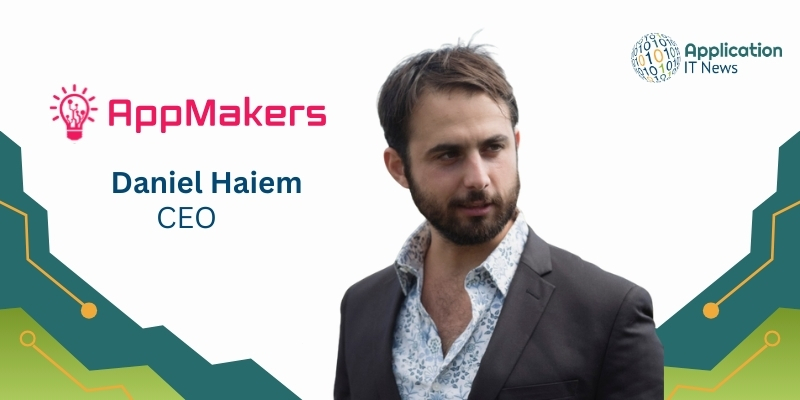
That helps explain why AppMakers sells product planning alongside programming. A founder may arrive asking for a feature; the commercial question is whether anybody will use it. Haiem describes a leadership style built around direct involvement, empathy and challenging initial assumptions. Those are his stated principles, and the case studies provide the more concrete test of how they translate into work.
The $5,000 starting line
AppMakers’ homepage advertises app and web design from $5,000, with an average two-week schedule. That buys the planning and visual stage described there: wireframes, interface work and clickable prototypes. A founder should resist mentally turning that number into a finished product.
The mobile-development service has separate published ranges. An informational app is listed at $10,000-$25,000; a cross-platform build at $25,000-$60,000; e-commerce at $40,000-$100,000. AI, connected hardware and similar integrations start at $65,000. Timelines range from weeks to months. These are the company’s indicative figures, with a final scope determining the price.
Company-published ranges. Bars show upper endpoints, not project averages. Design and complete development are separate scopes.
There is also evidence of smaller, bounded engagements. In a Clutch review, a financial analyst at EDF Capital reported spending less than $10,000 on an October-November 2025 project. The described deliverables included a sitemap, wireframes, a content model, plugin recommendations and an implementation checklist. It illustrates a useful purchasing option: pay to turn uncertainty into a buildable plan.
The company positions mobile projects as fixed-price, fixed-scope engagements, with ongoing maintenance available afterward. The practical bargain depends on both halves staying connected. Add requirements and the original number stops describing the same job. Buyers can copy the discipline by specifying acceptance criteria, separating launch essentials from later features and asking exactly what support follows delivery.
When the classroom got crowded
Number Hive makes the post-launch work visible. Created by former teacher Chris Hogbin, the math game turns practice into competition on a shared board. AppMakers’ case study reports that it reached more than 700,000 students worldwide, attributing the figure to Number Hive. The company built mobile and web versions and continued working as adoption grew.
Then expansion exposed an architectural mistake. According to the agency, a system that worked on one server began sending game events across unrelated matches when the backend spread across multiple servers. More capacity had uncovered a problem in deciding who should receive each event. Imagine your opponent making a move in somebody else’s game.
The engineers restricted events using game and session identifiers, then added checks on each player’s device to reject messages belonging elsewhere. The case study also describes the product consolidating around browser access as classroom use grew. Its lesson for a buyer is specific: test the behavior that additional users will stress, including whether sessions remain separate. A successful launch does not settle that question.
Simplified from the company’s engineering account.
The payroll is hiding in the plumbing
For Chen Plumbing, the product has fewer classroom fireworks. AppMakers built a field application for recording job costs, materials and restocking, paired with an office console. The case study describes a family business moving work out of manual lookups and memory. Technicians needed screens they could use between jobs; the office needed numbers it could reconcile.
The interesting decision sits below those screens. Rather than maintain a weekly payroll total that could drift away from corrected job records, the system recalculates pay from the underlying entries. Completed invoices are locked, and manual adjustments remain distinct from the calculated amounts. A number can be traced back to the work that produced it.
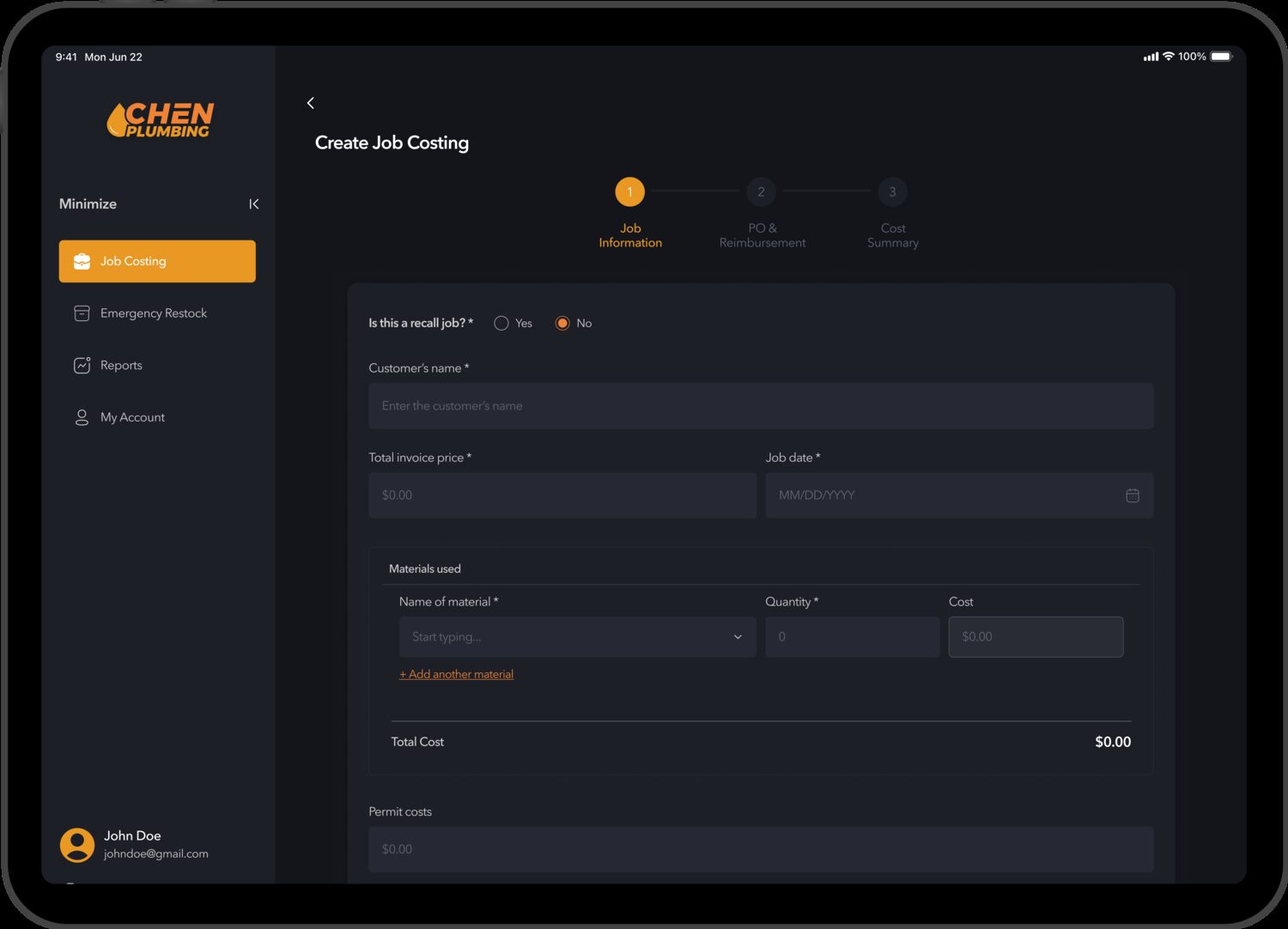
There was a less glamorous compatibility problem, too: some technicians kept using older app versions. When jobs gained support for multiple purchase orders and reimbursements, AppMakers added an interface layer that translated newer records into a shape older versions could still read. The reader’s takeaway is wonderfully ordinary: customers and employees will not all install an update because the development team would like them to.
One codebase still has three sets of manners
Cross-platform development is a central part of the pitch. AppMakers offers React Native and Flutter alongside native iOS and Android work. For a customer trying to reach several device types, shared code can reduce duplicated development and maintenance. The details decide how much sharing is practical.
ASL Flurry gives that proposition a concrete form. The American Sign Language learning product runs across iOS, Android and the web, using React Native Web for shared interface and application logic. The agency describes a relationship lasting more than two years, with continuing modules and features rather than a single handoff.
Even here, platforms demanded individual attention. On Android, opening the keyboard pushed lesson video out of view; the team changed the layout behavior so the answer field and video could coexist. Multiplayer required recovery logic when students reconnected over uneven networks. Shared code supplied a foundation. Testing the way learners actually moved between screens supplied the rest.
The crashing video that changed the advice
Brain-Body Therapy brought AppMakers an inherited app with a particularly inconvenient flaw: its guided videos crashed during sessions. The company’s account describes initialization problems, playback failures and state getting out of step when screens reloaded. The assignment required preserving much of the existing experience while stabilizing the engineering underneath.
The team reproduced the failures, tightened control of the video player’s lifecycle and added safeguards around errors and screen changes. Only after playback held did it proceed with the redesigned experience. This sequence matters to anyone paying for a rescue: a new interface cannot compensate for the function users depend on failing halfway through.
“Question React Native for anything media-heavy”
AppMakers USA’s published lesson from the Brain-Body Therapy rescue
The agency says the job changed its advice about selecting React Native when video is central. That is a useful limit on its cross-platform sales pitch. Buyers with demanding media requirements should budget for player stability and examine platform choice early. The lesson is tied to this build, rather than proof that one framework fails every video product.
AI creates work on both sides of the counter
AppMakers now sells AI features and AI-assisted development alongside a service called Fix Your App. The latter addresses broken builds from several origins, including AI tools, previous development teams and accumulated legacy problems. Its advertised sequence starts with an audit, followed by priorities, repair, documentation and optional support. Rescue is a service line in its own right.
Its AI offering includes chatbots, agents, model evaluation and data integration. The company also says it owns and operates Echo Journal, an AI voice-journaling app. There, it describes reserving more expensive models for selected analysis while using cheaper models for initial processing. That is a practical operating choice: a useful feature also needs an affordable cost per use.
The market position is a development partner for customers who need several skills coordinated around a specific product. A small prototype may suit a freelancer or low-code tool; a company expecting continuous product development may prefer its own team. AppMakers earns consideration where planning, design, engineering and maintenance need to travel together. Its most persuasive material is the work that tests that claim: the map that stays still, the match that stays separate and the payroll that can be explained on Monday.
Open the work
Explore AppMakers USA, its portfolio and blog. Read the Daniel Haiem interview or browse client reviews.
Try Number Hive and ASL Flurry. Follow the company on LinkedIn, X, Instagram and Facebook.