Coco Shellim wanted to read bedtime stories to her nieces and nephews. She was living overseas; they were in the United States. Voice recordings worked, but she imagined something more inviting: an app that could let families share familiar voices across the distance. She understood the experience she wanted. The obstacle arrived with a price tag.
- Thunkable lets non-programmers build native mobile apps.
- Visual blocks and AI prompts put product decisions in the creator’s hands.
- Students, founders and business teams use the same underlying idea.
- Testing, subscriptions and app-store requirements remain part of the job.
The quote that changed the job
According to Thunkable’s account of her experience, the lowest development estimate Shellim received was $65,000. Delivery would take six months or longer. For a bootstrapped designer, that meant postponing the idea or finding another way to make it.
She chose Thunkable and built Sound AiSleep herself. External APIs supplied essential services; the platform supplied the interface and app logic. She still spent hours testing workflows and debugging, with help from support. The $65,000 was a quote she avoided, not a complete accounting of what her finished app cost.
“without knowing any code or paying the high upfront costs of traditional development.”Coco Shellim, describing what Thunkable made possible
The interesting change was control. A usability problem no longer had to become a brief, an estimate and a wait. Shellim could open the builder and fix it. The designer had acquired a second job, but also the means to do it.
An idea that escaped the classroom
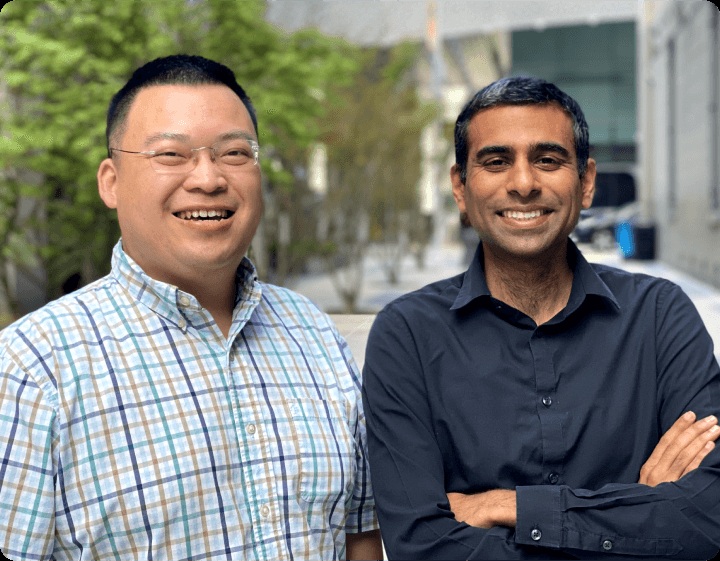
Thunkable’s founders, Arun Saigal and WeiHua Li, had worked together on MIT App Inventor. That project made programming approachable through visual assembly. Instead of learning the punctuation of a language before doing anything useful, a beginner could connect blocks and watch a phone respond.
The commercial opportunity emerged when demand stretched beyond what an academic project could support. Y Combinator’s 2016 introduction described the decision to commercialize the technology and add features. YC lists the company’s founding year as 2015; Thunkable dates its platform launch to 2016. Those dates describe different beginnings.
Education remained part of the business. In April 2022, Thunkable announced a $30 million Series B led by Owl Ventures, an education-focused investor. The stated agenda included enterprise capabilities, certification and integrations. Diplo joined the round too: a musician backing a company that made another kind of composition accessible.

The phone is the point
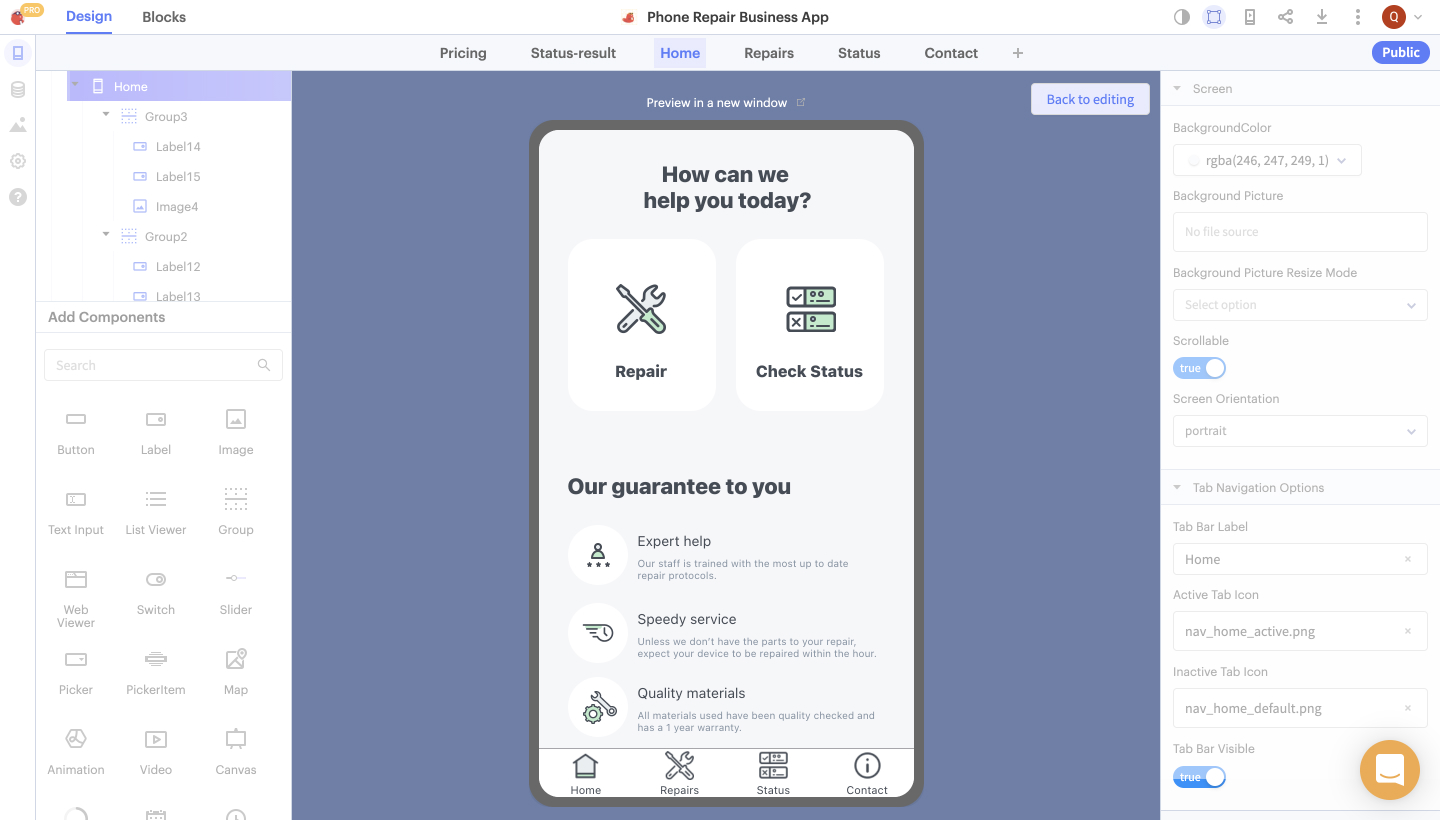
Thunkable sells a development platform rather than bespoke software projects. Its traditional workflow combines screen design with blocks that specify behavior: when a button is tapped, retrieve information; when a value changes, update the display. This is programming expressed through arrangements a newcomer can inspect.
The output matters. Creators can publish native iOS and Android apps, with mobile web support. They can build booking tools, learning aids, customer experiences or internal workflows. The documented block builder connects to Google Sheets and Airtable; local tables can support offline data. Bluetooth Low Energy components allow communication with compatible devices.
That does not make every capability equally effortless. The BLE documentation, for instance, says iOS testing requires downloading the app rather than using Thunkable Live. A convincing preview is only one stage of proving a product works.
Native publishing also belongs to competitors. Adalo offers it; FlutterFlow combines visual development with code export. Thunkable’s appeal rests on how it packages visual logic, device testing and publishing for people who would otherwise need to hire those skills.
From blocks to a conversation
In June 2025, Accelerator introduced an AI Template Generator. In March 2026, Thunkable AI moved the front door further toward plain language. Describe an app, inspect the generated project, then refine it. The company’s launch announcement reported more than 12 million apps built on its original platform. That is a creation count, not a count of thriving businesses.
- 01DescribeState the job
- 02RefinePrompts or blocks
- 03TestUse a real phone
- 04PublishSubmit for review
The October 2026 product explanation describes Discuss Mode for ongoing changes, version history for reversals and an AI Debugger for problems. Manual block and code editing remain available. AI actions consume tokens; manual edits do not. That gives builders a practical reason to learn the machinery beneath the conversation.
My reading of this progression is that Thunkable keeps reducing the effort required to start, while leaving the creator responsible for the result. A prompt can propose a workflow. Someone still has to decide whether it serves the person using it.
The subscription is the beginning
As checked in October 2026, Builder costs $59 monthly or $37 per month billed annually, equivalent to $444 upfront for a year. It includes one live published app. Advanced allows unlimited live published apps and costs more. Free access lets a curious beginner experiment with public projects.
Platform and store charges only. External services, taxes and your time add to the bill.
Store fees sit outside the subscription. Publishing still involves review; Android requires uploading a downloaded app bundle. And the pricing FAQ says most published apps become unavailable when a subscription expires, with exceptions for legacy plans. Buyers should budget for operation, not merely launch.
For a project requiring a particular unsupported integration or independent control over source code, test those requirements before committing. The sensible comparison includes the cost of leaving a platform as well as entering it.
A classroom full of product managers
A summer 2026 West Virginia pilot offers another view of the customer. The Rockefeller Foundation’s announcement describes approximately 120 high-school students building an estimated 80 apps. Projects addressed school schedules, wellness and other familiar concerns. Thunkable reported that 44% of participants became more interested in starting businesses. Interest is encouraging; it is not a business outcome.
The method worth copying is modest: choose a problem you know, build its smallest useful workflow and try it on a phone. Test the difficult integration early. Let an intended user get confused. Then change the app. Shellim’s experience suggests that the ability to make those changes yourself may be the most useful thing Thunkable sells.