microsoft-teams
(31)
Avoira makes the office talk to the factory floor
From two-way radios to AI call analysis, Avoira sells the connections that keep organisations working. Its most revealing projects begin with a broken meeting room, an awkward phone call or a system people have outgrown.

FLR Spectron makes the office work, one connection at a time
From dropped restaurant calls to meetings that need an IT chaperone, FLR Spectron tackles the everyday friction of business technology. Its expanding brief now includes the data and people behind AI adoption.
Tikit turns “just a quick question” into a ticket
Cireson’s service desk puts structure inside Microsoft Teams. Its customer stories reveal why the hard part of IT support is often getting the request into the system at all.

Summize wants your contracts out of the inbox queue
The Manchester company puts contract work inside Word, Slack and Teams. Its customers reveal why the real breakthrough often starts before anyone switches on the AI.
Charterhouse Is the Plumbing Behind Britain’s Hybrid Office
The London technology group has spent three decades turning phones, networks, meeting rooms and security into one managed service. Its most persuasive product is not a box or an app - it is having one number to call when the whole stack misbehaves.

LoopUp Bet Its Future on the Least Glamorous Part of Microsoft Teams
The conference-call company watched Teams swallow its old market, then rebuilt itself around the stubbornly local business of global phone service. The result is a useful lesson in choosing the complicated problem your platform partner cannot solve alone.

The Meeting Ends. tl;dv Starts Working.
The German meeting assistant grew up: it now turns calls into CRM updates, follow-ups, clips, and answers across an entire meeting archive. The convenience is real, but so is the homework for teams trusting it with the company memory.
How SkyLink Cut Corporate Booking to 99 Seconds - and Sold the Interface to Amadeus
SkyLink did not rip out the corporate travel stack. It put a chat window on top of it, taught travelers to choose from three useful options, and turned a 15-minute chore into a 99-second exchange before Amadeus bought the company.
The Cincinnati Company Betting That Your Employee Newsletter Should Read Like a Feed, Not a Blast
Cerkl Broadcast turns the corporate all-staff email into a personalized feed - one AI-curated digest per employee. Here's how a self-taught coder from Cincinnati built it, who's buying it, and where the whole bet could break.
Threado
A community-management dashboard that turned itself into a support AI - how two ex-Zomato builders taught software to answer the questions people keep asking.
Tettra
The Boston startup turned the most annoying part of Slack - answering the same question twice - into a business, then sold it to a company that wanted the whole workplace.

Social Intents
Social Intents is the leading AI customer support platform that helps businesses provide great customer service right from collaboration tools you already use. AI chatbots handle 75% of questions automatically while your team handles the important conversations.

Social Intents Answers Your Customers From Inside Slack
A two-person, bootstrapped company in Atlanta built live chat that lives inside Microsoft Teams, Slack and Google Chat - and now lets ChatGPT, Claude and Gemini field most of the questions before a human ever looks.

Social Intents Runs Live Chat From Inside Slack and Teams
The bootstrapped live chat company skips the separate support dashboard entirely - routing website chats, WhatsApp and SMS into Microsoft Teams, Slack and Google Chat, for a flat $39 a month with unlimited agents.

Live Chat Software Can't Agree Where Your Chats Should Live
Userlike, LiveHelpNow, Social Intents and Rocket.Chat all put a chat box on your website. The interesting part is what happens to the conversation after a visitor hits send.

ComputerTalk Never Got Bought, Its Founder Conducts Mahler
For nearly 40 years the Markham software company has built its ice Contact Center entirely in-house, turned down every acquisition offer, and outlasted rivals like Cisco, Five9 and Genesys. Its founder, Mandle Cheung, runs it while personally funding a 100-piece orchestra so he can conduct Mahler.

ComputerTalk
Contact Center with AI for Modern Customer Experiences

The Support Ticket Is Dying and Slack Is Holding the Knife
A new class of B2B support tools - Plain, Front, TeamSupport - is betting customers never wanted a help desk. They wanted an answer in the channel they were already in, and the old guard from BMC to USU is scrambling to catch up.
Smarten Spaces
Smarten Spaces is a Singapore-founded proptech company that builds AI, IoT and big-data software for managing hybrid workplaces and commercial real estate. Its flagship platform - marketed as Jumpree and, more recently, SpaceOnAI - lets enterprises book desks and meeting rooms on 3D floor maps, forecast space demand, roster teams, and analyze how offices are actually used. Founded in 2017 by former Cisco India president Dinesh Malkani, the company serves Fortune 500 clients across 30+ countries and integrates deeply with Microsoft Teams.
Huddly
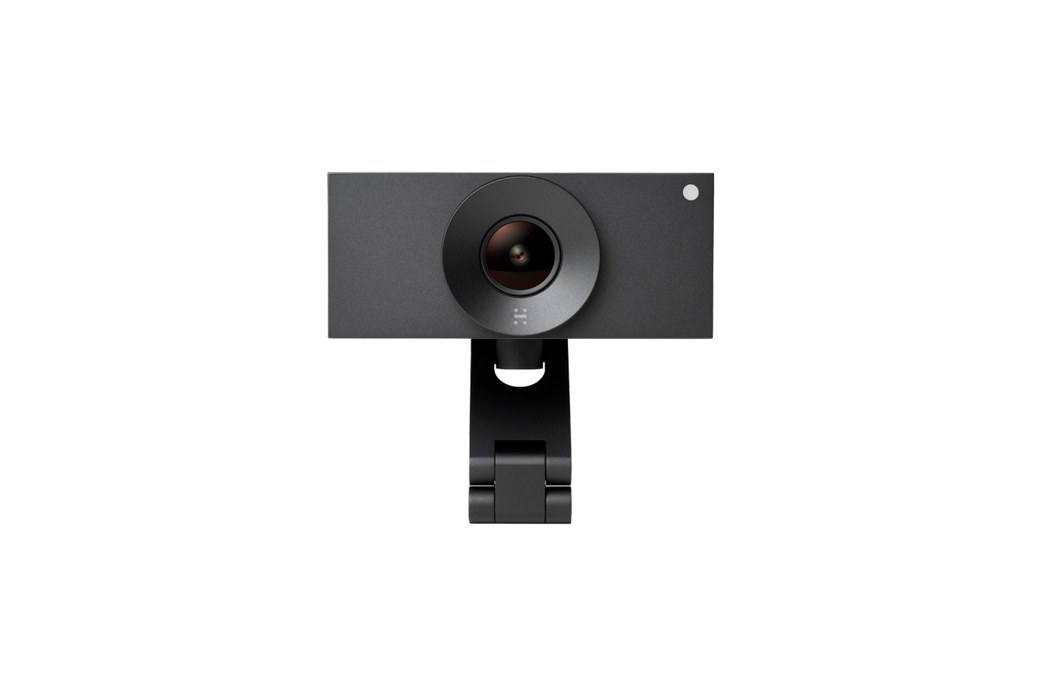
Huddly is an Oslo-based company that builds AI-powered conference cameras for hybrid meeting rooms. By running computer-vision neural networks directly on the camera (edge AI), Huddly devices automatically frame speakers, switch angles like a TV director, and improve over time through software updates. Its products work with Microsoft Teams, Zoom and Google Meet, and range from the single wide-angle IQ to the L1 and S1 and the multi-camera Huddly Crew system marketed as the world's first AI director. Founded in 2013, Huddly listed on Euronext Growth Oslo in December 2023.
Recall.ai
Recall.ai is a San Francisco developer-infrastructure company that sells a universal API for capturing meetings. Instead of building brittle bots for Zoom, Google Meet, Microsoft Teams, Webex, Slack Huddles and in-person calls, developers make a single API call and get back recordings, transcripts, and rich participant metadata. Founded by University of Waterloo dropouts David Gu and Amanda, the company pivoted from a consumer meeting app into the plumbing beneath a wave of AI notetakers and sales tools, and now powers thousands of companies. Recall.ai is Y Combinator-backed and raised a $38M Series B at a reported ~$250M valuation in September 2025.

Langfinity
Langfinity (formerly Byrdhouse) is a San Francisco AI company building a real-time voice and text translation platform for global teams. Founded by ex-interpreters Snow Huo and Jacob Greenway, it delivers industry-specific live interpretation across 100+ languages, plugging into video calls and Microsoft Teams so multilingual meetings, sales calls, safety briefings, and training sessions can happen without swapping tools or hiring a human interpreter.

Pinnacle - AI Coaching
Pinnacle is a New York-based HR-tech startup building scalable AI coaching that lives inside the tools employees already use. Its AI coach, Pascal, embeds in Slack, Microsoft Teams, and video meetings to give managers and employees personalized, real-time guidance drawn from their actual work context - performance reviews, 360 feedback, company competency frameworks, and day-to-day communication patterns. Founded by former accelerator CEO and executive coach Alexei Dunaway, Pinnacle raised a $2.5M seed round in March 2025 to bring executive-grade coaching to every employee, not just the C-suite.

Alexei Dunaway
Alexei Dunaway is the founder and CEO of Pinnacle, a New York and Palo Alto based startup building Pascal, an AI performance and career coach that lives inside Slack, Teams, and Zoom. A Stanford GSB graduate and Fulbright Scholar, he spent five years building an entrepreneur accelerator in Kenya before running an executive coaching practice for venture-backed founders. He now wants to give every worker the kind of coaching that used to be reserved for the C-suite. Pinnacle raised a $2.5M seed round in March 2025 led by eLab Ventures.

Fireflies.ai
Fireflies.ai is a San Francisco-based AI meeting assistant that joins video and phone calls across Zoom, Google Meet and Microsoft Teams to record, transcribe, summarize and analyze conversations. Its bot captures speaker-labeled notes and action items, its AskFred assistant answers questions about past meetings, and its Perplexity-powered Live Assist offers real-time web answers during calls. Founded in 2016 by Krish Ramineni and Sam Udotong, the company reached a $1 billion valuation in 2025 while staying profitable and is used by teams across more than a million organizations.

Mio
Mio is an Austin, Texas company that makes enterprise chat platforms talk to each other. Instead of forcing a whole organization onto a single tool, Mio sits in the middle and federates the public APIs of Microsoft Teams, Slack, Google Chat, Zoom Team Chat and Cisco Webex so a message typed in one app lands natively in another. Founded in 2015 by Tom Hadfield and James Cundle and backed by Y Combinator, Khosla Ventures, Zoom and Cisco, Mio turns the messy reality of multi-platform companies (and the partners they work with) into a single, interoperable conversation.

Tom Hadfield
Tom Hadfield is the British entrepreneur and CEO of Mio, an Austin-based company that makes enterprise chat tools like Microsoft Teams, Slack and Google Chat talk to each other. He is the kid who built Soccernet with his dad at 12 and sold it to ESPN for $40 million at 17, attended Harvard, ran a biotech, then went through Y Combinator to attack the problem of messaging interoperability with backing from Khosla Ventures, Cisco and Zoom.
Pylon
Pylon is the AI-native customer support platform built specifically for B2B companies. It unifies tickets across Slack Connect, Microsoft Teams, Discord, email, and in-app chat into a single inbox, automates routine work with AI agents, and surfaces account-level intelligence for post-sales teams. Backed by a16z, Bain Capital Ventures, General Catalyst, and Y Combinator.

PanTerra Networks
PanTerra Networks is a San Jose-based UCaaS provider that bundles voice, video, messaging, file sharing and an AI contact center into one cloud platform called Streams.AI. Founded in 2001 by Silicon Valley engineer Arthur Chang, the company sells to mid-market businesses that want one vendor instead of five, and points to a 99.999% uptime record and HIPAA-compliant SmartBox file sharing as its main differentiators.

Mike Promotico
Mike Promotico is the President and CEO of ProTelesis Corporation, a San Diego-based managed IT services provider he has helped build into a West Coast powerhouse over 37+ years in telecommunications. Starting as a principal at INet Corp in 1987 and helping grow it into one of North America's largest Mitel resellers, Promotico has spent three decades bridging the gap between traditional telecom and modern IT - co-founding Technology Assurance Group, leading Standard Tel Networks, and ultimately guiding ProTelesis through eight strategic acquisitions including the 2025 cyber-physical convergence play with Amer-X Security. Under his leadership, ProTelesis manages over 100,000 endpoints for more than 10,000 customers across the U.S.