Founder Profile / AI & The Future of Work
Alexei
Alexei
Dunaway
He coached founders one at a time, then decided to clone himself with AI. Now Pinnacle wants every worker to have a coach who never sleeps.
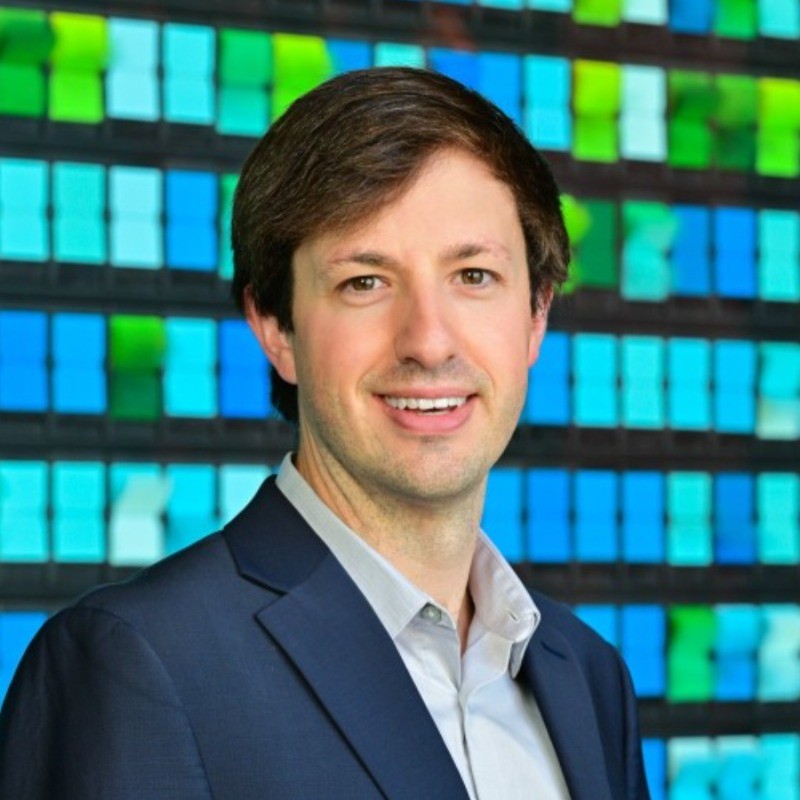
He coached founders one at a time, then decided to clone himself with AI. Now Pinnacle wants every worker to have a coach who never sleeps.
Pascal is an AI coach that does not wait for a quarterly review. It lives inside Slack, Teams, and Zoom, and it speaks up in the small moments that usually go uncoached - the 1:1 you are dreading, the conflict you are avoiding, the feedback you do not know how to phrase. Text or voice, day or night. This is the product Alexei Dunaway built, and the company is Pinnacle.
For most of corporate history, coaching has been a luxury good. A senior leader gets a $500-an-hour executive coach. Everyone below them gets a slide deck and a wish of good luck. Dunaway spent years inside that gap - first as the coach charging the high hourly rate, then as the founder who decided the model was broken. The fix was not to make coaching cheaper. It was to make it constant.
Pinnacle keeps the kind of numbers founders like to put on a slide. The company reports 94% monthly retention, an average of 2.3 coaching sessions per user each week, and a 20% lift in manager NPS among active users. Companies including HubSpot, Ripple, Verkada, Springboard, and Semgrep are on the customer list. The product is SOC2 and GDPR compliant, with guardrails that route genuinely sensitive issues away from the bot and toward a human.
Before there was a pitch deck, there was a five-year stretch in Kenya. Dunaway built the Ongoza accelerator from scratch and ran it as Executive Director, raising more than $2 million and advising hundreds of idea-stage and pre-seed entrepreneurs. Ongoza gave high-growth young founders up to a year of weekly business advisory, market linkages, and debt financing - the unglamorous scaffolding that turns a hustle into a company.
That work did not happen in one place. Before Kenya he spent time in South Africa, Brazil, and Mozambique, coordinating a youth community-advocacy pilot, supporting young entrepreneurs, and running policy research. Across more than a decade his stamps include the US, Mexico, Brazil, India, Kenya, Mozambique, and South Africa. The throughline was never an industry. It was the same verb in every country: helping other people grow.
The credentials he collected along the way read more like a social-impact resume than a software one: a Fulbright Scholarship in 2013, a GSBI Fellowship and an MIT D-Lab Innovation Ecosystem Builder Fellowship in 2018, an invitation to the Skoll World Forum. Then he went to Stanford - graduating from the university with honors and completing the Graduate School of Business MSx program. It is an unusual road into HR software, and it shows in the product.
After the accelerator, Dunaway built a full-time executive coaching practice for Series A through D founders and executives. He was good at it, and he ran into the oldest problem in coaching: it does not scale. One coach, one client, one hour. To stretch his reach he started keeping a library of articles, tips, and frameworks to send clients between sessions - a small, manual habit that turned out to be the seed of a company. If the in-between moments were where growth actually happened, why was a human couriering PDFs?
So in 2022 he founded Pinnacle to standardize and scale what he had learned. The early version was an AI micro-learning and coaching tool for managers, designed to work inside the flow of the day rather than in a training room. It grew into Pascal, the always-on AI coach the company sells today, tuned to each organization's culture and values so the advice sounds like it came from inside the building, not from a generic chatbot.
Most workplace software gets installed and ignored. Coaching tools usually fare worse - they ask for time people do not have. Pascal's reported metrics suggest the opposite habit: people keep coming back, on their own, several times a week. Here is the shape of it.
Figures self-reported by Pinnacle. Last bar scaled for display.
In March 2025 Pinnacle announced a $2.5M seed round led by eLab Ventures, with a long supporting cast: Incisive VC, 57 Blocks, Sher Ventures, the Sarah Smith Fund, Embedding VC, Jolly VC, Gaingels, Alchemist Accelerator, StartX, Cooley, and Mastodon Capital, plus angels and advisors. The company has also been pulling in operators who know the buyer - veteran CHROs joining as strategic advisors, the kind of people Pascal is ultimately built to impress.
Led the $2.5M seed announced March 2025.
An AI performance and career coach embedded in Slack, Teams, and Zoom - text and voice, 24/7.
You can read a founder by what they refuse to outsource. Dunaway spent a decade in the unscalable end of the work - sitting across from one entrepreneur, one founder, one manager, and helping them get unstuck. The company he built is an attempt to keep that intimacy while removing its ceiling. There is something fitting about a man who advised entrepreneurs in Nairobi now raising venture capital in the Valley to advise everyone else.
The AI coach has a name, a personality, and a calendar that is always open.
US, Mexico, Brazil, India, Kenya, Mozambique, South Africa - lived and worked.
Social-impact credentials feeding a hard-nosed software company.
Dunaway has made the rounds on podcasts about coaching, AI, and the future of work. On "Beyond Human Coaching," he lays out the case for why AI development tools belong in the flow of work - and why he thinks the old model of occasional, expensive coaching was always going to lose.