contract-manufacturing
(32)
Sublime turned a sticky problem into Fuzzies
An Oakland cannabis maker found a product hiding inside a packaging nuisance. Its next chapter shows why a popular brand and the factory behind it can end up on different paths.
PSC Biotech and the business of being believed
A medicine needs more than a promising molecule. PSC Biotech sells the people, software and manufacturing support that help turn scientific ambition into evidence an inspector can examine.
The Japanese Subsidiary That Bought Its American Parent
Ferrotec began with a magnetic liquid and a modest import business. Today its seals, ceramics, coolers and coating systems sit inside the machines that make chips - and its old family tree runs backward.

The Molecule Is Promising. Can It Survive the Factory?
JOINN Biologics US sells a deceptively practical service: finding out early whether a brilliant biologic can be made, measured and supplied. Its Richmond team now applies that logic from antibody screening to a 2026 biosimilar partnership.

14TH ROUND builds the part of a cannabis brand you can hold
Behind the name on the box is another company designing the box, the vaporizer, and the way they work together. For 14TH ROUND, the physical product is where a brand earns its keep.
Design Catapult takes the sketch all the way to the shipping box
A hospital cart, a contamination scanner and a cold-brew machine have something in common: Design Catapult. The California firm makes a business of the difficult distance between a clever idea and a product someone can actually use.
Keychain Put 50,000 Factories in a Search Box - Now It Wants to Run Them
The New York startup made contract manufacturing searchable, raised at least $78 million in publicly announced funding, and turned buyer demand into a software wedge. The useful lesson is less about AI than about starting with the ugliest spreadsheet in a valuable industry.
The Company That Builds Your Laptop and Never Puts Its Name On It
It is the world's #2 notebook maker, ships Apple Watches when demand spikes, and quietly assembles the laptop on your desk. Now Compal wants 40% of its revenue to come from AI servers - and its name still won't be on the box.

Six People in Auburn, Alabama Ran a Drug Company That Owned No Factory
They spent 20 years learning how the big pharmaceutical companies work, then built a lean generics shop in a college town - no factory, six people, and a strategy of copying the drugs everyone else found too hard.
Sanmina's $3 Billion Factory Bet - and the Playbook Hardware Founders Can Steal
Sanmina spent up to $3 billion to move from the quiet machinery behind medical scanners and network boxes into rack-scale AI infrastructure. The useful lesson is not "get bigger" - it is how to make difficult hardware less risky before the purchase order arrives.
Hi-P Lost S$100 Million on One Phone Bet - Then Built a Factory Portfolio Designed Not to Flinch
The Singapore manufacturer spent decades becoming the workshop behind famous brands. One brutal phone project exposed the danger of betting the factory on a customer - and rewrote how Hi-P takes risk.
The Chocolate Maker That Burned Down, Then Went Sugar-Free
A five-alarm fire took Barchemy's main plant in 2022. Three years later the Donora, Pennsylvania ingredient shop runs three facilities, quietly supplies the chocolate inside better-for-you bars, and has private equity money behind it.
The Accelerator That Bets on Atoms, Not Apps
Everyone wanted to fund the next app. N15 built a workshop for the people who make things you can hold - and turned Korea's biggest electronics market into a startup factory.
The Firm That Bets on the Toolmakers, Not the Cure
For nearly four decades, Ampersand Capital Partners has skipped the lottery of drug discovery and quietly backed the companies that make the drug discovery possible. In May 2026 it closed a $1.5 billion fund in a single day.
The Medical-Food Company That Learned to Own the Last Mile
Alfasigma USA sits in the narrow lane between prescription medicine and everyday nutrition. Its advantage is not one miracle ingredient, but control of the route from formulation and factory floor to clinician and customer.

Inside the Company That Takes a Drug From Sketch to Syringe
Curia rarely puts its name on the medicine. It does the chemistry, scale-up and sterile manufacturing that can get somebody else’s molecule into a patient’s hands.
The Coffee Company You’ve Probably Drunk Without Knowing It
Massimo Zanetti Beverage USA sells famous coffee brands, but its more revealing product is the system behind them - a farm-to-shelf operation built for supermarkets, restaurants, offices and the people who never notice the name on the roasting plant.
The Snack Empire You've Eaten From and Never Heard Of
How a bankrupt pretzel maker bought for $72,100 in 1971 became the quiet $1.58 billion supplier behind the ICEE at the ballpark, the Dippin' Dots at the fair and the pretzel in the freezer aisle.
Perry's Ice Cream
The century-old New York brand is really three businesses in one: a hometown ice-cream label, a cold-chain network and a contract manufacturer built to make other companies look good.
Harvest Hill Beverage Company
Harvest Hill assembled a billion-dollar beverage business from brands many Americans first met in a lunchbox. Now, under a new owner, the company must prove that nostalgia can travel across aisles, formats and generations.
Interparfums, Inc.
Interparfums turns other people’s fashion names into a $1.49 billion fragrance business. Its advantage is an asset-light system that connects brand mythology, bottle design and a distribution network reaching more than 120 countries.

YC Precision Fabrication
YC Precision Fabrication is a York, Pennsylvania precision sheet metal fabricator operating under the York Corrugating Company name since 1902. From a 125,000 sq. ft. facility, the roughly 11-employee (some directories list 100-249) contract shop runs MAZAK lasers and TRUMPF automatic punch presses with lights-out automation, offering laser cutting, CNC punching, press brake bending, shearing, welding, assembly and finishing to military, heavy equipment, automotive, elevator, HVAC and appliance customers under ISO 9001:2015 certification.
Velcro Companies
Velcro Companies is the maker of the original VELCRO Brand hook-and-loop fastener, invented by Swiss engineer George de Mestral after studying burrs under a microscope in the 1940s. From its U.S. base in Manchester, New Hampshire, the privately held firm designs and manufactures thousands of fastening variants - from basic fabric closures to injection-molded plastics, high-temperature retention systems and medical-grade straps - serving customers across medical, aerospace, automotive, military, industrial, footwear, packaging and consumer markets in roughly seven countries.
Planet Protector Group
Planet Protector Group is an Australian climate-materials company that turns waste wool and recycled fibre into circular insulation. Its flagship WOOLPACK product replaces polystyrene in cold-chain packaging for food, wine and pharmaceuticals, while a newer building-insulation line extends the same wool, denim and recycled-poly technology into construction. Founded in 2016 by Joanne Howarth, the company has diverted thousands of tonnes of waste wool from landfill, eliminated millions of polystyrene boxes and returned millions in new revenue to sheep farmers across Oceania.
Made Scientific
Made Scientific is a Princeton, New Jersey-based contract development and manufacturing organization (CDMO) focused exclusively on cell therapies. Formerly BioCentriq, it was rebranded in March 2025 and is backed by South Korea's GC Corporation. The company runs a 60,000 sq. ft. GMP facility with five ISO 7 / Grade B cleanrooms, offering process and analytical development, GMP manufacturing of autologous and allogeneic products, aseptic fill and finish, QC release testing, regulatory consulting, and workforce training, taking cell therapy programs from preclinical development through commercial supply.
Foundry Robotics
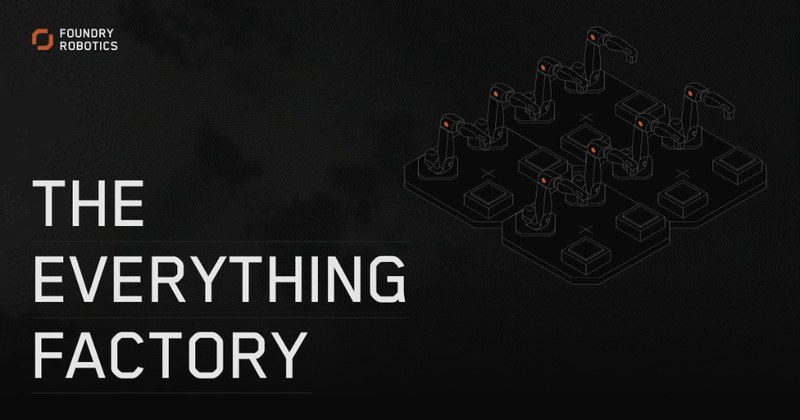
Foundry Robotics is a San Francisco startup building 'The Everything Factory' - an AI-first, assembly-focused contract manufacturer that uses Vision-Language-Action (VLA) foundation models to run flexible robotic assembly cells. Instead of retooling a line for every new product, Foundry aims to let general-purpose robots switch between building drones, robot dogs, battery packs and satellite components on demand. Founded in 2025 by ex-Ghost Robotics and Scale AI robotics lead Adarsh Kulkarni, the company positions itself as a dual-use manufacturer serving both commercial customers and the U.S. Department of Defense, backed by a seed round led by Khosla Ventures and Garuda Ventures.

Laser Wire Solutions
Laser Wire Solutions is a Welsh precision-engineering company that builds laser systems and robots to strip, cut and process the tiniest, most delicate wires on Earth - the kind found inside catheters, MRI coils, EV harnesses and spacecraft. Founded in 2011 by Oxford-trained physicist Paul Taylor, the Pontypridd firm turned a niche insight (that lasers strip fine wire more cleanly than blades) into award-winning machines and contract-manufacturing services now used by medical OEMs, aerospace and defense primes, data-center builders and even Tesla.

MacLean-Fogg
MacLean-Fogg is a fourth-generation, family-owned American manufacturer founded in 1925 that grew from a single railroad lock nut into a global maker of fasteners, engineered components, plastics, and additive-manufacturing tooling. Headquartered in Mundelein, Illinois, the roughly $1.2 billion-a-year enterprise supplies the automotive, heavy-truck, electric utility, telecom, and industrial markets from dozens of plants across North America, Europe, and Asia. In 2025 it marked its 100th anniversary still owned and led by the MacLean family.
HebeCell Corp
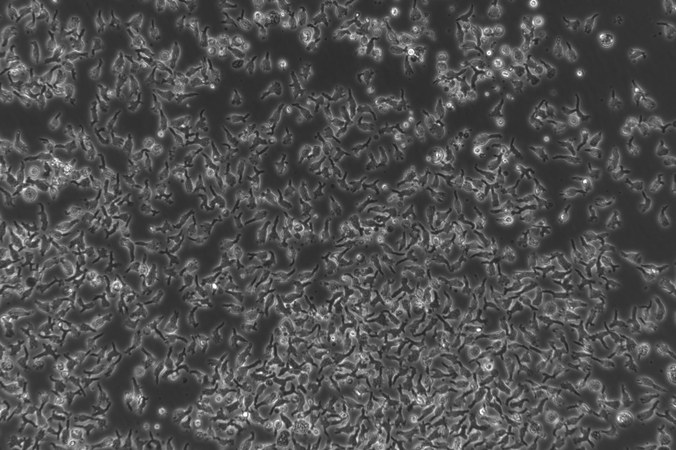
HebeCell Corp is a Natick, Massachusetts biotech developing allogeneic, off-the-shelf cell therapies grown from induced pluripotent stem cells (iPSCs). Its core invention is a suspension-bioreactor platform, ProtoNK, that produces natural killer (NK) cells indefinitely and at scale - a manufacturing approach the company says no other lab can match. Founded in 2016, HebeCell aims to make cancer and degenerative-disease therapies cheaper, safer, and available without a matched donor, under the tagline 'Incurable no more.'
Nventric, Inc.
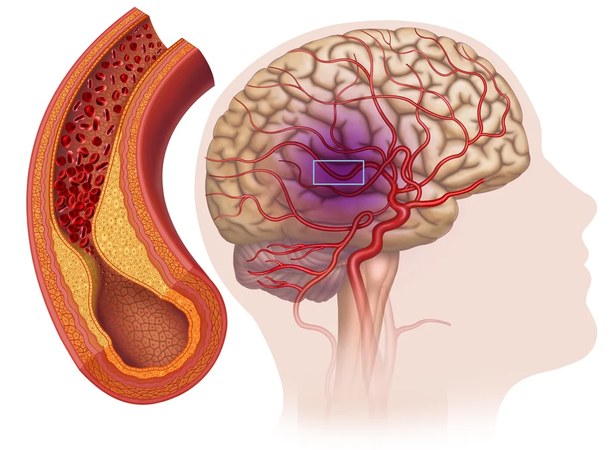
Nventric, Inc. is a medical device company and contract development and manufacturing organization (CDMO) headquartered in Arcadia, California, with operations in Seoul, South Korea. Founded in 2019 by engineers with backgrounds at Abbott Vascular and Johnson & Johnson, Nventric designs and builds minimally invasive vascular devices - covering neurovascular, coronary, and electrophysiology applications - from concept through scalable, ISO 13485-certified manufacturing. Its own-branded neurovascular line, including the ULTRIVA stent retriever and EVOGLIDE distal access catheter, targets acute ischemic stroke, while its OEM/CDMO services help device companies move products from prototype to commercialization.