The Chocolate Maker That Burned Down, Then Went Sugar-Free
A five-alarm fire took Barchemy's main plant in 2022. Three years later the Donora, Pennsylvania ingredient shop runs three facilities, quietly supplies the chocolate inside better-for-you bars, and has private equity money behind it.
Open a better-for-you protein bar and bite through the chocolate coating. There is a decent chance you are eating something that started as a formula on a whiteboard in Donora, Pennsylvania - a Monongahela River mill town of about 4,000 people. The coating is not the brand's own invention. It came from Barchemy LLC, a 57-person ingredient shop that most shoppers will never hear of, and that most food companies would rather you did not.
That is the whole point of Barchemy's business. It is the chocolate behind the chocolate. Founded in 2015 by Larry Toscano, the company develops and manufactures custom confectionery components - coatings, inclusions, fillings, drops, wafers and chunks - and sells them to the nutritional bar, bakery, confectionery and ice cream companies that assemble the finished product. Barchemy does not put a bar on a shelf. It makes the parts that make the bar work, and it specializes in the parts that are hardest to get right: chocolate with no sugar, chocolate with added protein and fiber, and chocolate built to avoid the allergens people are afraid of.
A sugar man who bet on sugar-free
Toscano did not arrive from a health-food background. Before Barchemy he was co-president and co-owner of a sugar company. So the founding bet has a certain irony to it: a man who sold sugar for a living built a chocolate company on the premise that the growth was in leaving the sugar out. That read on the market has aged well. The better-for-you category - products with no added sugar, higher protein, added fiber - kept pulling shelf space away from conventional confectionery, and the brands chasing it needed suppliers who could actually make the components.
Making them is harder than it sounds. Sugar is not just sweetness; it is bulk, texture, and the thing that carries chocolate through a depositing line. Take it out and add protein and fiber, and the chocolate behaves differently at every step. Barchemy's pitch is that it has spent years learning those behaviors, and that it will do the collaborative R&D - concept to delivery - rather than handing a customer a catalog and wishing them luck.
What you can actually order
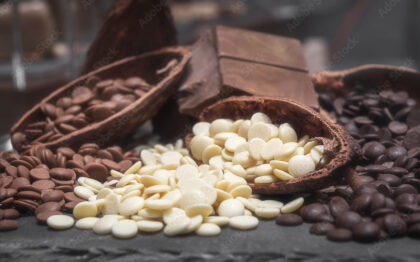
Barchemy's product line is built around forms and attributes. The forms: drops (sized by count per pound, from roughly 800 to 4,000), wafers, chunks in custom dimensions, bulk fillings shipped in pails and drums, and dry blends for the protein cores and layers inside bars. The flavors run dark, milk, white, peanut butter, caramel and yogurt, plus custom profiles. Then the attributes get stacked on top: sugar-free, protein-added, added fiber, dairy-free, organic, plant-based, kosher and Kosher Pareve, gluten-free.
The other half of the pitch is operational: flexible minimum order quantities and fast turnaround. Barchemy will run a small test batch and scale the same formula up to full production, and it markets its response time as a competitive weapon. For a food R&D team that has waited months on a giant supplier, a shop that will take the small order and move quickly is worth a lot.
The allergen-free bet
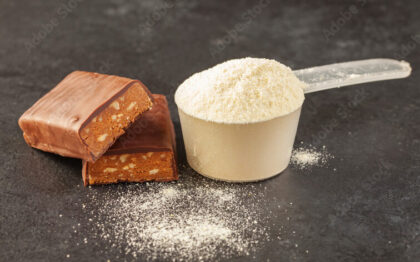
In January 2022 Barchemy opened a dedicated line built to exclude the top 12 allergens at once. This is not a claim you make loosely. It means engineering the facility so that a whole roster of ingredients simply never enters the building, and certifying it Kosher Pareve on top. The expansion added 40,000 square feet and ran on equipment from Aasted, a confectionery-machinery maker. In a market where label anxiety is real, "we can make it without the thing you are afraid of" is itself a product.
The dedicated allergen-free line is built to exclude all twelve.
The fire, and what it revealed
On June 19, 2022 - months after that allergen-free line came online - a five-alarm fire tore through Barchemy's main plant. No one was injured. The building was not so lucky. For a manufacturer whose entire value is the ability to produce, losing the plant is close to an existential event.
What happened next is the part Toscano still talks about. The company kept paying its employees through the reconstruction, and, by his account, not a single job was lost as a result of the fire. That decision is worth pausing on, because it is the clearest window into how the place operates. A manufacturer that treats payroll as the first cost to cut in a crisis looks different from one that treats it as the last. Barchemy chose the second.
And then, roughly a year later, the company did not just reopen - it added capacity. In June 2023 Barchemy completed a 23,000-square-foot dedicated peanut facility, built to make healthier peanut butter coatings, chips and fillings and to run bulk dry blending, keeping peanut operations physically separate from the rest. It was the company's third plant.
A comeback, then a partner
In October 2025, Barchemy took on private equity. Avance Investment Management - a firm focused on U.S. services, technology and consumer businesses - partnered with the company, with the investment bank Stout advising Barchemy on the deal. The terms were not disclosed. The structure was the interesting part: Toscano kept significant ownership and stayed in the leadership seat. This was not a founder cashing out and walking away. It reads as a capacity deal - money to expand production, strengthen the team and speed up product development - rather than an exit.
Barchemy is founded
Larry Toscano launches the company in Donora to make custom better-for-you confectionery ingredients.
Allergen-free line opens
A 40,000 sq ft expansion adds a dedicated top-12 allergen-free, Kosher Pareve chocolate line.
Five-alarm fire
Fire destroys the main plant on June 19. No injuries; the company rebuilds without layoffs.
Peanut facility opens
A 23,000 sq ft dedicated peanut and dry-blending plant becomes the third facility.
Avance partnership
Private equity backs Barchemy in October; the founder keeps ownership and control.
Where it sits in the market
Barchemy plays in the same broad space as the giants of chocolate and compound coatings - Barry Callebaut, Cargill, Blommer, Puratos and the like - but it is not trying to out-scale them. Its differentiation is the opposite of scale: flexible minimum orders, fast response, and dedicated capability in the sugar-free and allergen-free corners that are fiddly to run and easy for big suppliers to deprioritize. A large ingredient house wants long, standardized runs. Barchemy will take the small, awkward, high-value order and move on it.
That is backed by the paperwork that lets a blue-chip customer say yes. The company holds SQF, Kosher and Kosher Pareve, RSPO, MOSA organic and GMP certifications, and produces to FDA FSMA requirements. Certifications are dull until you realize they are gatekeepers - a national brand cannot buy from a supplier that cannot check every box, and Barchemy stacked the boxes.
What it makes
Custom coatings, inclusions, fillings, drops, wafers and chunks in sugar-free, high-protein, allergen-free, organic and kosher versions.
Who buys it
Nutritional bar, bakery, confectionery and ice cream manufacturers - including blue-chip brands - and their product-development teams.
How it competes
Flexible order sizes, fast turnaround, and dedicated sugar-free and allergen-free lines the giants find awkward to run.
The moat
Stacked certifications - SQF, Kosher Pareve, RSPO, organic, GMP - plus proprietary better-for-you formulation know-how.
What a founder can copy
There is a portable lesson buried in the Barchemy story, and it is not "be resilient." It is that your supply position is your moat. Barchemy made itself the component supplier that better-for-you brands cannot easily replace - hard-to-make products, fast turnaround, small orders welcome, every certification in place - and that position is what survived a fire and attracted private equity. The comeback was possible because the underlying business was worth rebuilding. For anyone building an unglamorous B2B company: pick the awkward, high-value work the incumbents avoid, and make yourself the name on the R&D team's speed dial.
The obvious caution is that this only works within its lane. Barchemy's edge - flexibility, speed, custom formulation - is expensive to run at commodity volumes, so it is not the company to call for the cheapest possible standardized coating by the truckload. That is the giants' game. Barchemy's game is the specific, the certified, and the better-for-you, and in a mill town on the Monongahela, that has been enough to build three factories.