At 4:40 on a Sunday afternoon in June 2022, the factory stopped being a factory. Fire crews converged on First Street in Donora, Pennsylvania, where a five-alarm blaze was moving through Barchemy's main plant. The fire was out by evening, but a place built to make chocolate and confectionery ingredients had taken substantial damage. For a manufacturer, the arithmetic is brutal: no line, no output; no output, no invoices. Yet founder and CEO Lawrence "Larry" Toscano made one number non-negotiable. Payroll would continue.
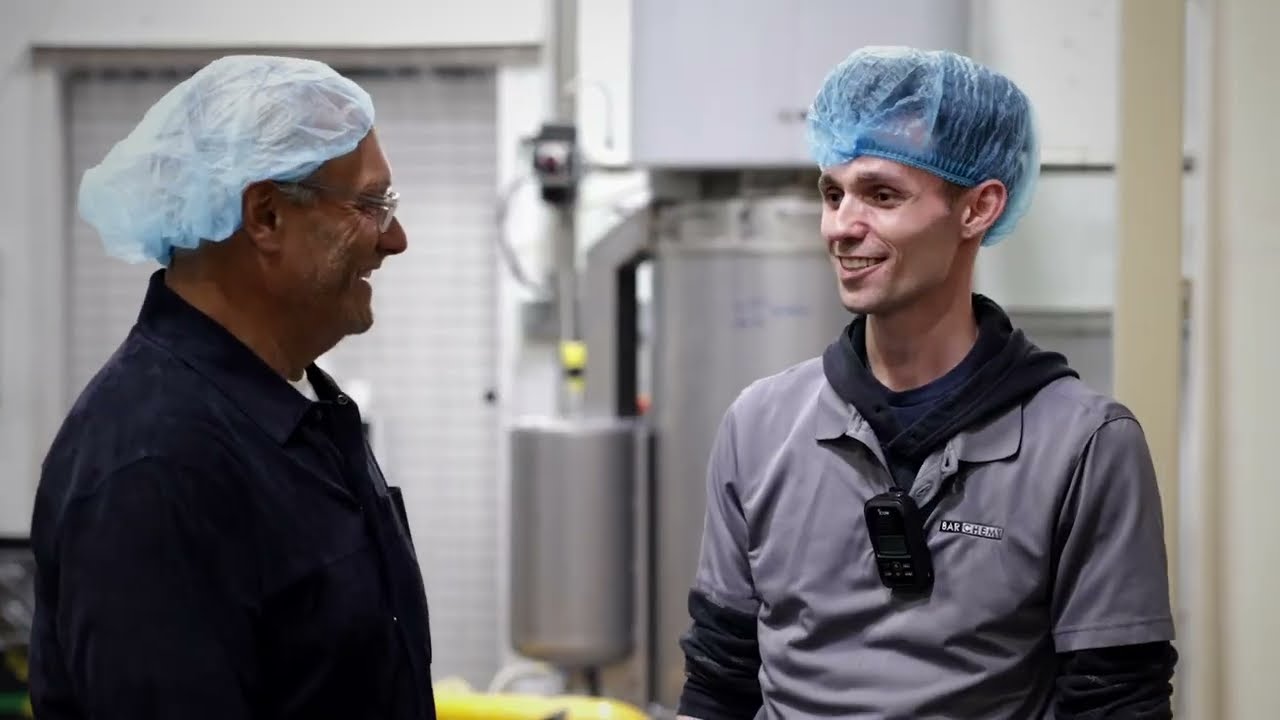
Toscano later said every employee was paid during reconstruction and not one job was lost because of the fire. He also said Barchemy retained every customer. Those outcomes belong together. Food manufacturing depends on equipment, certifications and formulas, but it also depends on memory that cannot be bolted to the floor. A skilled team knows the sound of a line under strain, the feel of a coating at the wrong temperature and the history behind a customer's peculiar request. Keeping the people meant keeping the knowledge required to restart.
“We made sure all of our employees were paid during the reconstruction, and not a single job was lost as a result of the fire.”Larry Toscano, 2023
The decision provides a clean view of Toscano's operating philosophy because disaster removes the decorative language. Before the fire, a company can say its culture is collaborative. After the fire, it has to decide whose check clears while the machinery is silent. Barchemy chose continuity. Roughly a year later, it opened a third Donora manufacturing facility. The company had moved from damage to additional capacity without discarding the team that knew how to use it.
A sugar career meets the sugar-free brief
Toscano arrived at Barchemy with more than three decades in specialty ingredients behind him. His public career record begins at Paulaur Corporation, where he held business-development and ownership roles. By the late 2000s, he had co-founded Royal Ingredients with William Fawley. Royal processed cane sugar into the fine, powdered, brown and organic forms used by wholesale food customers. In 2013, it became a subsidiary of commodities group ED&F Man.
Then came the useful irony. After years in sugar, Toscano founded a chocolate ingredient business that would become known partly for taking sugar out. Barchemy, established in 2015, makes the components that disappear inside someone else's finished product: coatings around nutritional bars, chunks inside baked goods, fillings in confectionery and ingredients destined for ice cream. Its catalogue can be conventional, but its harder work involves sugar-free recipes, added protein or fiber, dairy-free options and formulas designed for dedicated allergen-free production.
Removing sugar from chocolate is not as simple as subtracting sweetness. Sugar supplies bulk and texture and affects how a mixture flows, sets and survives a depositing line. Protein and fiber introduce their own behavior. The customer is asking for a nutrition claim, a pleasant bite and a material that will cooperate with industrial equipment. Barchemy's answer is a development process rather than a shelf of fixed recipes.
The brief becomes a batch
The sequence begins with listening. Barchemy asks about the application, flavor, functionality, volume and the customer's manufacturing process. Its team builds bench prototypes, then moves the selected formula toward commercial quantities. Customers can join the plant trial. Small runs support a market test; larger runs follow if the product earns its shelf space. This is not glamorous work. It is the practical reduction of uncertainty, one sample and one production constraint at a time.
Building in an old mill town
Barchemy located that work in Donora, a Monongahela River town shaped by industry. In early 2017, Toscano told a local reporter that the company was preparing for formal and full operation at two sites in the industrial park. The launch involved reclaiming the properties, retrofitting electrical, mechanical and plumbing systems, and procuring equipment. It began with 15 employees and 25 customers. Their addresses reached west to California, north to Massachusetts and south to Florida.
There is something fitting about making a modern food ingredient business inside reclaimed industrial space. The market language may be clean labels and protein fortification, but the physical requirements remain stubbornly concrete: power, drainage, tanks, depositing lines, warehouse space and people trained to keep every one of them behaving. Toscano's product-development promise had to survive contact with pipes.
A decade measured in facilities and decisions
Separation is a product feature
By January 2022, Barchemy had opened a dedicated confectionery facility designed to exclude the top 12 allergens. The expansion added 40,000 square feet and later incorporated Kosher Pareve capability. The important word is dedicated. In sensitive manufacturing, confidence comes from what never crosses the threshold. Barchemy now describes three separate facilities: a main plant for conventional production, the allergen-free site and a peanut facility.
That peanut operation opened in June 2023, after the fire and its reconstruction. Its 23,000 square feet support peanut butter coatings, chips and fillings as well as bulk dry blending. Moving peanut work into its own building also removed nut products from the main facility. The arrangement gives the company a physical answer to questions that cannot be solved by a clever label.
It also turns a compliance constraint into operating flexibility. A customer can choose drops, wafers, custom chunks, pail or drum fillings, or a dry blend. It can specify dark, milk, white, peanut butter, caramel, yogurt or a custom flavor. The interesting part is not the length of the menu. It is the architecture behind it: separate plants, adjustable batch sizes and a process designed to move a difficult idea from a bench to a line.
The quiet advantage is response time
Large suppliers are built for large certainties. Young food products arrive as small uncertainties. A brand may need enough coating for a regional trial, then far more if the launch works. Barchemy markets flexible minimum orders and quick turnarounds precisely at that uncomfortable stage. It offers to stay close while the recipe is still changing and remain useful when demand grows.
Toscano's experience makes this less a startup trick than a considered response to years on the supplier side of the table. The business sits where formulation, customer service and machinery meet. Each function corrects the others. A brilliant prototype that cannot run at speed is a laboratory souvenir. A flawless production line making the wrong flavor is an expensive misunderstanding. Listening early prevents both.
One formula, three scales
Illustrative sequence based on Barchemy's published development process, not a volume comparison.The fire tested that system from the opposite direction. Instead of scaling a formula up, Barchemy had to preserve relationships while capacity was constrained. Toscano credited the team for losing no customers. His language is revealing: the comeback belongs to "everyone in the company," not to a solitary founder turning a heroic wrench. The payroll decision made that plural possible.
Capital, with the founder still in the room
In October 2025, Avance Investment Management announced a strategic investment in Barchemy. The terms stayed private. The leadership arrangement did not: Toscano retained a significant ownership stake and continued as CEO. Avance said the company planned to invest in facilities, capacity and its team. Toscano described the goal as accelerating investment in people, capacity and innovation while maintaining the flexibility, speed and quality customers expected.
“This partnership will allow us to accelerate our investments in people, capacity, and innovation.”Larry Toscano, October 2025
Outside capital creates a delicate manufacturing assignment. It can fund equipment and room to grow. It can also introduce approval layers that slow the response customers came for. Barchemy's next chapter will be judged by whether it can enlarge the factory without enlarging the distance between a customer question and a useful answer. Toscano is still present to protect the original cadence.
His career forms an unusual loop. The ingredient salesman became a sugar-company owner. The sugar executive became a founder solving sugar-free and protein-fortified chocolate. The founder whose business depended on production discovered, in one smoky afternoon, that continuity rested on people. Years of formulas and facilities led back to a simple operating truth: the most important asset was the group that knew how to begin again.
Donora supplies the final note. A town with a long industrial memory now houses a company working on what the next snack is asked to become. The vocabulary has changed. The discipline has not. Listen to the buyer. Understand the material. Respect the line. Keep the team. Then make another batch.