The first draft of Dessert Holdings fit on the back of a napkin. The setting was a Starbucks in downtown St. Paul, Minnesota, and the idea was less about cake than a peculiar tension inside the American appetite. People were leaning toward premium treats, recognizable ingredients and modest moments of indulgence. Restaurants and grocers, meanwhile, needed consistency, food safety and enough dependable supply to serve a crowd. Somewhere between the pastry case and the loading dock sat an opportunity.
Paul Lapadat had spent a career learning how to see it. He began in finance at General Mills, moved through brand marketing at Kraft and Pillsbury, then ran increasingly large pieces of Conagra Foods. From 2004 to 2010, as president and chief operating officer of its Snack Foods Group, his remit included names familiar from cinemas, cupboards and road trips: Orville Redenbacher’s, ACT II, Slim Jim, DAVID and Crunch ’n Munch. It was a practical education in how desire gets forecast, manufactured, packaged and delivered.
But corporate scale was only half the curriculum. Lapadat wanted an entrepreneurial life. In 2010 he became chief executive of Flagstone Foods, a healthy-snacks platform built from Ann’s House of Nuts and Amport Foods. The company doubled in size in three years. In July 2014, TreeHouse Foods completed its purchase of Flagstone for $860 million in cash, subject to a working-capital adjustment. Lapadat had helped turn trail mix and dried fruit into a serious operating platform. He next went looking for a category with a little more theatre.
His education explains some of the blend. Lapadat earned a bachelor’s degree in finance and accounting from the University of St. Thomas in 1988, then completed an MBA in marketing at UCLA Anderson in 1993. The sequence put the ledger before the label. In his later companies, those instincts would live side by side: consumer desire on one page, unit economics on the next. Dessert is emotional at the table and unforgiving in a forecast. He was trained to read both versions.
A roll-up with a taste test
Premium dessert had attractive economics, but the opportunity was not simply “buy bakeries.” The category was fragmented, and specialist producers often held capabilities that were difficult to reproduce. One knew multilayer cakes. Another understood rich cheesecakes for restaurants. Another could turn a customer’s idea into a bespoke sweet at commercial volume. Lapadat and four colleagues formed their team in 2015 and began applying a narrow test to possible partners.
The team was not entering an empty market. It was choosing a precise place inside a busy one. Lapadat had noticed what he called the “tailwinds of premiumization,” accompanied by interest in clean ingredients and real food. The phrase sounds like investor vocabulary until translated into a shopping basket: fruit that tastes like fruit, whipped cream that began as cream, chocolate chosen for flavor, and a treat good enough to justify the calories. The opportunity was to deliver that experience without asking every customer to operate a pastry department.
“Are they a leader in what they do? Do they have the products and capabilities we want? For us, it always starts with the products.”Paul Lapadat
The first platform was The Original Cakerie, a Canadian business with a long history in frozen desserts and a distinctive multilayer bar cake. Lawler’s Desserts followed, adding cheesecakes, layer cakes and pies for foodservice. Atlanta Cheesecake Company arrived in 2018 with packaged cheesecakes aimed at retail bakery. The logic was capability by capability, channel by channel. Each acquisition gave the whole a new reason to exist.
The portfolio, one specialty at a time
The structure also answered a delicate question: what should scale touch, and what should it leave alone? Shared purchasing, analytics, food-safety systems and distribution can improve with size. A beloved pie crust is a different matter. Dessert Holdings kept acquired brands and local expertise while building what Lapadat calls “Fortune 500 CPG discipline” around them. The phrase is not romantic, yet romance fares better when the freezer works and the truck arrives.
The factory behind the fork
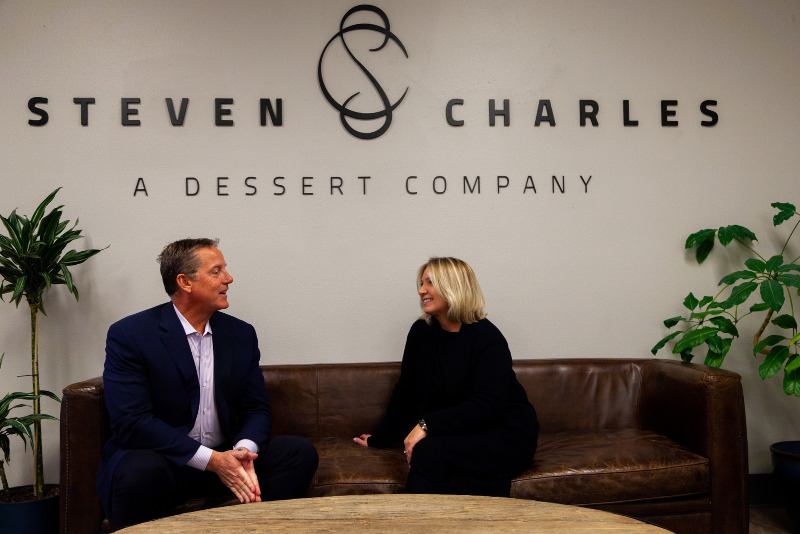
Steven Charles, acquired in 2021, made the model especially vivid. The Denver bakery paired a 3,178-square-foot culinary innovation studio with a 367,000-square-foot production operation that ran 23 hours a day. Its team hosted a monthly “Sugar Rush” to put new ideas in front of executives. Behind the playful name sat a rigorous commercialization process: develop the flavor, test whether it works, source the ingredients and design a way to repeat the result thousands of times.
Lapadat described the fit as artisan baking at scale. Steven Charles had entrepreneurial energy, prominent customers and a reputation for bespoke development. Dessert Holdings brought capital, procurement reach, contingency planning and a network. Rebecca O’Hara remained president, an example of Lapadat’s preference for retaining the operators who know why the business works. Acquisitions can make employees fear the arrival of identical systems and unfamiliar people. In this case, the stated aim was to add resources without sanding off the bakery’s useful edges.
Discipline, moving quickly
Reported speed-to-market comparison in a 2022 industry profile. The company retained a Stage Gate process while moving through it faster.
That speed matters because dessert fashion travels quickly. Flavors migrate from drinks to bakery cases. Portion control creates demand for minis. Retailers want seasonal ideas while the season is still relevant. Restaurants need something striking enough for a photograph but simple enough for a busy kitchen to serve. A slow innovation pipeline can turn mango passion fruit from a trend into an archaeological finding.
The larger service is easy to miss. Many restaurants and supermarket bakeries face persistent labor constraints. A thaw-and-serve cake with real cream and fruit is not merely inventory; it replaces hours of skilled preparation while preserving the appearance of care. Dessert Holdings sells a solution to the disappearing pastry shift. The customer sees a clean slice. Behind it sit product developers, automated facilities, safety certifications, cold storage, route planning and backup capacity.
“Our customers want to do business with suppliers that have scale. They need top-tier bakery manufacturers with world-class food safety.”Paul Lapadat
From three brands to seven
Bain Capital agreed to acquire Dessert Holdings from Gryphon Investors in 2021, leaving Lapadat and his management team in place. At the time, the group had three main brands and served more than 250 customers across several regions. The change in ownership supplied more fuel for the same thesis. Steven Charles joined that year. Dianne’s Fine Desserts followed in 2022, deepening foodservice capabilities across cakes, pies, tarts, brownies, bars and individual desserts.
The Original Cakerie and Lawler’s form the early platform.
Atlanta Cheesecake Company adds packaged retail expertise.
Bain Capital acquires the platform; Steven Charles joins.
Dianne’s expands the foodservice assortment.
Kenny’s Great Pies brings clean-label cream pies.
Willamette Valley Pie Company becomes brand number seven.
Kenny’s Great Pies arrived in 2024 with cream-based pies and a particular command of Key lime. Willamette Valley Pie Company followed in July 2025. Founded on an Oregon family farm, Willamette brought fruit pies, cobblers, handheld products and relationships with local growers. Lapadat’s public explanation returned to the same vocabulary he had used years earlier: complementary products, distinctive market position, durable customer relationships and room to expand distribution.
By then, Dessert Holdings described a network of ten highly automated facilities and seven brands. The range included cakes, cheesecakes, pies, bars, minis, bespoke products and gluten-free desserts. In 2025 the company refreshed its identity and returned to the IDDBA trade show with new flavors including strawberry shortcake cheesecake, mango passion fruit cheesecake and mixed berry custard cake. The whisk worked its way into the logo. Even corporate typography, it seems, can be asked to help with dessert.
The operator’s second ingredient
Lapadat’s biography can read like a sequence of transactions, but the recurring subject is people. He started Dessert Holdings with trusted colleagues from earlier jobs. Senior operators moved across the network. Acquired leadership teams often stayed with their businesses. In 2022, he said the company was focused on customers, employees and “just building a great company.” That emphasis has a practical edge. Recipes can be documented. Judgment, trust and the instinct to spot a production constraint before it becomes a missed shipment are harder to acquire.
His community work also remains rooted in Minnesota. Children’s Minnesota named him to its Foundation board in March 2024, after earlier board service connected with the organization. The appointment sits comfortably beside a career spent building teams in and around St. Paul. It is another kind of long-term infrastructure, far removed from seasonal cheesecake yet close to the question that serious operators eventually face: what should the system make possible for other people?
The answer inside Dessert Holdings remains concrete. Make a dessert that feels considered. Make enough of it. Make it safely. Get it where it needs to go. Let the specialist baker keep the technique, and give that baker a supply chain worthy of the recipe. Lapadat’s contribution is the architecture connecting those instructions. He did not invent the pie, the cheesecake or the multilayer bar. He built a company designed to help each travel farther without arriving anonymous.
There is something satisfyingly Midwestern about beginning an ambitious company without bothering to find a pristine sheet of paper. The napkin anecdote endures because it compresses the business into one scene: a practical surface, a strong appetite and just enough room for a plan. A decade later, the plan fills factories. The fork, as Lapadat’s acquisition rule suggests, still gets the final vote.