Company Profile / Consumer Products
The Irvine Shop That Buys Dead-Famous Brands and Sells Them Back to You
How a three-person back office in Irvine turned into the quiet machine that keeps Sharper Image gadgets, FAO Schwarz toys and Vornado fans on the shelf.
Walk past a Sharper Image kiosk in an airport, or a Vornado fan in a hardware aisle, or an FAO Schwarz toy soldier holding a door in Manhattan, and you are looking at the output of a company almost no shopper can name. It sits in an office park in Irvine, California, and for most of its life it did the part of the consumer-goods business nobody puts on a billboard: the designing, the sourcing, the shipping. The name is MerchSource.
The short version of what MerchSource does is deceptively plain. It takes a brand people already recognize, figures out what products should carry that name, engineers those products, has them manufactured through offices in China, and moves them into retail. The longer version is more interesting, because somewhere along the way the company stopped just renting famous names and started buying them outright.
The OriginThree people and a borrowed back room
MerchSource was founded in 1999 by Kirk McLean, Johann Clapp and Mike Roberts. The founding story that gets repeated is a small one: a three-person operation working out of a back room, selling and sourcing consumer products for retailers who needed someone to handle the messy middle. There was no marquee brand, no signature invention. What the founders had was a willingness to own logistics and design at the same time - to be, in their own description, a "vertically-integrated cross-category, multi-channel" supplier.
That phrase is a mouthful, but it is the whole business. Vertically integrated means MerchSource does the design and the sourcing rather than buying finished goods. Cross-category means it does not care whether the product is a drone, a wooden toy, a white-noise machine or a heater. Multi-channel means it sells through big-box, specialty and e-commerce accounts at the same time. Pick a lane in consumer products and MerchSource is in it.
The ModelBuy the fame, own the machine
The pivot that made MerchSource matter was a change in what it owned. In 2008 it began licensing the Sharper Image name - the gadget catalog that had gone bankrupt that same year - and putting products under it: radio-controlled drones, men's gifts, electronics, home décor. Licensing is the low-risk version of the game. You rent the logo, pay a royalty, and hope the products sell.
MerchSource kept going. In 2011 it acquired its longtime sourcing partner, ThreeSixty Sourcing, and the combined company began operating under the parent name ThreeSixty Group. That gave it the two halves of the pipeline under one roof: the design-and-brand side facing US retailers, and the manufacturing-and-sourcing side facing Asian factories. MerchSource became the US retail-facing division of that structure.
The business logic here is worth stealing. Most founders spend their energy trying to invent a new brand from zero. MerchSource looked at the pile of famous-but-tired American names - the ones with decades of recognition and no working supply chain behind them - and realized the recognition was still valuable if you could actually make and ship good product. Fame is rentable. Execution is not. Own the execution, and you can rent, or buy, all the fame you want.
The Buying SpreeFrom renting brands to owning them
In 2015, private-equity firm AEA Investors took a majority stake in ThreeSixty. That capital changed the ambition from "make products for brands" to "buy the brands." The acquisitions came quickly:
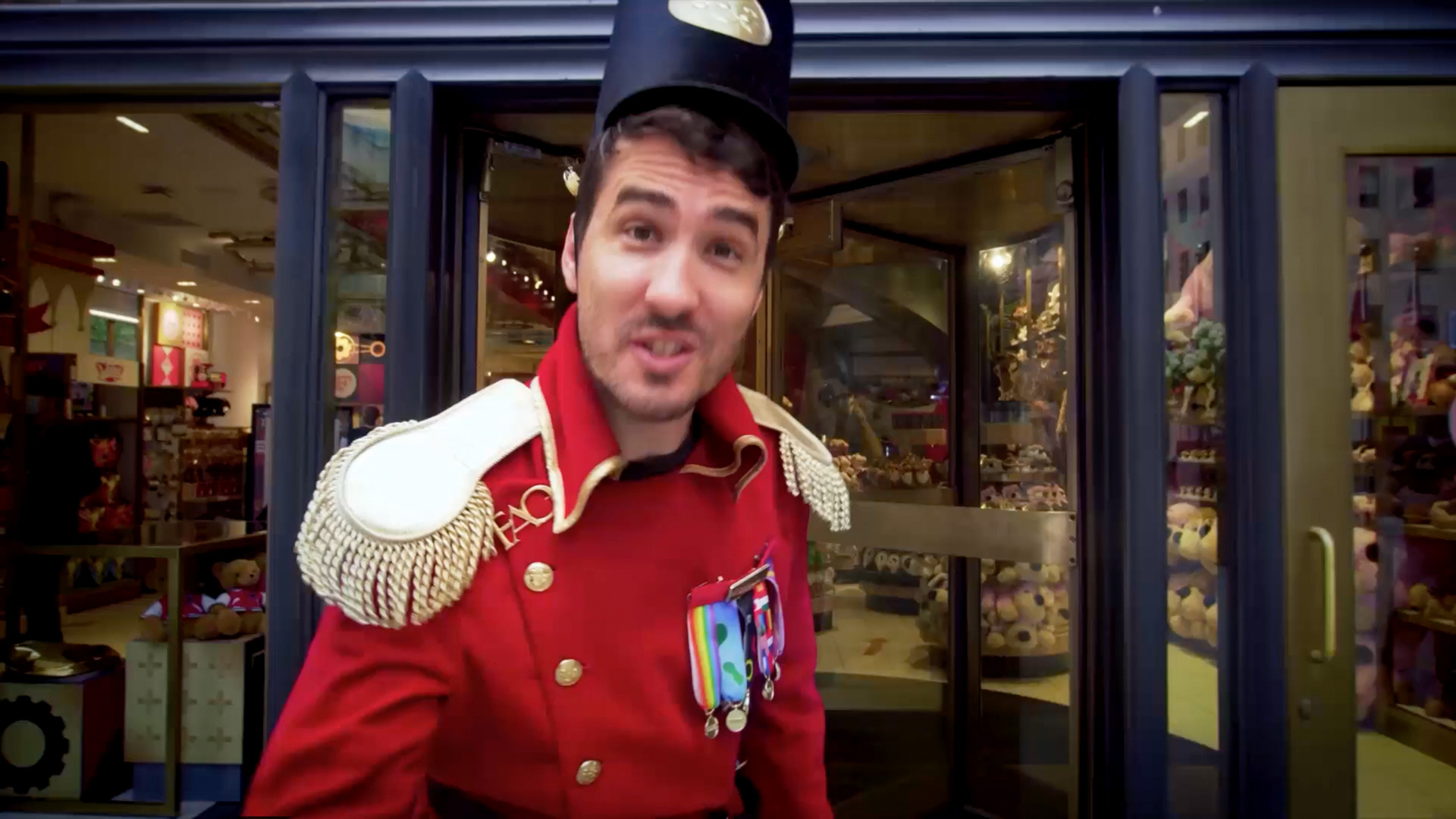
Each purchase followed the same shape. Take a name with more history than momentum, plug it into a design-and-sourcing engine that already exists, and let the retail reorders do the compounding. By the time the dust settled, the once-three-person shop owned a 1970s gadget catalog, a 160-year-old toy institution, and a mid-century air-circulation brand - plus licensed names including Discovery, Animal Planet, Peanuts, Emerson and Smithsonian.
The PipelineWhere the product actually comes from
The glamorous end of this business is the toy soldier and the retro logo. The functional end is a set of sourcing offices in Hong Kong, Shanghai, Ningbo and Guangzhou. That is where product specifications become factory orders, where quality gets checked, and where a design drawn in Irvine turns into a pallet on a container ship. MerchSource's advantage is that it does not hand this off to a broker; it runs the sourcing itself.
Illustrative view of MerchSource's own-the-whole-chain model. Relative widths are schematic, not financial figures.
Who Buys ItRetailers first, shoppers second
MerchSource's direct customers are retailers - the buyers at big-box, specialty and online chains who decide which products get shelf space next season. The shopper is the end user, but the reorder is the real metric. A licensed brand that ships on time, hits its price point, and sells through is a brand a buyer will restock. Parent company ThreeSixty reports sales in more than 30 countries across 75,000-plus store locations, run by roughly 738 people spanning 20-plus nationalities out of eight global offices.
The RangeWhat you can actually buy
The catalog is wide on purpose. Across its owned and licensed brands, MerchSource's product line runs through consumer electronics, radio-controlled vehicles and drones, natural-wood and educational toys, wellness gear, home décor, men's gifts and pet items. A shopper might pick up a Sharper Image white-noise machine, a Discovery STEM kit for a kid, a Vornado tower fan for a bedroom, and an FAO Schwarz plush - four different aisles, four different brand promises, one company underneath. That breadth is the point: it spreads risk across categories and gives retailers a single supplier who can fill more than one shelf.
The DifferenceWhy not just be a factory or a brand?
Plenty of companies do one slice of this. Sourcing agents move other people's products. Licensing houses rent out names. Private-label suppliers make generic goods for a retailer's own label. MerchSource's separation from those competitors is that it stitches the slices together and owns the brands at the end of the chain. A pure sourcing agent has no brand equity; a pure licensor has no supply chain; a private-label supplier has no name recognition. MerchSource carries all three, which is what lets it capture margin at more than one point.
The CultureA design shop that looks the part
For a company built on logistics, the headquarters leans hard into design. The Irvine campus - a mid-rise office plus a converted single-story auto garage - was renovated to LEED Silver by architecture firm LPA, and it reads more like a creative studio than a distribution outfit: design studios, retailer showrooms for brands like FAO Schwarz and Sharper Image, a library, a wine room, an outdoor fire pit and commissioned street art. It is a deliberate signal that the product ideas, not just the shipping, are supposed to originate here.
The CatchWhere the model strains
The playbook is not weatherproof. It leans on offshore manufacturing concentrated in China, which makes it exposed to tariffs, freight costs and supply shocks. It depends on legacy brand names continuing to mean something to a younger shopper who may not remember the original Sharper Image. And a private-equity-backed roll-up eventually has to justify the brands it bought with sell-through, not just nostalgia. Buying a famous logo is the easy part; keeping product moving under it, quarter after quarter, is the work.
The TakeawayWhat you can copy
The useful lesson from MerchSource is not "buy old brands." It is the ordering of operations. Build the machine first - the design capability and the sourcing control - and the machine makes tired brands valuable again. A name with recognition but no supply chain is a stranded asset; connect it to a working pipeline and it turns back into shelf space. That is a strategy any operator in consumer goods can study, whether or not they ever own a toy store from 1862.