A coffee mug is a demanding place to put a computer. People already know how to use one. They know where to hold it, where to drink from it, and what to do when it is empty. Any engineer hoping to improve the arrangement has several centuries of muscle memory to negotiate with.
Clayton Alexander, Ember’s founder, ran into this problem. His early temperature-controlled mug prototypes had buttons, switches and screens. He wanted a more human interface and brought the project to Ammunition. The resulting travel mug concealed its display when inactive, used a rotating base to adjust temperature, and rested on a charging coaster. At its 2015 preorder introduction, prices started at $109.
That was a substantial proposition for something normally bought without thinking about electronics. The design had to make the benefit intelligible while letting the object remain comfortable company at breakfast. The interesting question was how much new behavior a warm drink should demand.
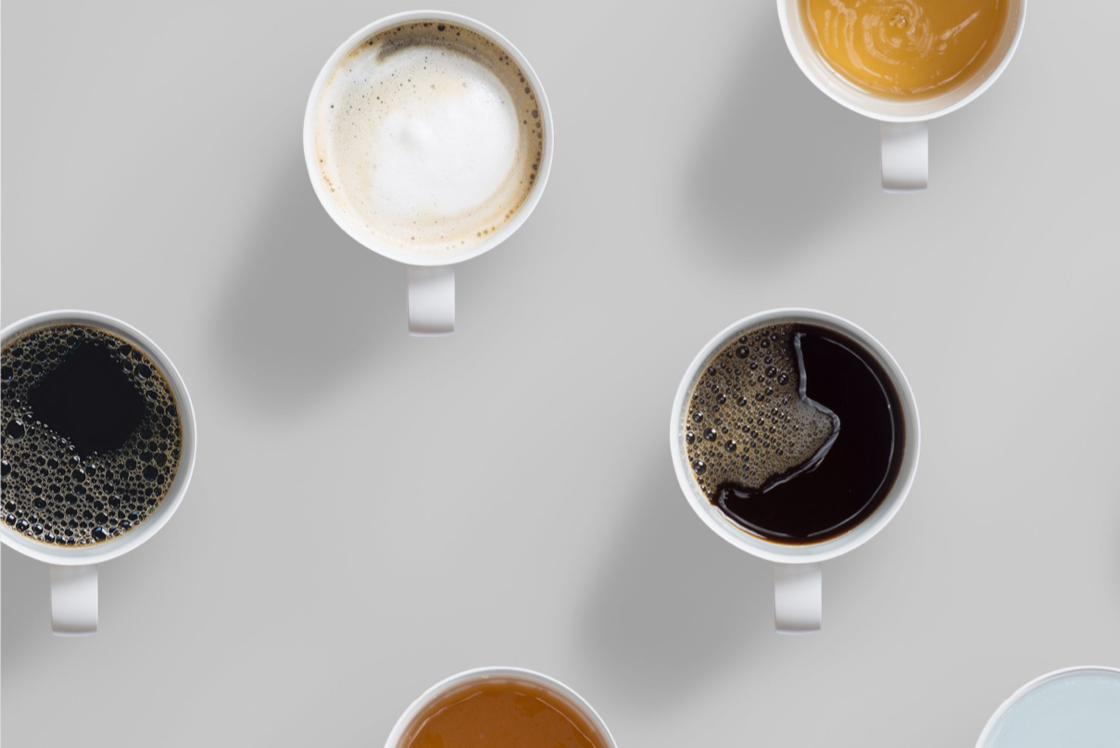
The mug gets to stay a mug
Ammunition’s own account of Ember makes an unusually modest promise: preserve what people expect from a favorite mug. The studio worked across industrial design, strategy, identity, app interfaces and packaging. Its involvement extended to both the travel mug and the ceramic version.
The app could adjust temperature, save preferences, report battery status and notify the drinker when the beverage was ready. The coaster supplied a familiar place to put the mug while also charging it. Each piece belonged to the same routine.
Here is a useful way to read that work: the customer buys the benefit, but lives with the behavior. A product team can make a convincing presentation about temperature control. The person reaching for coffee has to enjoy the next ten seconds. Those are different design problems, and the second one returns every morning.
Improve the result.
An editorial reading of the Ember brief: preserve the drinking ritual while making temperature adjustable.
Headphones with a public life
Robert Brunner founded Ammunition in 2007 after a career that included Apple and Pentagram. Beats gave the new studio a very different kind of ordinary object to reconsider. Working with Dr. Dre and Jimmy Iovine, Ammunition helped develop headphones, earphones and speakers, with responsibilities spanning identity, physical form and packaging.
Headphones have two audiences: the person listening and everyone looking. The Beats brief acknowledged both. Music reproduction mattered; so did the object’s life on somebody’s head. That combination helps explain why this portfolio moves so readily between industrial design and branding. On a wearable product, the boundary can become academic.
Ammunition sits in the market for companies that need those disciplines to talk to each other. Its work reaches from consumer electronics and domestic appliances to digital services. A founder might arrive with technology that needs an understandable form. An established business might need its next product to make sense alongside everything customers already associate with its name.
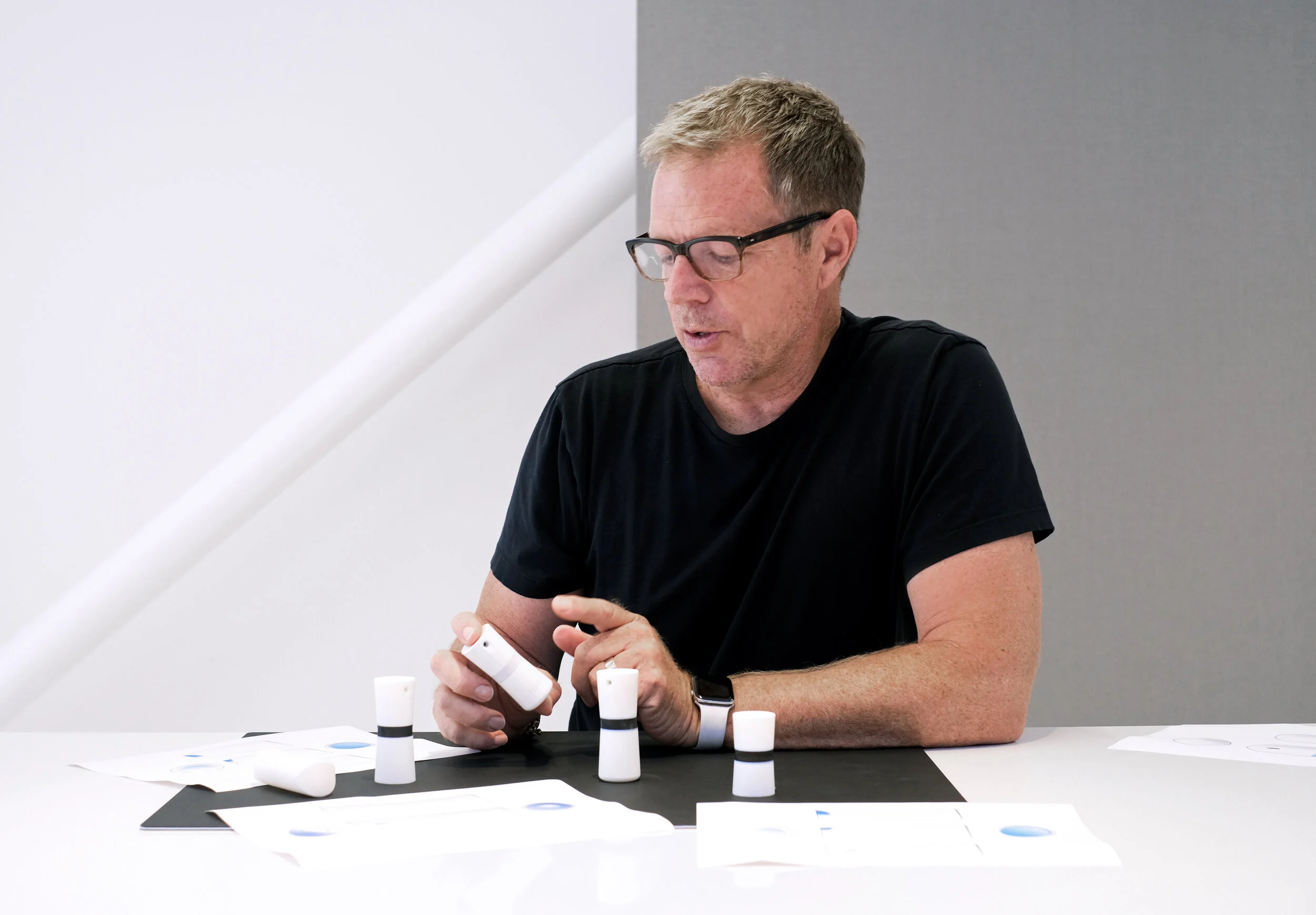
The last 50 feet are a design problem
Consider Lyft. Its original fuzzy pink mustache made cars recognizable. Recognition, however, was only part of the job. Drivers and passengers told Lyft that the final 50 feet of a pickup could be the most difficult stretch.
Ammunition worked on Glowstache and Amp, moving the brand’s visual personality into functional dashboard objects. Amp could match its lighting to the color shown in a passenger’s app. A rider scanning traffic had a specific signal to look for. Glowstache retained the mustache’s character while becoming compact, removable and visible at night.
This is a useful correction to the idea that branding ends once people recognize a symbol. In the Lyft work, the symbol acquires a task. The app and the physical object cooperate at the very moment a passenger needs them to.
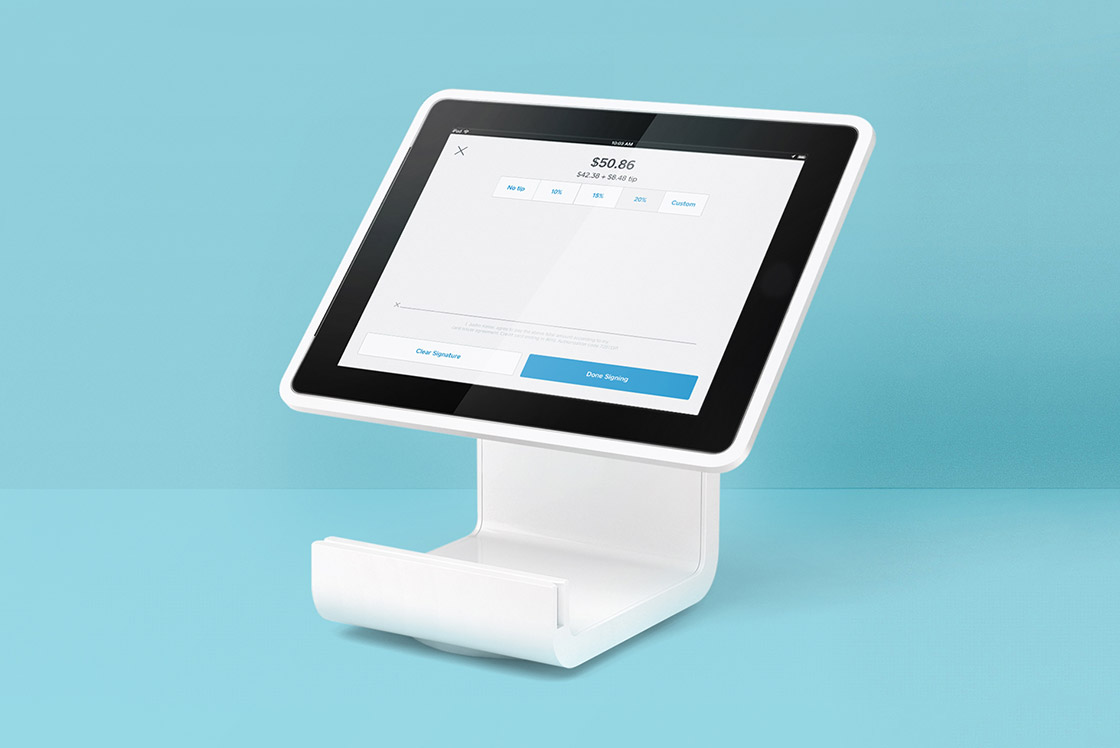
Square offers a related example at the shop counter. Ammunition collaborated on the Square Stand’s hardware and the experience of opening and setting it up. It also worked on a wireless Square Reader. The customer was a business trying to take payments, often in limited space, with customers waiting nearby.
The packaging therefore belonged in the assignment. So did the object’s place on a counter or in a pocket. Hardware design begins to look less like making an isolated sculpture and more like arranging a short sequence of human actions.
The invoice is only one arrangement
Ammunition sells design services to other businesses. But the commercial relationship can take several forms. In a 2017 Design Observer interview, Brunner described fee work, revenue sharing and equity arrangements with early-stage companies. His explanation focused on how the relationship changes when the designer participates in the outcome.
“We become a partner.”
Robert Brunner / Design Observer, 2017
That model gives the studio a reason to care about decisions beyond the final presentation. It also introduces a different kind of exposure. As a matter of business logic, a fee pays for agreed work; revenue participation depends on sales; equity depends on the value of the company. These mechanisms put different demands on cash, patience and judgment.
A company choosing a design partner should therefore consider what it needs the relationship to accomplish. A defined assignment can suit a fee. A venture that wants sustained involvement might consider a deeper arrangement. Ownership cannot, by itself, make a product useful or make two teams good collaborators.
People who learn by making things
Brunner has described another change in approach around 2012. Competing with large technology companies for senior designers was expensive. Comparing candidates’ work with that of his own less-experienced staff led him to emphasize developing talent internally. The lesson came from looking at the work already on the studio’s tables.
His account of remote working is equally physical: the team sent multiple sets of models to dispersed colleagues so they could handle the same objects. For a studio making things people touch, a shared screen only takes the discussion so far.

In November 2025, Ammunition named Andy Bauer, Christopher Kuh and Peter Rack as partners. Their responsibilities cover product strategy, industrial design and the operations that support the practice. The announcement recognized long-serving leaders, giving the firm’s account of shared leadership some concrete names and jobs.
One set of insides, several kinds of light
The more recent portfolio shows how far that approach can extend. For Gantri, Ammunition designed wireless lighting around Helia, a shared internal architecture containing the light engine, batteries, electronics and thermal system. Different lamp families could grow around the same technological core.
Charging received its own attention: a puck for an individual lamp, plus a six-port tray for commercial settings such as restaurants and hotels. Carrying a lamp and managing a roomful of lamps are related tasks with different practical demands. A product family has to account for both.
Elsewhere, Terra Kaffe’s Demi applies industrial design to a compact automatic espresso machine for smaller kitchens. Peaxy takes the work off the countertop altogether: Ammunition developed identity and interfaces for its data-management system. These are different markets, but each requires decisions about how much complexity users should encounter at once.
The recognition is substantial without being a substitute for that work: Cooper Hewitt awarded Ammunition its 2016 National Design Award for Product Design. The museum’s announcement listed projects ranging from Beats to UNICEF’s Kid Power Band. The variety makes a better argument than a single trophy photograph could.
What can another team borrow? Start with an existing action. Watch where it becomes awkward. Decide which parts deserve to survive, then make the new product support them. That reading of Ammunition’s work has limits: familiarity helps when it preserves something useful. A confusing or unsuitable old routine deserves a different answer.
Return to the coffee mug. The ordinary version already tells you where your hand belongs. Improving it begins with noticing how much it knows.
Keep looking
Explore Ammunition’s portfolio, the Ember project, and the Gantri lighting system.
Follow the studio on LinkedIn, X, Instagram and Facebook. Read its studio news.
Listen to Brunner on the business of design or watch his Apple@50 conversation.