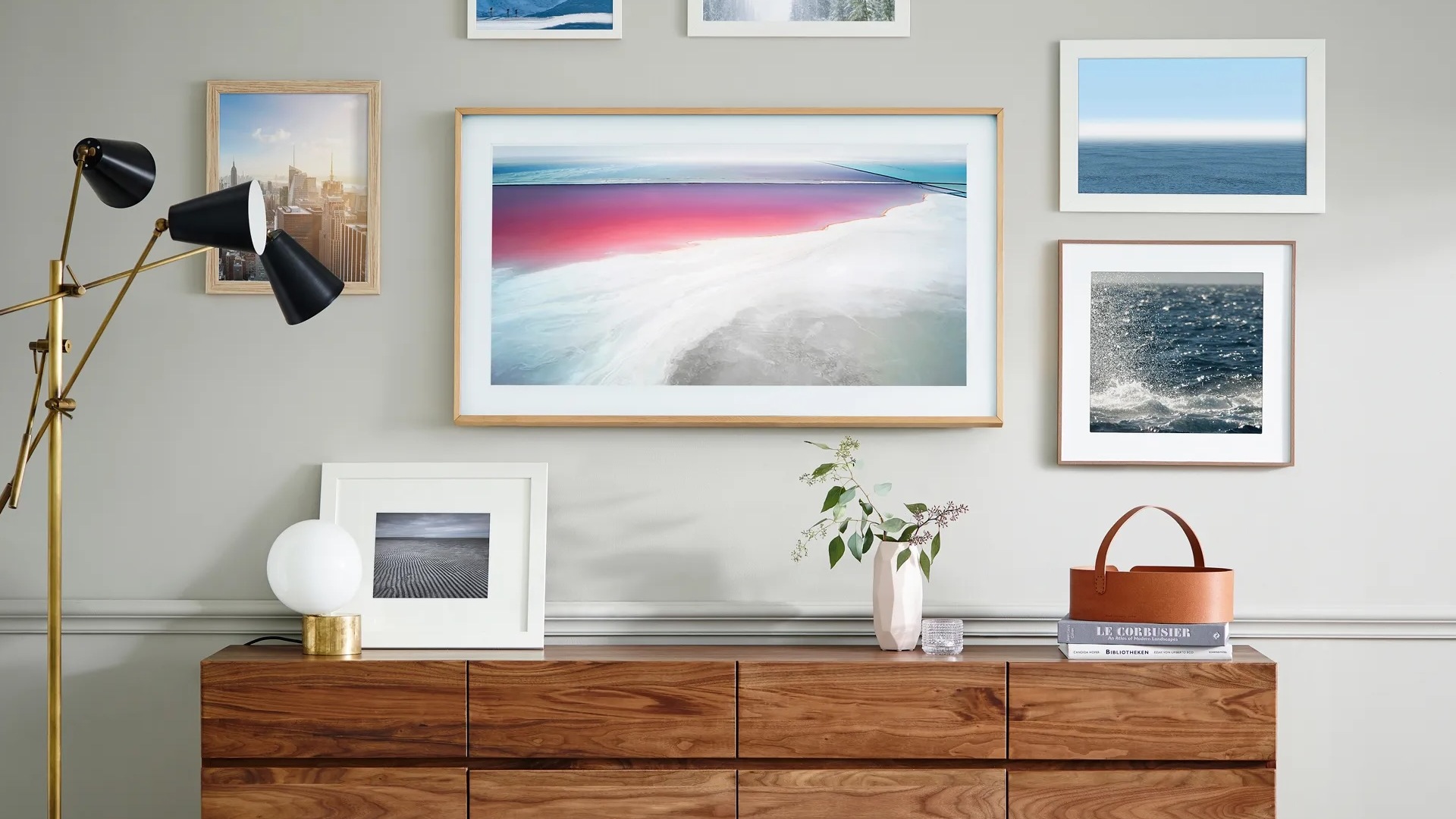
Consider the television when nobody is watching. It occupies the wall, commands the furniture and contributes a large black rectangle to the room. Television companies spent decades improving what happened when the screen came on. Fuseproject found an opportunity in what happened afterward. With Samsung’s The Frame, introduced in 2017, the idle screen became a place for art.
- Product, brand and digital design shaped together.
- Corporate retainers alongside selected equity partnerships.
- A repeatable habit: question the assumption inside the brief.
The interesting part was the scope of the intervention. A picture-frame edge alone would have been a cosmetic trick. The project also involved ambient-light sensing, interface design, interchangeable frames and an art platform. Brightness had to behave convincingly in a room. The television needed to acquire the manners of a picture. That required decisions across several departments, all serving the same domestic observation.
This is a useful way into fuseproject, the San Francisco design and innovation firm Yves Béhar founded in 1999. Its portfolio can look like an unusually well-appointed department store: chairs, locks, bassinets, speakers, robots. Follow the decisions behind those objects, though, and a pattern appears. The studio looks for an assumption that everyone else has stopped noticing. The variety matters because an idea from one industry can become a useful question in another.
A bridge you can sit in
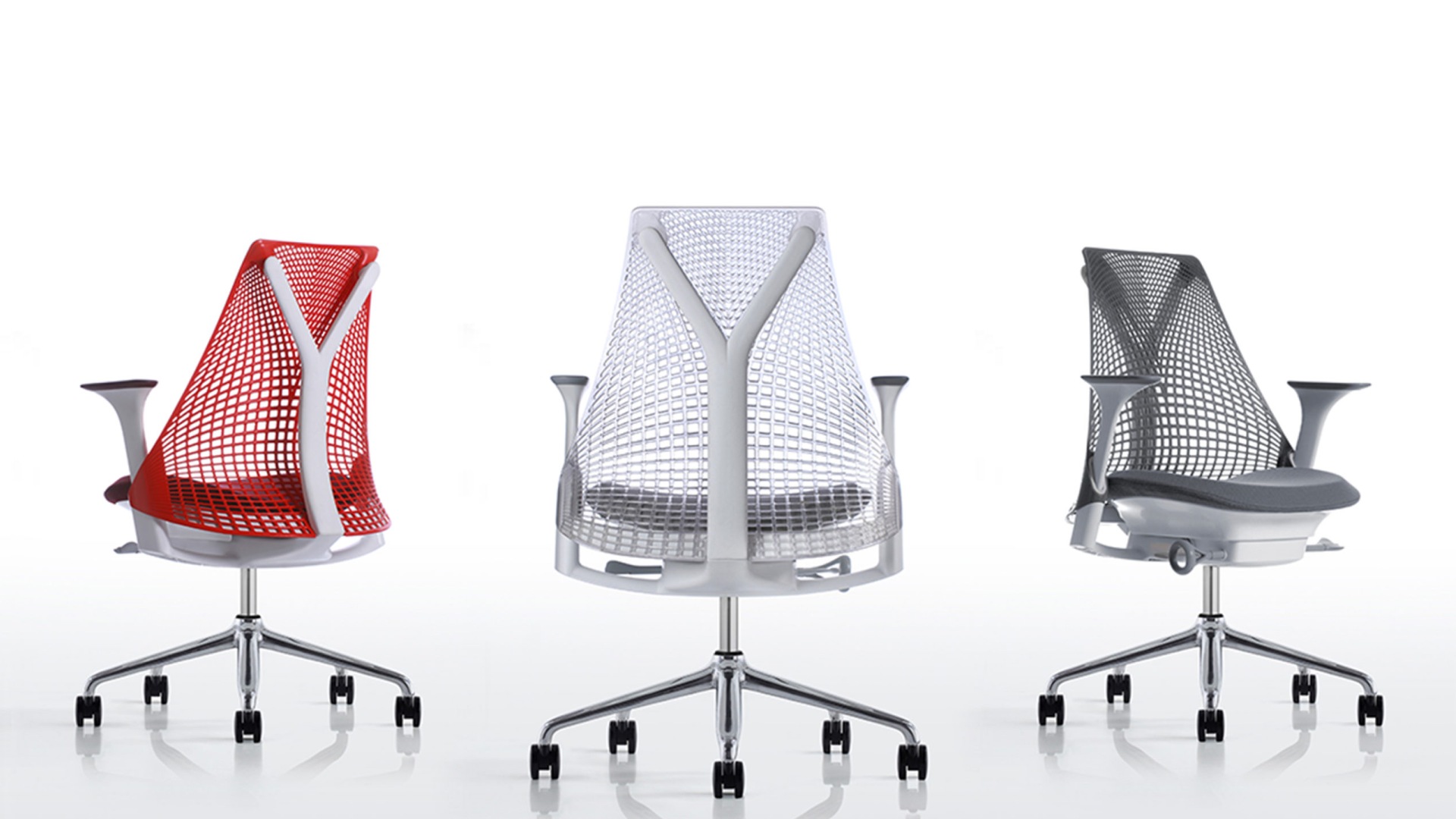
Herman Miller’s brief for Sayl was demanding in a wonderfully ordinary way: make an affordable chair with good ergonomics, elegant engineering and respect for materials. Béhar looked at the Golden Gate Bridge. Suspension structures carry substantial loads without filling every available inch with solid material. Could a chair work that way?
The resulting unframed back stretches elastomer around a support structure, varying tension where the body needs support or freedom. The visual signature follows the engineering. Herman Miller describes the wider achievement as fewer parts and less material. Even the spelling carries a small joke: the “y” in Sayl points to the chair’s Y-Tower, while the name evokes sailing beneath the bridge.
The lesson is available to anyone developing a product: make a constraint specific enough to design against. “Sustainable” is a sentiment until somebody asks which parts can disappear. “Comfortable” becomes useful when it means support here, movement there. Fuseproject’s expertise lies in connecting those choices with the object people eventually recognize and buy.
The invoice became a stake
The studio sells strategy, industrial design, digital experiences, branding, packaging and environments. Customers include Samsung, Herman Miller and L’Oréal, alongside young businesses trying to establish a product category. Corporate clients can work through programs or retainers. Early-stage companies can enter venture partnerships. Social-impact work includes One Laptop per Child and projects with New Story and The Ocean Cleanup.
A revealing episode came with Aliph, the company behind Jawbone. Its first headset had connectivity and distribution problems, according to Fast Company’s account of the partnership. The business shrank, and cash for outside design help disappeared. Béhar still wanted to develop the product. Fuseproject proposed taking equity, giving the studio a reason to stay involved beyond the next invoice.
The arrangement changed what the studio could sell: sustained attention with a financial interest in the outcome. Established-client work helped support riskier partnerships and social projects. This puts fuseproject among multidisciplinary consultancies such as IDEO and frog, with an explicit venture-design offering. Its appeal is continuity across product, identity and experience, particularly when a founder needs those decisions made together.
There is a bill for that continuity. Founders exchange ownership and potential future upside; designers commit time before knowing the return. Jawbone eventually entered liquidation in 2017. Good design and patient participation could not ensure a viable business. The early headset’s technical and distribution trouble is an especially useful reminder: desirability still needs a product that works and reaches customers.
“We believe design accelerates the adoption of new ideas.”
fuseproject / its stated belief
Buying back the room to experiment
Fuseproject’s own ownership tells a similar story about incentives. In 2014, BlueFocus agreed to buy 75 percent for a reported $46.7 million. Béhar remained CEO. In September 2023, he bought the company back for an undisclosed sum. Reporting at the time connected the return to independence with renewed interest in entrepreneurial partnerships. Today, the studio identifies offices in San Francisco and Lisbon.
TELO makes that ambition tangible. Béhar co-founded the electric-vehicle company with Jason Marks and Forrest North; fuseproject’s contribution spans naming, branding, exterior, interior and digital experience. The MT1 design puts five seats and a 60-inch bed into a vehicle 152 inches long. The question becomes how much useful truck can fit into a city-sized footprint.
TELO’s configurator lists an estimated starting price of $41,520 and a refundable $152 reservation deposit, while warning that specifications and prices may change before fulfillment. Those are proposed vehicle economics, not fuseproject’s design fees. The distinction matters. A compelling prototype, a reservation and a delivered vehicle represent very different stages of a business.
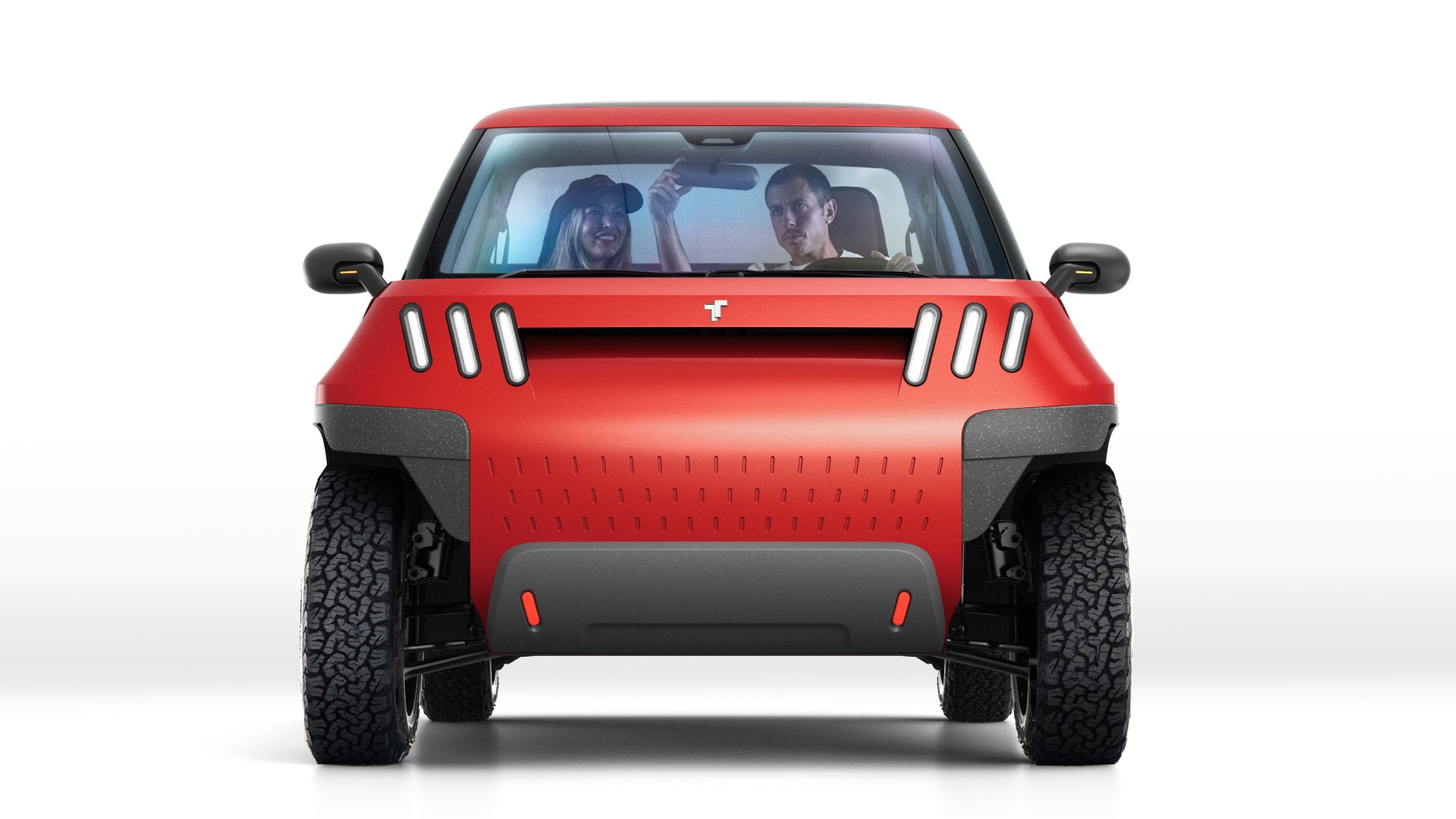
Proposed design. Delivery specifications may change.
Sometimes the robot should stay put
For ElliQ, the AI companion developed with Intuition Robotics, interviews with older adults pushed the design toward a stationary object. According to fuseproject’s account, participants did not want a robot following them around. The resulting arrangement separates an expressive moving element from a screen. The research changed the product’s behavior before anyone had to argue about its styling.
For AES’s Maximo solar-installation robot, the setting demanded another vocabulary: panel replenishment, worker interaction and visible safety communication. Fuseproject worked with engineers, construction managers and safety specialists. AES says Maximo installs panels in half the time and at half the cost. That is a claim about the installation task, rather than a promise to halve an entire solar project’s budget.
The range keeps widening. In September 2026, fuseproject reported a Home-category Innovation by Design award for Peaks, its rotating modular seating with Moooi, and an IDEA Bronze for TELO MT1. The sofa and the pickup share an appetite for rearranging familiar things. Their usefulness still depends on the particular household, street or customer they serve.
For a prospective client, the fit is clearest when product architecture, brand and user experience remain open to change. A team seeking only a finished logo has less reason to involve this many disciplines. The transferable habit costs nothing: watch what people tolerate, write down the assumption beneath it, and test whether that assumption deserves to survive. Start with the television nobody is watching.