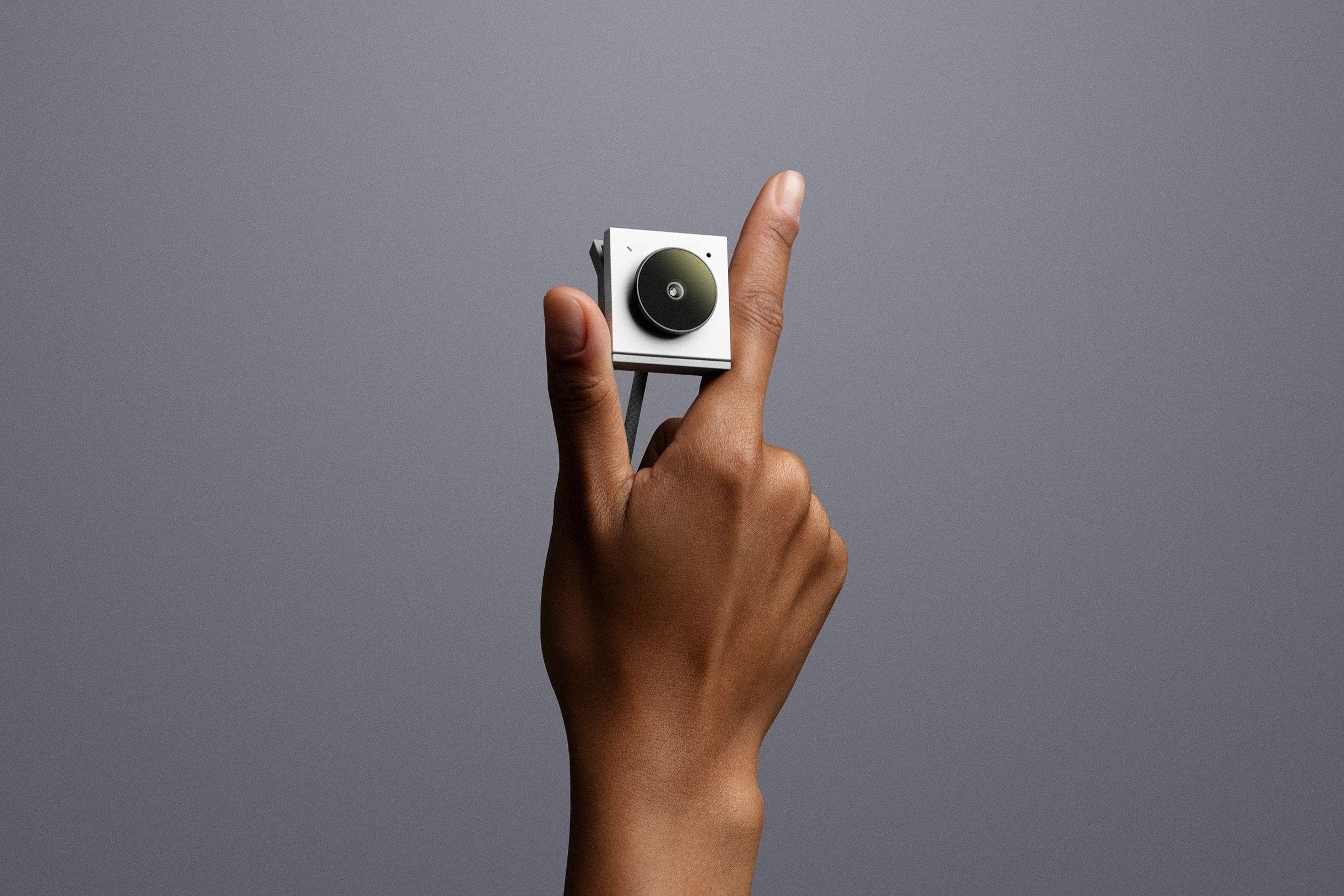
The interesting part of Opal’s Tadpole webcam is at the wrong end of the cable. Look past the lens, follow the woven cord, and you arrive at a USB-C plug that doubles as a mute control. Tap it. The microphone goes quiet. A mundane connector has acquired a second job, which is rather more ambition than most connectors display.
- Opal began with premium webcams for people who live on video calls.
- Tadpole made the proposition smaller, simpler and specific to laptops.
- The company is moving beyond cameras, carrying its design ambitions and support obligations with it.
That little switch provides a useful introduction to Opal Electronics. The company designs consumer hardware around ordinary moments: appearing on a call, being heard, finding a control without hunting through a window. Its proposition is that these moments deserve an object designed expressly for them. Whether they deserve another purchase is the more difficult question.
The face in the little rectangle
Founded in 2020 by Veeraj Chugh and Stefan Sohlstrom, Opal entered a category that had become hard to ignore. Work was happening through video. The person in the little rectangle was now the colleague, applicant or customer. A webcam’s deficiencies were suddenly visible to everyone except, perhaps, the person who had designed it.
The C1 arrived in December 2021 at roughly $300. Its appeal was to occupy the space between an ordinary webcam and a camera rig requiring more equipment and patience. The Verge’s launch review found convincing image quality in a compact device, including software-generated background blur. The purchase was partly an image upgrade and partly an attempt to remove the bother of constructing a miniature television studio.
Opal’s company fact sheet later recorded a waitlist above 60,000. A waitlist measures desire, however, rather than completed purchases. For a hardware maker, those are separated by production, delivery, compatibility and the small matter of whether the thing behaves after someone plugs it in.
The software had other plans
The first camera shipped with beta software. Opal subsequently rewrote its firmware and introduced Composer. The company’s release notes make the repair work unusually legible: camera resets, connection reliability, resource usage and autofocus all received attention. These are humble accomplishments until your camera freezes while you are explaining something important.
In February 2024, the notes described rewritten hybrid autofocus. Other releases addressed reconnecting cameras and recording stability. Read together, they show a company improving the unphotogenic parts of its product. An attractive enclosure can explain a purchase. Predictable behavior must justify keeping it.
The distinction matters for anyone tempted to copy Opal. Physical design, image processing and the computer’s operating system meet in the same user experience. A failure in one can undo the others. The lesson from the documented fixes is practical: test the recurring transitions, including disconnecting, reconnecting and updating, with the seriousness normally reserved for a launch demonstration.
“the products you use the most often should be the best things you own”Veeraj Chugh · 2023 company announcement
A smaller camera chooses its customer
Tadpole, launched in November 2023 at $175, offered a more focused proposition. It clipped onto a laptop and worked over USB on Mac and PC without requiring the companion application for basic calling. Its directional VisiMic, developed with Soundskrit, aimed to favor the person in front of the camera. The plug supplied that clever mute control.
This was a device for the person who moved between desks, rather than someone arranging a permanent broadcast setup. The distinction changed the object: clip, cable and controls had to travel together. It also changed the market. Gear Patrol’s review found the cable too short for many desktop arrangements and the improvement over newer laptop cameras less dramatic than an owner might expect.
A laptop owner with an adequate built-in camera may find the purchase unnecessary. A Mac user can also consider Apple’s phone-as-webcam approach. Logitech, Elgato and Insta360 offer other dedicated cameras. Opal competes against this whole collection of alternatives, including the very economical decision to buy nothing.
For buyers, the sensible procedure is to inspect their own setup first. Is the complaint image quality, distracting sound or inconvenience? Is the display a laptop lid or a thick monitor? Composer offers additional controls on macOS 12.3 and later; Tadpole’s Windows calling support does not imply a Windows Composer application. These details decide whether the device solves the actual problem.
A table full of unfinished business
Opal’s expertise extends across industrial design, electronics and software. Its hiring page asks engineers to work on manufacturing diagnostics, firmware updates, low-power systems and machine learning evaluation. That combination helps explain the business: hardware sales with included camera software, rather than a recurring camera-app subscription. The maintenance still has to be paid for somewhere.
The company announced a $17 million Series A in October 2023, led by Founders Fund. In June 2026, WIRED reported a $40 million Series B closed in early 2025, with OpenAI backing and an approximately $275 million valuation. Its account also described an AI audio device under development. Those details were attributed to an unnamed source, not a product launch announcement.
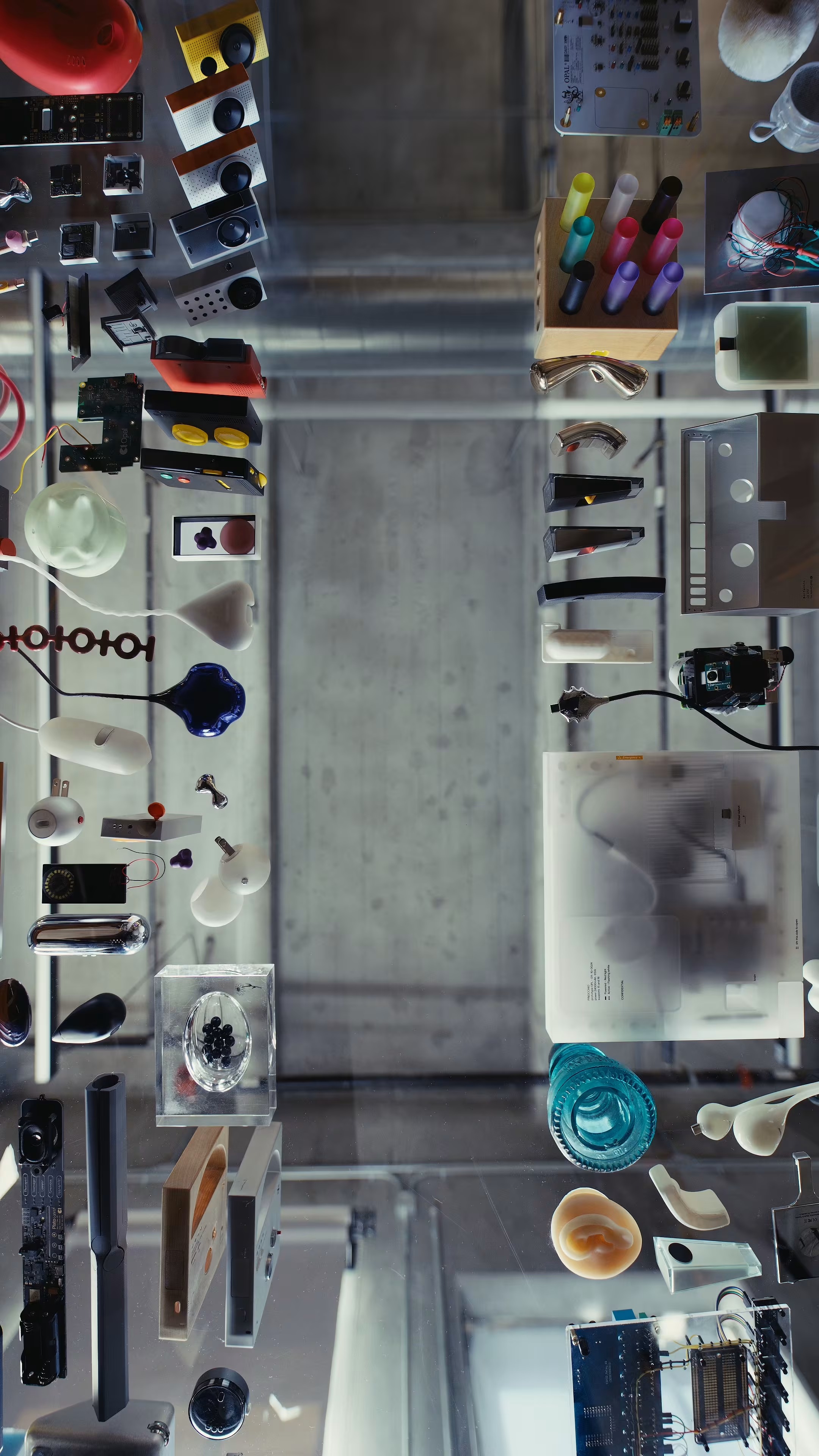
Opal’s own June announcement adopted the Electronics name and said the cameras would retire, with support continuing for years. The company described a table holding its past work and unreleased ideas. It wants to remain small while producing more devices. Each release, though, adds another product that somebody must maintain.
The opportunity is attractive: choose a neglected daily irritation, give it a precise physical solution, and make the object pleasant to use. The constraint is equally concrete. A dedicated device must earn its space beside equipment people already own. Opal’s next favorite thing will need to survive that test every morning, long after anyone has admired the packaging.