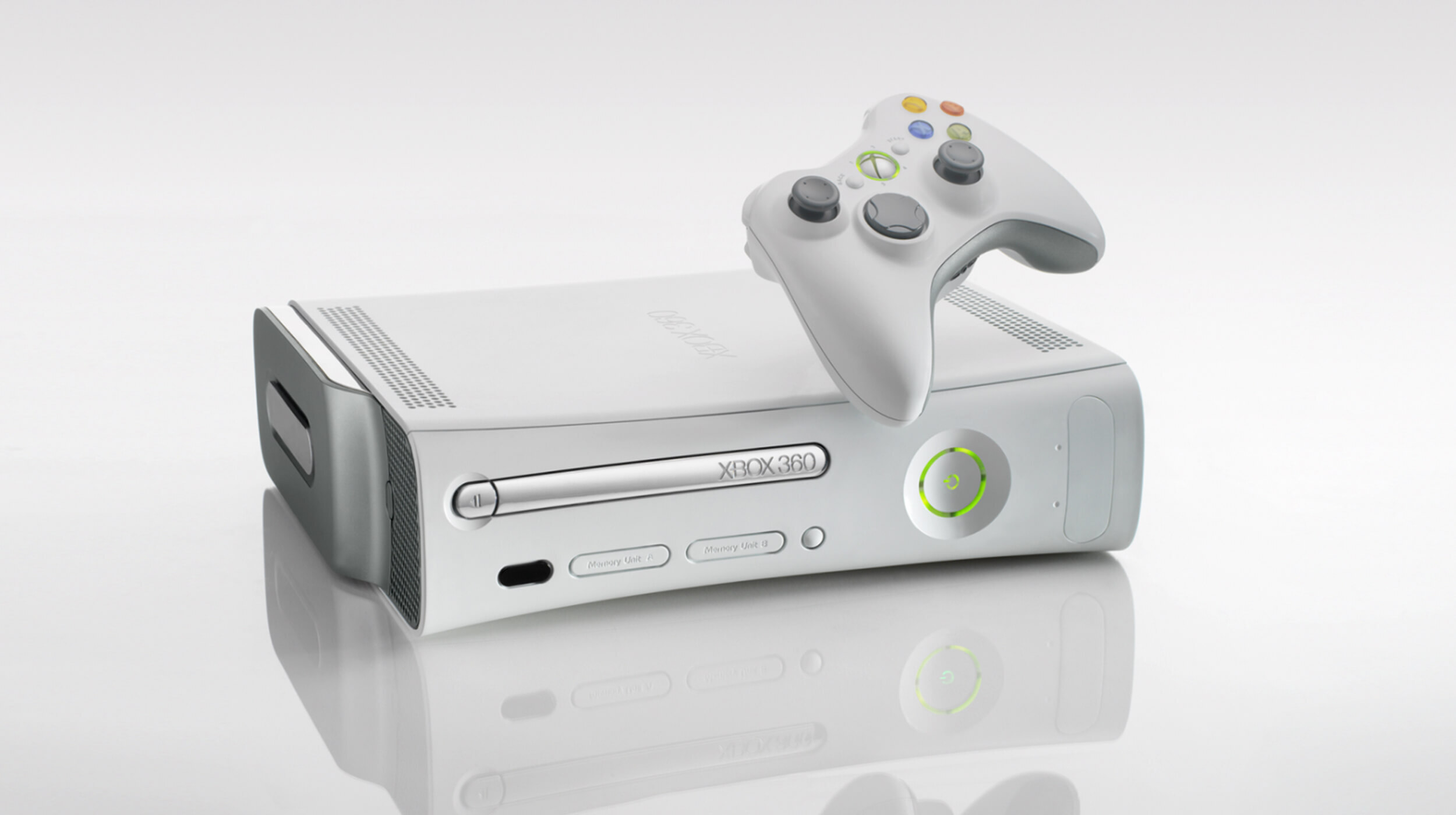
Pick up an Xbox 360 controller and you encounter a piece of Astro Studios' work. The San Francisco design firm helped Microsoft develop the console's physical identity, extending a shared visual language across controllers, removable hard drives, faceplates and accessories. That familiar object was part of a much larger assignment: make a new generation of gaming hardware look as though it belonged together.
Astro worked alongside Microsoft's teams and other design and development partners. The ambition reached beyond the machine under the television. Wireless controllers and Xbox Live were changing how people played; the hardware needed to make those changes approachable. PA's retrospective puts lifetime console sales above 80 million. That is the reach of a client's product, rather than revenue earned by the design studio.
This is Astro's territory: the space where an engineering achievement becomes a recognizable consumer object. Its customers have included Nike, Bose, HP, P&G and Facebook. They come with technologies, audiences and commercial ambitions. Astro supplies research, industrial design, brand identity and experience design, often working across several of those disciplines on the same assignment. The resulting work can end up on a wrist, in a living room or around a gamer's ears.
02The wristband had to earn its place
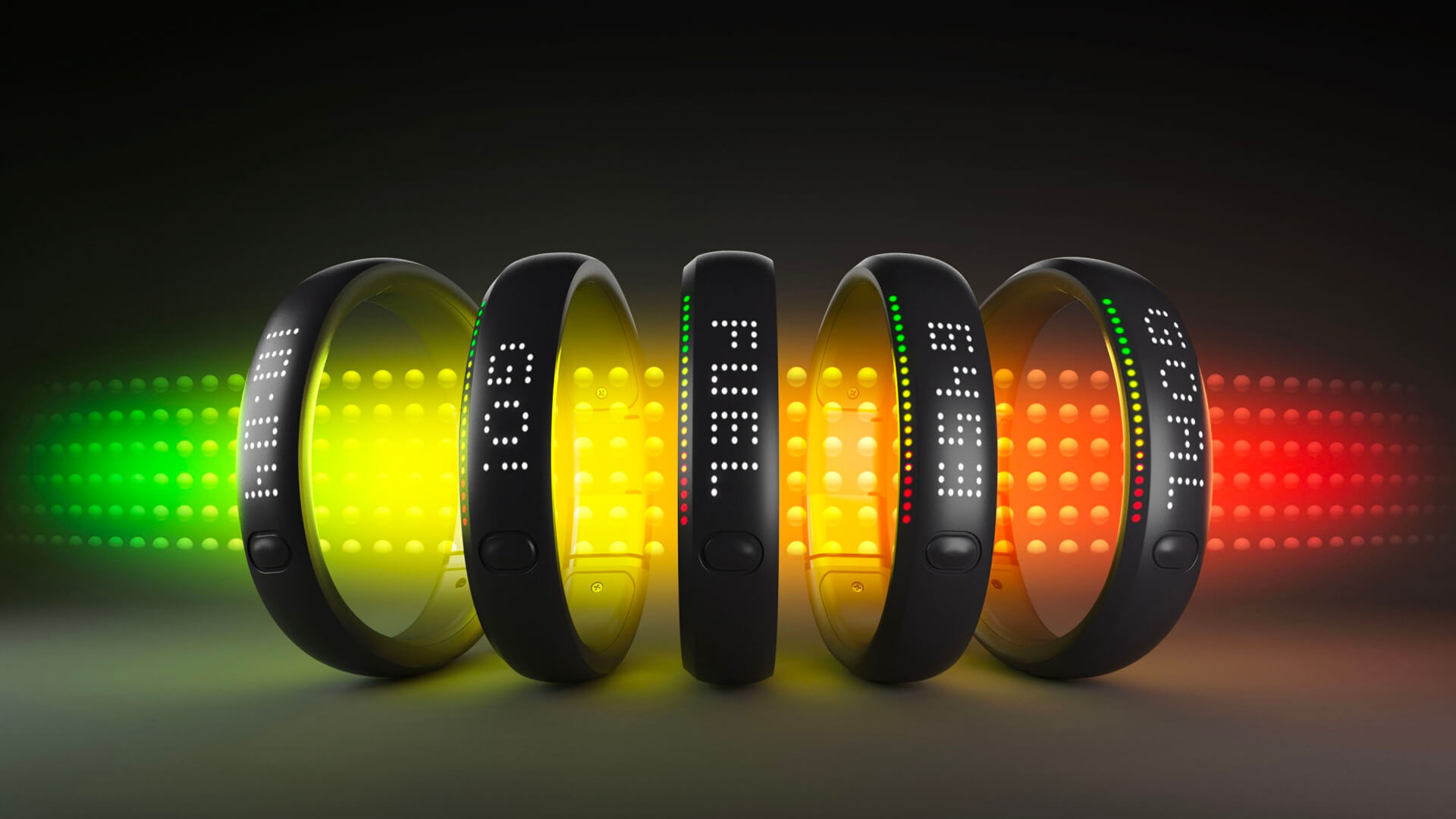
Nike's FuelBand makes that proposition unusually easy to see. The activity tracker translated movement into NikeFuel points, with a display that encouraged the wearer to keep going. Astro's contribution included a soft exterior and a restrained, unisex appearance. Its display could recede into the band when inactive. The product had to survive the awkward transition from interesting gadget to something a person would actually wear all day.
Early development was less graceful. A 2013 account of Nike's first prototypes describes a concept whose flexible color display and power requirements outran the available engineering. Nike explored a dozen prototypes before narrowing the field and bringing in outside partners, including Astro, R/GA, Synapse and Whipsaw. The team inherited a direction, including the color progression, rather than an empty sheet of paper.
What hit the wall first was feasibility. A convincing demonstration could communicate the desired experience without being a manufacturable wristband. For anyone developing hardware, that distinction is useful: a prototype can answer whether an interaction makes sense while leaving the battery, materials and assembly unresolved. Those are separate questions, and they need separate tests. A room full of people liking the idea does not settle them.
03A headset becomes a business
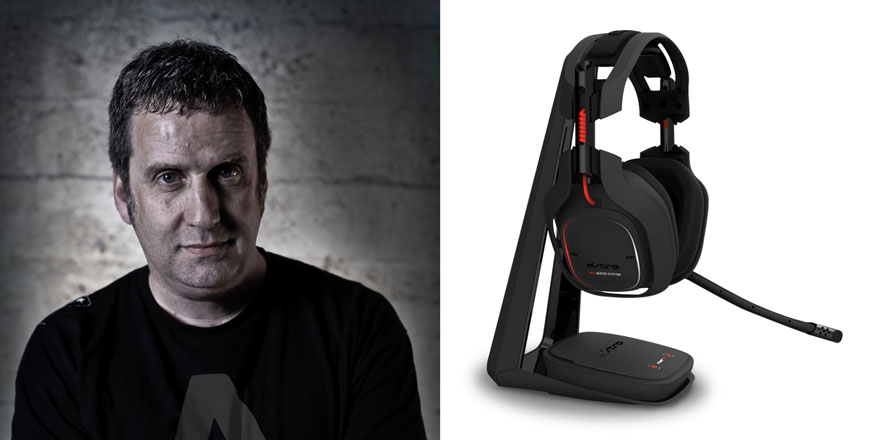
Astro sometimes went beyond advising other companies. Founder Brett Lovelady established the studio in 1994 after working at Lunar and Frog. In a 2013 interview, he described setting aside 20 percent of company money for ventures that could return royalties or equity. It was an early way to give design a financial stake in what happened after delivery.
Astro Gaming, co-founded in 2006, made that idea tangible. Its headsets addressed the experience of competitive play, including how players heard both teammates and the game. The MixAmp let users balance those sounds; magnetic ear tags made the headset's appearance changeable. Packaging and carrying gear extended the same attention beyond the electronics. A recognizable brand could develop around a specific community and its habits.
Skullcandy acquired the gaming company in 2011. Logitech announced its agreement to buy it for $85 million in cash in July 2017, expanding its console gaming presence. Astro Studios and Astro Gaming consequently have different ownership stories. The studio's subsequent move to PA was a separate transaction involving a design consulting business.
Lovelady's experience as a product seller also changed his view of client work. Manufacturing, financing, marketing and selling brought responsibilities beyond the design presentation. The distinction remains useful when evaluating Astro: the portfolio includes both commissioned work and a business its founders helped build. That history gives its commercial claims a concrete example to examine.
04The fragrance machine and the dinner mess
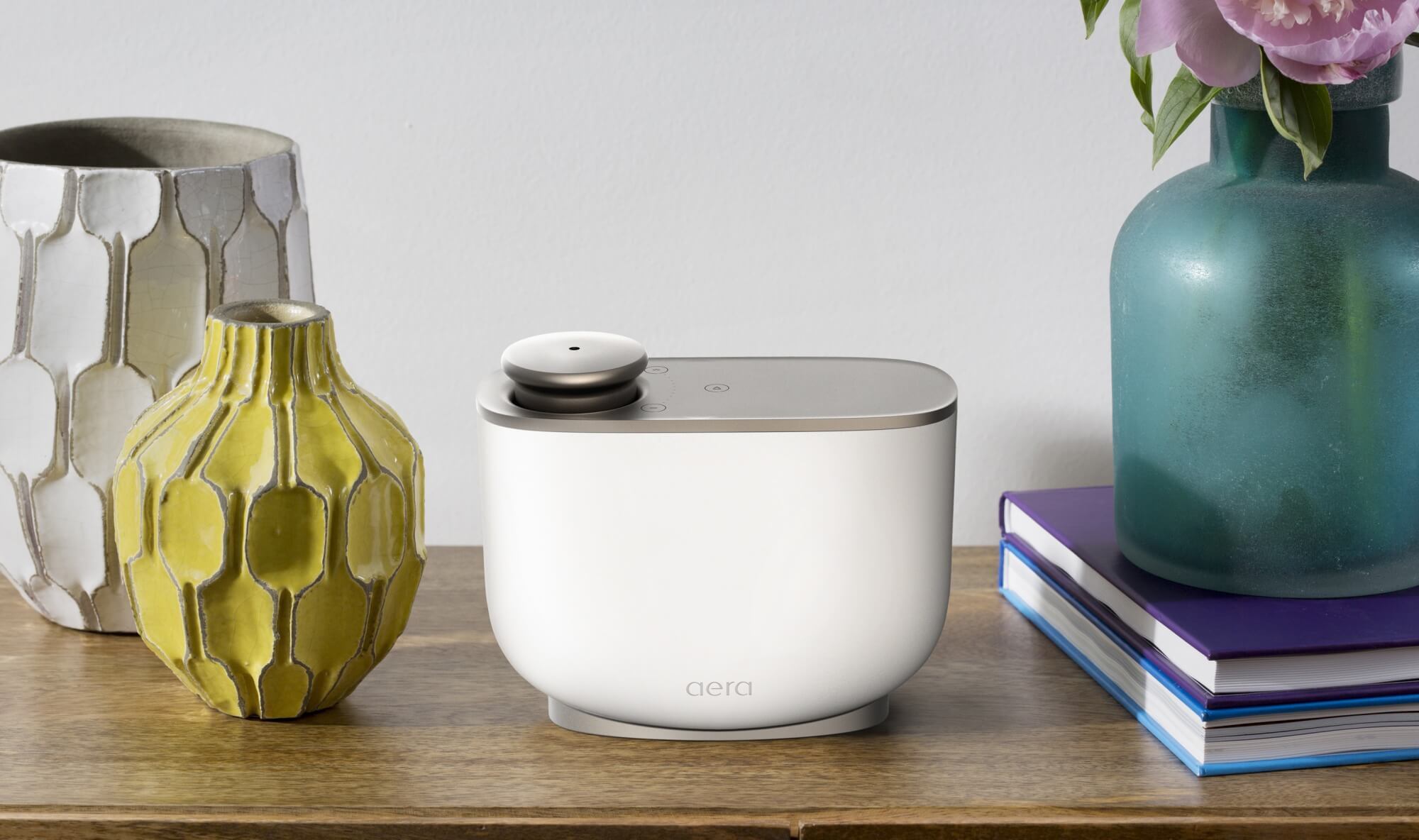
Consider Aera. Prolitec wanted to bring its commercial scenting expertise into homes through a fragrance device controlled by phone. Astro helped create the object, its name, logo and packaging. The form borrowed from the familiar potpourri bowl, while replaceable scent cartridges and precise detailing suggested an electronic appliance. Even the name was chosen to evoke the atmosphere it would influence.
Aera shows why combining brand and product work can matter. A device, its packaging and its name all explain the purchase. If they tell different stories, the customer must reconcile them. Here the assignment covered those decisions together, allowing the same idea to travel from the shelf to the home. It is a practical example of the studio's broad design offer.
Stokke's Clikk highchair started somewhere considerably stickier: family mealtimes. The design team visited parents at home, watched meals and discussed purchasing decisions and frustrations. Sketching, prototypes and testing with babies followed. The resulting chair emphasized easy assembly and cleaning. The research was useful because it connected the purchase to the repetitive work that comes after it.
Shinola brought a different challenge. Its Runwell turntable, developed with VPI, combined machined aluminum, white oak and leather to make audio equipment feel at home among furniture. A separate power collection with General Electric translated cues from Shinola's watches, bicycles and leather goods into outlets and extension cords. Yes, extension cords: objects usually banished behind the sofa were invited to join the decor.
05Gaming without the light show
Western Digital's WD_BLACK assignment stretched across roughly 18 months. Astro worked with executive leadership and design teams on positioning, visual identity, industrial design, packaging guidelines and a launch campaign. The products drew on utilitarian storage containers and metal construction, including materials that helped dissipate heat. The visual system took cues from coding and precision tools.
That gave WD_BLACK a deliberate stance within gaming's crowded visual landscape. Rather than adding more decorative lighting, the work made technical purpose part of the appearance. Brand positioning became something visible in the object itself. For a buyer assessing a design partner, this is a more revealing example than a list of capabilities: one commercial argument expressed across several deliverables.
Astro's work for HTC's VIVE shows the other end of its range. The assignment included brand positioning, identity, product naming, messaging and launch video work. A company could engage the studio for how a technology was introduced and understood, without commissioning a new physical enclosure. That places Astro across the overlap between product design consultancies and branding agencies.
06The battery gets the final vote
A strong portfolio also contains products with difficult lives after launch. Astro helped design Bose's original noise-masking Sleepbuds, intended to make bedtime listening comfortable. In October 2019, Bose stopped selling that generation after battery charging and unexpected shutdown problems persisted. Software and firmware fixes had not resolved the failures; Bose offered customers refunds.
The episode illustrates a limit on what design can accomplish. Comfort and an intelligible proposition depend on reliable components to deliver their promise. The reported fault was in the battery system, and that account does not assign battery engineering responsibility to Astro. For a client, the useful lesson is to examine validation and production responsibilities alongside the industrial design brief.
07Why independence stopped being enough
By 2020, the studio faced pressures familiar to independent consultancies. Large technology companies were building internal design teams, competing for both work and talent. Lovelady told Fast Company that reliable, continuing client relationships had become harder to sustain. He wanted access to more engineering and interface expertise so Astro could address a product's physical and digital experience together.
PA appealed because it had practical development capabilities. As Lovelady put it: "They actually make things and solve problems." PA announced the team's arrival on June 23, 2020, linking San Francisco with Essential Design in Boston and its innovation and technology center in Cambridge, England.
The deal's financial record is unusually specific. PA's 2020 accounts state that it acquired Astro Studios Inc.'s trade and assets on June 19 for £0.8 million, equivalent to $1 million. That reported consideration describes the acquired business assets; it should not be confused with the gaming company's $85 million transaction. Nor does either figure tell a prospective client what a product development engagement will cost.
In 2022, Brett Lovelady and Astro received IDSA's Special Achievement Award. By March 2023, PA described integrating its acquired design, engineering and innovation firms, including Astro, Essential Design, Cooper Perkins, Sparkler and Design Partners. The present offer therefore sits inside a broader consulting organization, with access to disciplines a smaller independent studio would have to assemble through separate relationships.
“They actually make things and solve problems.”
Brett Lovelady on joining PA / 2020
Astro Studios trade & assets
PA Consulting · 2020
Astro Gaming acquisition agreement
Logitech · 2017
08Bring the problem before the polish
For prospective clients, Astro's work suggests a sensible starting point: bring an observed problem, a defined audience and a commercial objective. A sports company might need people to keep wearing a tracker. A fragrance specialist might need a credible route into homes. A hardware company might need a family of products to communicate the same promise. Those briefs invite research and decisions across several connected parts of a business.
The approach asks something of the client, too. It works best when teams can revisit the product, interface and brand together, and when engineering can test the proposed experience early. If the enclosure is fixed, the packaging already ordered and the launch date immovable, much of that room for exploration has disappeared. The assignment becomes narrower, whatever the agency's portfolio contains.
Lovelady has argued for more time to explore ideas before rushing them into production. His advice in Communication Arts was equally direct about entrepreneurship: "you need to learn to run a business." Astro's history gives both positions weight. It has helped shape familiar products, built a consumer brand of its own and changed its operating model. The lesson a reader can copy is to keep the design decisions close to the business decisions, all the way to the thing someone takes home.