A man needs a shirt. The ordinary retail answer is to send him among shelves of shirts, each cut for a hypothetical body. He tries on a medium, discovers the sleeves are short, tries a large, and discovers the torso has acquired a room of its own. Trumaker’s answer was to send someone to him. The Outfitter arrived with fabric, questions and a tape measure. Once the fit was recorded, the man could buy the next shirt without repeating the expedition.
The short version
- Trumaker began with made-to-measure casual shirts and grew into suits, blazers and wardrobe staples.
- Its Outfitters measure customers, suggest styles and stay available for later orders.
- Early shirts started around $100; prices in older profiles vary by fabric and garment.
- The useful idea is cumulative: save the fit, then make the second purchase simpler than the first.
This is a clothing company, but its sharpest observation concerns time. The founders, Mark Lovas and Michael Zhang, started Trumaker in San Francisco in 2012. Lovas had worked at Bonobos, where he helped develop the Guide Shop model. He saw men’s custom clothing as a market burdened by dress fabrics, large choice books and a ceremony many customers did not want. He wanted an everyday shirt that fitted its owner, and a buying process that did not demand an afternoon.
The shirt was the invitation
The first offer was made-to-measure casual shirting, the button-down that lives with jeans rather than a dinner jacket. In 2013, an Outfitter visited a customer at home or work, took measurements and entered the order into a mobile app. Fabric, fit, collar and other details went with it. The measurements stayed in the customer’s profile, so later shirts could be ordered online. Trumaker was selling an object and quietly keeping a useful piece of information.
The early economics were equally specific. Shirts started around $100 in 2013, according to the launch coverage. The Outfitters were contractors who earned commission on an initial purchase and later orders from their clients. That gave the person taking the measurements a reason to stay in touch. The company avoided a network of permanent stores at first, letting Outfitters meet people wherever a fitting was convenient.
Early signal / 2013Shirts reportedly sold through word of mouth after the December 2012 soft launch. It was enough to show that people would try a made-to-measure casual shirt without a conventional retail floor.
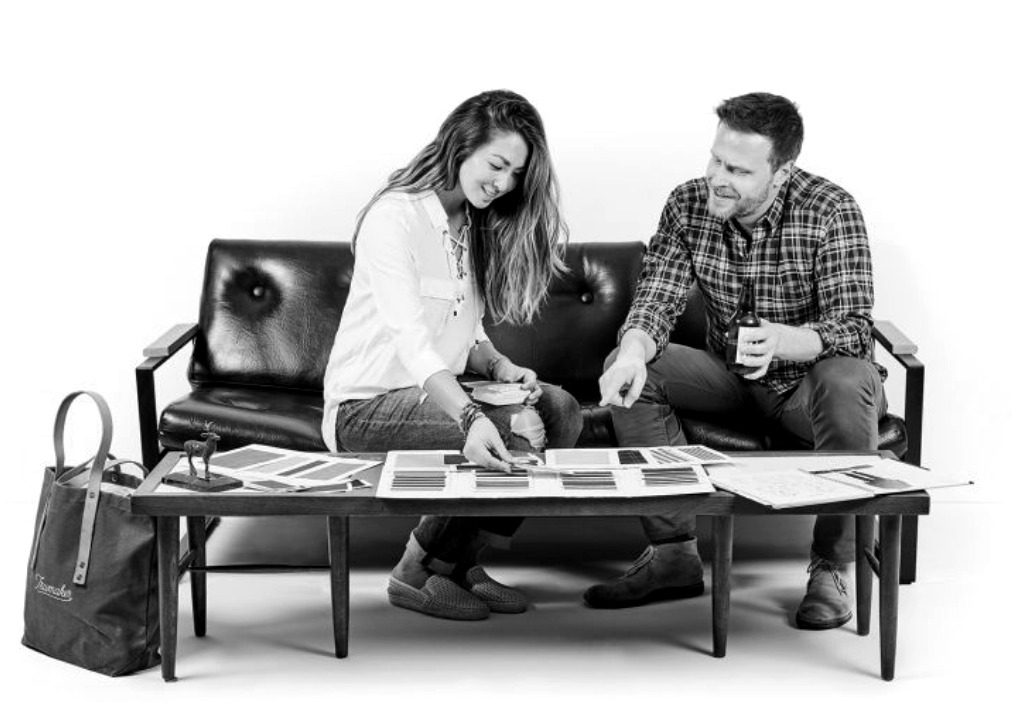
A stylist with a memory
A size chart is good at describing averages. It cannot see a shoulder that sits differently, a sleeve that always runs short, or the fact that one customer considers a bright plaid a small personal disaster. Trumaker put a person between the chart and the purchase. The company calls its stylists Outfitters, a deliberately practical title. They measure, recommend, assemble outfits and remain a point of contact when the customer wants to buy again.
Lovas told a Seattle interviewer that an initial consultation took about 30 minutes. It was meant to be relaxed, and the client stayed matched with that Outfitter afterward. The company’s own language calls the worry of opening a closet and finding nothing that fits or goes together “closet anxiety.” The phrase is a little comic; the problem is common. The service promised to remove the small daily tax of uncertainty.
“Why can’t a company simply take my measurements?”Mark Lovas, describing the founding question
That question also explains how Trumaker differed from a tailor, a department store and a pure online shirt maker. A tailor can do the fitting, but usually asks the customer to visit. A department store has inventory, but rarely retains a personal pattern. An online brand can remember an order, but getting the first fit right may still be a guessing game. Trumaker tied a local human visit to a digital record and later ecommerce. The novelty lay in the sequence.
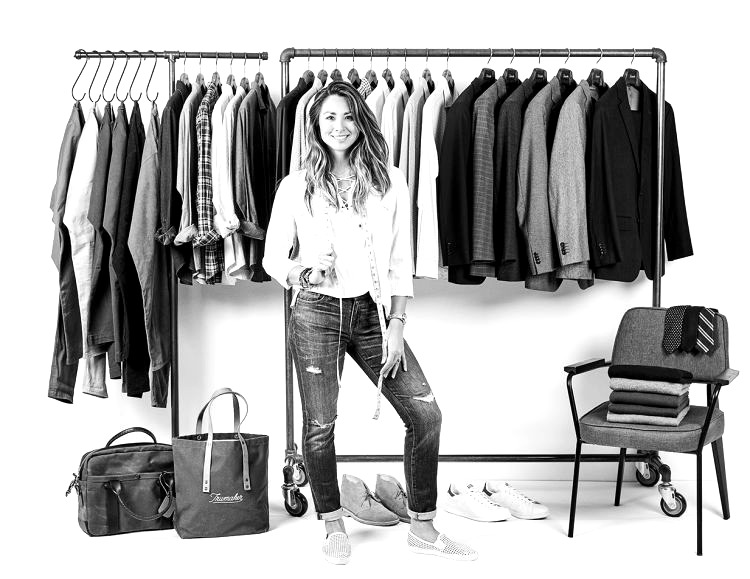
More of the closet, fewer decisions
The company did not remain a shirt specialist. By 2015, profiles described blazers, sweaters, ties, belts and wallets. A reporter paid attention to the details: $135 for one flannel shirt and a starting price of $445 for a corduroy blazer. In 2016, Trumaker was promoting made-to-measure suits as well. Today its site describes wardrobes running from casual wear to black-tie attire, with custom and in-stock clothing side by side.
This expansion was a logical bet. Once an Outfitter knows the customer’s body and taste, the next question is what else is missing. A shirt introduces the relationship; a blazer, a suit and the other items can fill it out. Trumaker says its fabrics come from partner mills in Italy, England and the United States. It emphasizes clothes that are easy to pair, which is a useful antidote to selling a man a beautiful jacket that refuses to live with his trousers.
Money helped the model travel. The company raised $1.9 million in seed funding in 2013, then $6.5 million in a Series A led by Javelin Venture Partners in 2014. A reported $13 million Series B followed in 2015, bringing disclosed funding to $21.4 million. When the Series A closed, Trumaker had Outfitters in six US markets and about 15 full-time employees; Lovas said the money would fund new cities, staff and the technology platform. Funding was buying a wider map of people able to knock on the customer’s door.
The appointment still matters
Trumaker’s present site offers appointments at a customer’s office, online or in a lounge. Its location page lists lounges in Denver and Mexico City, plus Outfitters in Los Angeles and San Francisco. That map is smaller and more precise than the broad nationwide ambitions of its funding years. It is also a reminder that the model depends on geography: a personal fitting works best where a skilled Outfitter can actually meet you. For someone far from that network, the company’s main advantage is harder to deliver.
The idea is portable, though. Learn something important in a first service encounter, store it carefully, and use it to make the second encounter easier. Avoid offering every possible choice when a customer mainly wants the right one. Give the human adviser a reason to care about repeat business. These are lessons for any retailer that sells goods people struggle to evaluate online, from eyeglasses to furniture.
A well-fitting shirt is pleasant. A retailer that remembers why it fits is more interesting. Trumaker’s best customer may still dislike shopping. That was the point all along.