The most important thing Marquee Brands owns may be consumer memory. Martha Stewart belongs to the kitchen before a shopper sees a pan. Body Glove arrives with salt water on it. Laura Ashley can summon an English bedroom from a scrap of floral cloth. Stance is a sock, but also a particular version of California cool. These associations took decades to build. Marquee's business begins after that difficult work has already been done.
The New York company buys established names, protects their recognizable core and connects them to manufacturers, retailers, distributors and digital operators. It does not need to sew every shirt or staff every shop. It needs to decide what a brand can plausibly become, who should make it and where it should appear. In a retail economy crowded with products and short on attention, familiarity is the scarce raw material.
A switchboard for second acts
Marquee was formed in 2014 by Neuberger Berman with investment executives Samuel Porat and Zachary Sigel and operating executives Michael DeVirgilio and Cory M. Baker. Its first major purchase, the Italian footwear name Bruno Magli, offered a useful prototype: deep history, broad recognition and more potential than its current business captured. Ben Sherman followed. In 2016, an oversubscribed acquisition fund closed at $462 million, above its $400 million target.
The selection logic was unusually legible. Management looked for heritage, global opportunity and evidence that the brand would improve under Marquee's process. DeVirgilio described the key question in 2018 as whether a brand was “bigger than its current business.” That phrase remains the cleanest explanation of the company. A tired balance sheet is not necessarily a tired idea.
Today those early fashion labels sit beside Martha Stewart, Emeril Lagasse, Sur La Table and America's Test Kitchen in home and culinary; BCBG, Ben Sherman, Bruno Magli, Anti Social Social Club and Laura Ashley in fashion and lifestyle; Body Glove, Dakine and Stance in active and outdoor; plus a developing luxury platform led by the announced Roberto Cavalli deal. Maternity names and weather-accessory brands add still more shelves to the cabinet.
The product is the permission
Consumers rarely buy from Marquee Brands by name. They buy a licensed kettle, dress, wetsuit, cookbook, sock or sofa from one of its properties. Marquee's immediate customers are the businesses behind those objects: licensees that want a recognized badge, retailers that want demand without inventing a label from scratch and regional operators that understand a local market better than a New York headquarters could.
That gives Marquee two audiences to satisfy at once. Its partners need predictable standards, protected territories and enough creative room to make products that fit local tastes. End customers need continuity: a Martha Stewart appliance should still feel considered, and a Dakine bag should still feel built for use outdoors. The company solves the expensive problem of creating awareness for partners, while solving the coordination problem of keeping hundreds of partner-made objects inside one recognizable world.
This makes licensing a form of distributed execution. A partner contributes factories, sourcing, sales teams and retailer relationships. Marquee contributes intellectual property, standards, marketing, consumer research and a portfolio-wide view of opportunity. The arrangement can be capital-efficient because Marquee does not duplicate every operational layer. It also produces recurring royalty streams tied to contractual sales.
“We look at brands that are bigger than their current business for one reason or another.”Michael DeVirgilio, founding operating executive
The model is not entirely hands-off. Marquee has taken direct control when it believed control mattered, including selected BCBG wholesale and e-commerce operations. America's Test Kitchen brought a different engine altogether: subscriptions, television, cookbooks, more than 15,000 recipes and thousands of equipment reviews. That acquisition made media expertise part of the portfolio, not merely a marketing service applied to it.
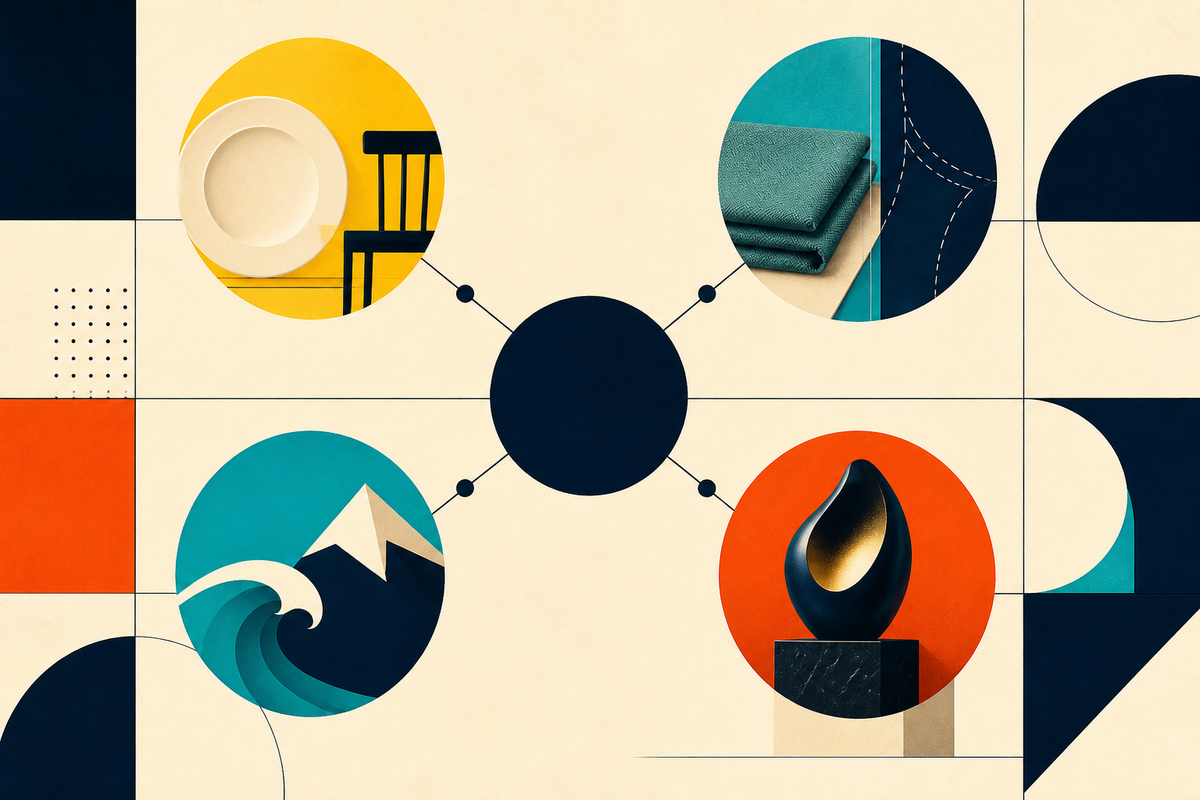
Four platforms, different rules
Recipes, advice, cookware, furniture and hospitality turn authority into products and experiences.
Silhouettes, prints and cultural associations give licensees a usable design language.
Surf and mountain customers notice when a lifestyle extension ignores how the equipment is used.
Scarcity, creative authority and craftsmanship make a mass licensing reflex especially risky.
The differences matter. Martha Stewart can move from cookware to a restaurant because entertaining has always been the organizing idea. Laura Ashley's floral archive can travel across bedding, dresses and wallpaper. Body Glove can collaborate with Zara on children's clothing while retaining water-sports equipment at its center. Each extension borrows permission from the brand's story. The further it travels, the more carefully that permission must be tested.
Laura Ashley is a useful case. Marquee bought the British label in early 2025, retained its UK team and opened a London headquarters. The brand already worked through more than 100 licensed partners and over 200 lifestyle categories. Marquee did not need to reconstruct an old vertically integrated retailer. It could use NEXT for a return to British apparel retail while other partners handled other rooms, products and countries.
Stance shows the speed of the system. When Marquee acquired the performance and lifestyle sock company in November 2025, it simultaneously named United Legwear and Apparel Co. the core global licensee outside China. The brand owner and the operator arrived as a pair. CEO Heath Golden has since discussed possible movement into footwear, grooming and adjacent products - exactly the category whitespace Marquee is built to see.
The line between extension and erosion
Brand managers compete on two related judgments: what to buy and what not to do after buying it. Authentic Brands Group, WHP Global, Bluestar Alliance and Iconix pursue variations of the same opportunity. All can offer sellers an exit and licensees access to famous intellectual property. Marquee differentiates itself through a comparatively focused portfolio, in-house marketing and media capabilities, and a partner network designed for international category growth.
The danger is visible in the model itself. A logo can produce quick royalties on many products, but too many indifferent products weaken the reason anyone cared. Licensees can deliver local expertise, but they also fragment control. A brand that looks global on a portfolio slide may feel inconsistent on a shop floor. Golden's public insistence on “localized execution at global standards” recognizes the problem. The network is an advantage only if standards travel through it.
Roberto Cavalli is the sharpest test yet. In May 2026, Marquee announced a definitive agreement with DAMAC Group for a majority interest in the Italian house, with the transaction expected to close in the second quarter. DAMAC would retain a meaningful stake and continue branded residences and hospitality. Milan's The Level Group would run core collections, manufacturing, distribution, retail and e-commerce in Europe and the United States. The arrangement is pure Marquee: intellectual property at the center, specialist operators around it.
But luxury is unforgiving. A surf label can welcome useful ubiquity; a luxury house depends on controlled desire. Cavalli must expand without becoming ordinary. That asks Marquee to demonstrate not only how far a brand can travel, but when it should stop. If it works, the deal opens fashion, accessories, hospitality and residences across major regions while pushing portfolio retail sales to approximately $5 billion. If it does not, the same reach could flatten the house's distinctive glamour.
Where the machine goes next
Marquee now sits between private equity, consumer marketing, media and retail. It is not a traditional conglomerate because most production and distribution live with partners. It is not merely a trademark warehouse because selected teams develop content, consumer insight, creative direction and direct commerce. The useful description is a brand operating system: capital acquires the name, a central team sets direction and a distributed network performs the work.
Recent launches show how many forms that work can take. The first Martha Stewart store opened in Dubai with Apparel Group. A Martha Stewart kitchen-electrics line reached Amazon. The Bedford restaurant expanded to Foxwoods. Laura Ashley returned to British retail. Body Glove met Zara. Hint, an always-on home intelligence platform co-founded by Stewart, launched nationwide in July 2026. None is simply another labeled mug. Together they widen the definition of what a consumer brand can provide.
For manufacturers and regional retailers, Marquee offers a shortcut to meaning - a product can enter the market with a story already attached. For brand sellers, it offers a home designed to separate intellectual property from legacy operating burdens. For consumers, the promise is quieter: the old favorite will reappear in a form that feels both recognizable and useful. That is a delicate promise. Marquee's future depends on keeping it at industrial scale.