A supermarket shelf looks orderly because all the disorder happened somewhere else. Before a protein bar, store-brand salsa or probiotic soda gets its tidy rectangle of real estate, somebody has to find a factory with the right line, capacity, certifications, allergen controls, packaging and minimum order. For years, that search was an industrial scavenger hunt: trade shows, brokers, old contacts, web searches, spreadsheets and a great many emails beginning with “just circling back.”
Keychain built a search box for that mess. The New York company says its platform now covers more than 50,000 global consumer-packaged-goods manufacturers. A brand or retailer can filter for what a plant can make, how it can package it and which standards it meets; post a project; receive matches; and compare suppliers. AI helps translate a product idea into specifications and query the network. The practical achievement is not that a chatbot can imagine a creatine gummy. It is that the gummy can be connected to a factory qualified to produce it.
The first failure is discovery
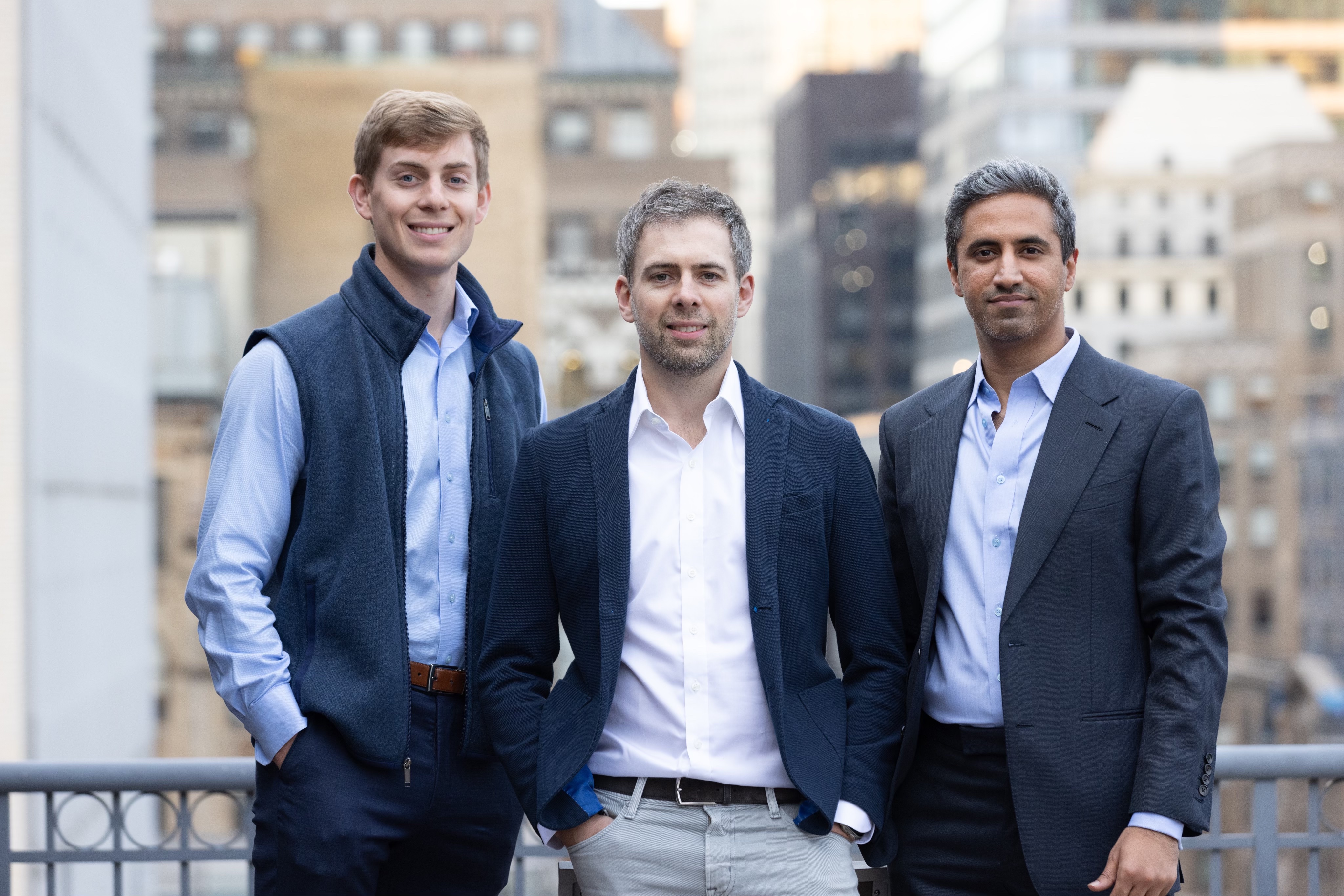
Co-founders Oisin Hanrahan, Umang Dua and Jordan Weitz started Keychain in 2023. Hanrahan and Dua had already built Handy, the home-services marketplace later acquired by Angi. The rhyme is obvious: both businesses begin with a buyer who knows the outcome but cannot confidently identify the supplier. A clean apartment needs a reliable cleaner. An organic granola bar needs a plant that can source, mix, form, wrap and certify it.
The team did not sprint straight to a demo. It spent roughly a year researching, visiting factories and collecting feedback. Hanrahan has also pointed to the confusion faced by people with food allergies as one clue that the production system was not transmitting enough useful information to the shelf. This is the part of the story worth stealing: the founders looked for the first information breakdown in a long workflow. They found it before the purchase order, before production planning and before the ERP. Discovery failed first.
“If we can take that process from months down to days, we think we can unlock innovation in product development for this whole industry.”Oisin Hanrahan, co-founder and CEO
Keychain launched its core product in February 2024. By that November, it said more than 20,000 brands, retailers and food-service operators had used it, while roughly $500 million in project volume passed through during October. In February 2025, as the search product left beta, the company reported $1 billion of projects posted each month and introduced beta tools for finding packaging and ingredient suppliers. The map was spreading outward from the factory.
The wedge became a triangle
A directory is useful, but a directory alone is not much of a fortress. Keychain's expansion explains the larger bet. Search & Discovery sits in the middle. Keychain360 gives brands and retailers a place to manage their supplier network, sourcing pipeline, documents, qualification and product-development work. Keychain Edge helps manufacturers attract qualified opportunities. KeychainOS reaches into the plant with purchasing, inventory, production automation, food-safety audits and traceability.
That creates a credible data flywheel. Every search reveals demand. Every supplier response adds capability data. Every awarded project teaches the platform which matches survive contact with reality. Workflow products can then keep both parties on the system after the introduction. In theory, the same graph can tell a retailer who makes sugar-free gummies, help qualify three factories, store the documents, and later help the winner buy inputs and trace finished lots.
The customers span both sides: emerging brands, large CPG companies, retailers with private-label programs, contract manufacturers, packagers and ingredient suppliers. Keychain has publicly named or displayed companies including General Mills, Campbell's, Ferrero, Lidl US and GoPuff. In 2025, it said eight of the ten largest U.S. retailers used the software, including 7-Eleven and Whole Foods. Those are company-reported adoption figures, not the same thing as disclosed recurring revenue, but they show where Keychain wants to sit: between product ambition and production reality.
Who pays, and what did it cost?
Keychain's original marketplace offered free access to brands and retailers, while manufacturers paid for premium placement, analytics and access to qualified commercial demand. The newer enterprise products are sales-led, and public list prices are not disclosed. In plain English: buyers create liquidity; suppliers and larger organizations pay where the software can produce leads, shorten sourcing or replace operational work.
Building that position was not cheap. Lightspeed led an $18 million seed round in 2023. A $15 million 2024 financing brought in BoxGroup and strategic industry names including General Mills, Schreiber Foods and Hershey-related backing. Bright Pixel added $5 million in February 2025. A $30 million Series B led by Wellington Management and BoxGroup arrived that August, followed by $10 million from retail-backed W23 Global in November. Public announcements therefore support at least $78 million raised through late 2025.
One financing detail reveals how the founders think. Keychain had not planned to raise in 2024 and still had plenty of seed capital. Investors kept approaching. The company took a smaller Series A than it could have because Hanrahan, after an 11-year journey with Handy, was more sensitive to dilution. The change of mind was conditional: accept strategic money and useful industry partners, but do not maximize the headline at the expense of ownership. General Mills did more than invest; its supply-chain chief said the platform compressed some co-manufacturer searches from weeks or months to minutes.
A global team for a stubbornly physical market
Keychain is headquartered at 7 World Trade Center, yet its core product and engineering operation is in Gurugram, India. In August 2025, the company had about 70 people: roughly 35 in Gurugram, 20 in New York and the rest in Austin. It planned to grow the India team toward 100. Hanrahan said the choice reflected talent depth, speed and a desire to build a durable engineering organization after lessons at Handy and Angi. LinkedIn listed 184 employees by August 2026.
That distributed model fits software; the market itself remains physical and local. A certification is not capacity. A polished profile is not a successful pilot run. Freight, tariffs, ingredient availability and plant downtime can ruin a match. Keychain's advantage depends on keeping supplier data current and earning enough trust that buyers share real specifications while manufacturers share real constraints.
Find the first painful handoff, not the largest software budget. Keychain began with discovery before challenging ERP systems.
Do the taxonomy work. Certifications, allergens, formats and capabilities make matching defensible; a generic prompt does not.
Subsidize the side that creates demand. Free buyer utility can give suppliers a measurable reason to pay.
Expand along the transaction trail. Search leads naturally to qualification, documents, purchasing, inventory and traceability.
Where the strategy can break
Keychain competes first with habit: brokers, trade shows, industry directories, internal sourcing teams and private spreadsheets. Digital alternatives range from Thomasnet and Maker's Row to specialized procurement and product-lifecycle tools. Its OS products enter a tougher neighborhood occupied by Oracle, SAP, QAD, Infor, Plex and Redzone. The differentiator is CPG specificity plus a live network of buyer intent. The disadvantage is that mature operational systems are sticky for a reason.
Conditions where the playbook weakens
It works poorly when supplier data is stale, the needed process is too specialized for the network, buyers will not share specifications, or manufacturers already have full pipelines and entrenched systems. It also weakens if paid visibility compromises match quality. A marketplace that becomes an operating system must remain useful to both sides without appearing captured by either.
The hardest transition is no longer from offline search to online search. It is from helpful connector to system of record. A manufacturer can trial a lead source quickly; replacing purchasing, inventory or traceability software requires implementation, training, integrations and confidence that Keychain will be around for years. Retailers face their own question: if suppliers, competitors and strategic investors share one network, how is sensitive data separated and governed? Those are enterprise questions, not pitch-deck questions.
Still, the sequencing is unusually clean. Map the market. Create demand. Observe the work around the match. Turn repeated work into software. Keychain may ultimately become the operating layer it describes, or it may find that discovery and factory operations are different businesses with different sales cycles. Either way, it has already made a hidden market easier to see. The shelf remains neat. Now the disorder behind it has a search bar.