An avocado is a rather demanding passenger. It needs the right temperature, the right timing and a buyer who wants it at the right stage of ripeness. Its travelling companion, the purchase order, seems less troublesome. Then someone changes a quantity, uses a different product code or charges a price that disagrees with the contract. Suddenly the fruit is the easy part.
iTradeNetwork makes software for that second journey. It connects food buyers and suppliers, helping orders, invoices, product information and traceability records move between businesses. Growers, manufacturers, distributors, grocers and foodservice operators occupy different seats at the table. The company’s business is giving them a workable account of the same transaction.
- Food moves between companies. Its data has to make the same trip.
- iTradeNetwork links ordering with product records, pricing and traceability.
- Roper bought the business for $525 million in 2010.
- The habit worth borrowing: check the handoff while you can still fix it.
The avocado has company
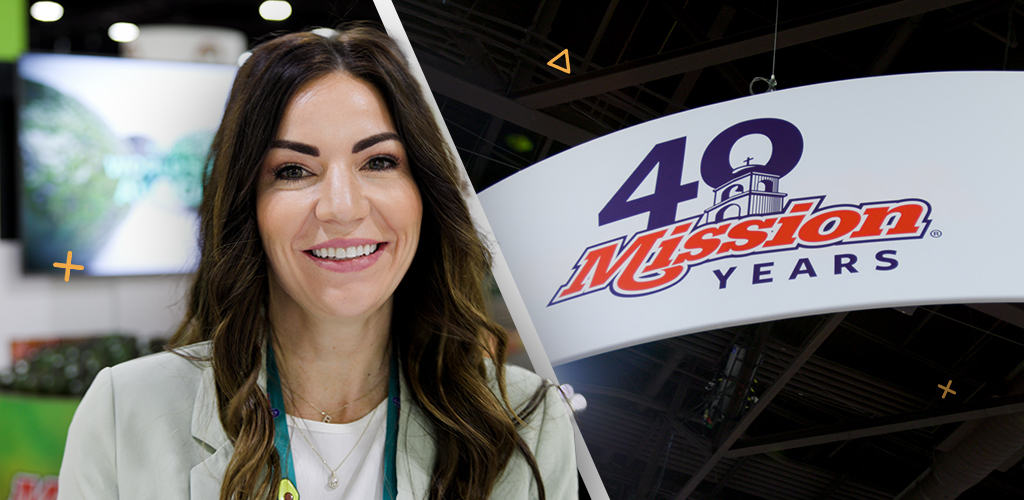
Mission Produce offers a useful view from inside the machinery. The avocado supplier sells across retail, wholesale and foodservice markets. In iTradeNetwork’s customer interview, sales executive Brooke Becker describes a centralized platform where staff can find and sort purchase orders, communicate with buyers and combine commodities on one PO.
“The buy-sell process is very simplified.”
Brooke Becker · Mission Produce, SVP of Sales
There is a pleasing absence of theatre in that endorsement. A sales team needs to locate the order. A buyer needs an answer. The product still needs to arrive. Becker’s account also describes Mission’s analytical work for retailers, using sales trends and store placement to help customers make merchandising decisions. Easier access to order information supports that wider conversation.
The network was the acquisition
Founded in 1999, iTradeNetwork was built by founder and former chief executive Robert Bonavito and his team around food-industry commerce. Accel-KKR invested in 2006 and acquired a majority interest in December 2007. Instill and Amphire joined the business in 2008, widening its capabilities beyond the original order-management focus.
Accel-KKR’s retrospective describes a move into contract management, supply-chain analytics and branded procurement. It says revenue more than tripled during its ownership. This was a strategy of joining related pieces of a particular industry’s work, with acquisitions helping fill the gaps. More trading relationships and more uses for the software could reinforce one another.
Roper’s announced all-cash acquisition price.
A company purchase, not a customer software bill.
Roper completed the acquisition on July 27, 2010. iTradeNetwork remains a Roper Technologies business. The transaction matters because a trading network has a practical attraction: a supplier can use an established connection to reach a buyer. Building the application is one job. Making two companies comfortable exchanging information through it is another.
A product code with an identity crisis
The company’s expertise lives in details that make poor dinner conversation. Item identifiers. Catalog alignment. Invoice reconciliation. Yet a product described differently in two systems can turn a straightforward order into a clerical investigation. Before a business can ask clever questions of its data, it needs agreement about what the data represents.
iTradeNetwork’s Master Data Services prepares, cleans and synchronizes supplier product information. The company identifies itself as a certified data pool for GS1’s Global Data Synchronization Network. Its product page says the platform maintains information for more than 15 million products, including identifiers, classification, nutrition and allergens. That is a company-reported catalog scale, not a count of food shipments.
Catalog · product data
Order · price · contract
Lot · shipment · receipt
Its Order Management System then brings buying and selling into a shared workflow, with capabilities spanning planning, purchase orders, load management and reconciliation. The distinction is useful: master data establishes the product’s identity; order management records what the partners intend to do with it. A beautiful dashboard cannot settle an argument between mismatched item codes.
Catch the price before it escapes
For a restaurant operator, a procurement contract can look splendid at headquarters and become less splendid at the unit placing an order. OrderMaestro applies contracted pricing and sourcing rules during ordering, with controls for approved substitutions and distributor availability. Corporate purchasing policy becomes part of the transaction, rather than a document someone hopes the store has read.
MarginIQ tackles another point in the journey: trade claims and deductions. It compares claimed activity with order and contract data, flags invalid or duplicate claims and uses document capture to turn invoices and trade paperwork into structured records. The practical aim is to give finance and sales teams something specific to investigate before discrepancies erode margin.
These tools make the company’s market position easier to understand. A general business system may manage the records inside one organization. iTradeNetwork concentrates on the relationships between food-industry organizations, adding controls tied to their commercial arrangements. Whether that extra layer earns its place depends on the buyer’s existing systems and the work still falling between them.
A recall is a relay
Traceability makes the cost of a poor handoff more serious. iTraceFresh combines modules for case and pallet labels, event capture, partner data exchange and reporting. A field or warehouse operation can capture information nearer the product’s origin; a receiving partner needs records it can actually use. Printing a label is only one leg of that journey.
The FDA’s food traceability rule focuses on specified foods and records connecting key data elements to critical tracking events. The agency’s current page says Congress directed it not to enforce the rule before July 20, 2028, following a proposed extension. A postponed enforcement date leaves the underlying operational problem quite intact: information must pass between supply-chain participants.
Trustwell’s FoodLogiQ is one alternative in traceability, supplier compliance, quality and recalls. iTradeNetwork’s broader proposition combines those concerns with ordering, commercial controls and product-data services. That breadth may suit a business trying to connect several workflows. A buyer seeking a narrowly defined recall or supplier-compliance tool has a different comparison to make.
The buyer can keep the bad handwriting
The newer AI pitch is refreshingly ordinary. Order Agent accepts purchase orders arriving as PDFs, emails, scans and handwritten documents, converts them to structured data and validates information before it enters downstream systems. The buyer can keep sending an order in a familiar format. The supplier hopes to stop typing it all over again.
iTradeNetwork describes a Google Cloud collaboration involving Gemini Enterprise and Vertex AI, applied to connected commerce and data validation. The appeal here is removing repetitive work from a transaction already happening. Recognition accuracy, exception handling and the quality of the destination data remain sensible things to examine in a demonstration.
In October 2025, the company introduced Cerena, organizing its existing capabilities into connected suites for different food-industry roles. The name borrows from Ceres, the Roman goddess of agriculture. Even a goddess, apparently, must now contend with catalog synchronization. The company’s own explanation treats Cerena as a way to bring its tools together, with built-in intelligence supporting existing workflows.
Ask for the untidy demonstration
The business model is enterprise SaaS with data and integration services. Buying it involves a commercial proposal. The useful cost calculation includes subscription fees, implementation, connecting partners, cleaning records and training the people who resolve exceptions. Those categories are a buyer’s checklist, not a published iTradeNetwork tariff.
A prospective customer should bring a real order, an actual contract and a troublesome product record to the demo. Ask what happens when the quantity changes, the supplier’s identifier differs or the traceability record arrives incomplete. Follow the exception all the way to the person responsible for it. Measure rekeying time, discrepancy handling and the completeness of exchanged records before and after a pilot.
Other businesses can copy the sequence without copying the purchase: establish product identities, apply commercial rules when orders are placed, and test whether records survive partner handoffs. The approach needs maintained contracts, accurate inputs and suppliers able to exchange the required information. Software has a difficult time repairing a fact nobody captured.
The avocado will eventually be eaten. The order, invoice and lot record will still have work to do. iTradeNetwork’s case rests on making that continuing work less expensive and less bewildering. For anyone running a food business, that is a proposition worth taking into the demonstration room.
Follow the order
Explore the tools, hear the customer and keep up with the company.