The problem was that the joint was sticky. In an account published by California retailer KindPeoples, Sublime production assistant Ivan Ledesma persuaded production chief Ahmer Iqbal to try a joint coated in the company’s vape distillate. The idea had appeal. Putting it into packaging was another matter. The solution was to coat the oil with kief. What had been a handling nuisance acquired a texture, a name and a place on the shelf: Fuzzies.
- Sublime built cannabis products around familiar formats and difficult production work.
- Fuzzies offered a ready-made, infused joint with a distinctive kief coating.
- A $6.2 million funding announcement in 2018 put machinery and capacity on the shopping list.
- The 2024 Smoakland deal excluded Fuzzies. The factory and the brand are separate parts of this story.
There is something pleasingly unglamorous about this origin. A company can hold meetings about differentiation for months. Here, the question was how to stop a product sticking to things. The resulting coating also supplied a visible feature that a customer could recognize. The engineering problem and the marketing opportunity occupied the same small cylinder.
A shortcut with several ingredients
Sublime Canna belongs to California’s cannabis manufacturing and distribution business. Its historical portfolio includes infused pre-rolls, vape cartridges, concentrates and edibles. Consumers encounter the products through dispensaries and delivery services. Licensed retailers and distributors are commercial customers; the company has also manufactured for other brands. Behind the consumer-facing name sits work that sounds more like a factory than a lifestyle advertisement.
For the buyer, the proposition of Fuzzies was convenience: a prepared joint with the concentrate already incorporated. KindPeoples described flower mixed with extract, then rolled in oil and kief, in Mini and King formats. The retailer also reported that Sublime brought its oil and kief sourcing in-house after using outside partners. That is a consequential detail. A recipe is easier to describe than to reproduce consistently when its ingredients keep changing.
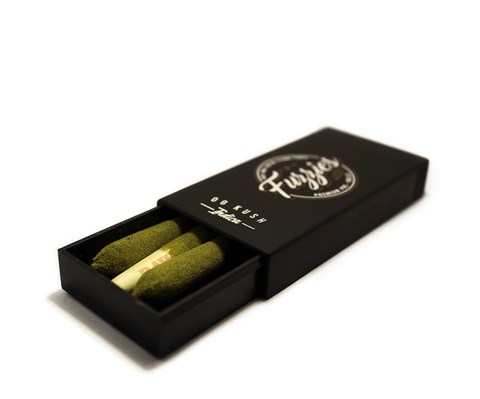
A November 2021 Emjay review listed a 1.5-gram King Hybrid pre-roll at $14. It is a dated retail example, not today’s price list. Still, it makes the offer concrete: pay for a finished format instead of assembling flower, concentrate and papers yourself. An ordinary pre-roll or a self-rolled joint remains an alternative. For someone seeking less intensity, an infused format may also be the wrong purchase. Convenience does not make different products interchangeable.
The mint was supposed to be difficult
The Fuzzies story suggests an accidental discovery. Sublime’s wider product strategy was more deliberate. In a sponsored 2019 CFN Media interview, co-founder and then-CEO Alex Fang described an internal test called USB: Unique, Superior and Barrier to Entry
. The company wanted familiar consumer appeal paired with production work that competitors would find awkward to copy.
Dosies, cannabis-infused sugar-panned mints, illustrated the ambition. The format borrowed from the conventional candy aisle; the production method demanded substantial development. The same interview described a lengthy, more expensive-than-expected process and presented shelf-stable Ice Pops as another departure from the usual product lineup. These were historical product bets, with the company’s commercial intentions plainly on display.
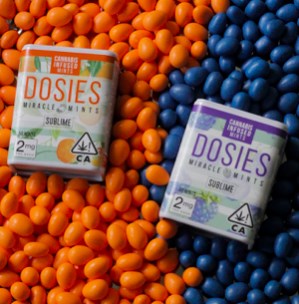
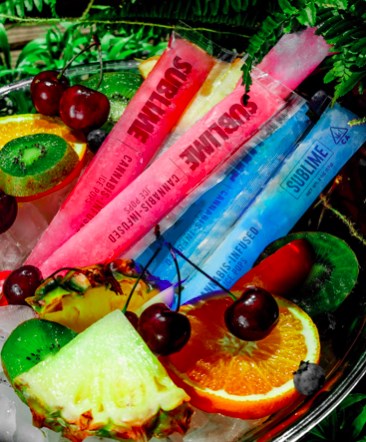
Difficulty has a seductive sound in a pitch. In production, it is an invoice. The wager only works if customers value the result enough to support the extra work. A complicated mint that nobody wants remains a complicated mint. Sublime’s approach offers a useful question for any product business: which difficulty improves the customer’s experience, and which merely keeps the engineering team busy?
When the machinery needs money
By May 2018, Sublime had announced $6.2 million in Series A financing. The stated uses were practical: equipment, technology, skilled staff, raw materials and new products. Fang described the move from self-funding as a big change in mindset
. The company said reaching milestone revenue run rates had made outside financing necessary for expansion.
A factory can have a popular product and still need money before it can make enough of it.
The distinction matters. Demand is evidence of an opportunity; it does not purchase the next machine. The announcement also said revenue doubled from 2016 to 2017. Growing orders can make a capacity problem more urgent rather than more comfortable. Sublime’s financing story was about paying for the means to produce, not simply paying to be noticed.

Fang’s background makes that choice interesting. GreenState reported that he had worked as a financial adviser and initially entered the cannabis venture as an investor. The company also announced a collaboration with chef Dennis Lee of San Francisco’s Namu Gaji. Finance, food and manufacturing met in the same business, each bringing a different definition of what a good product required.
At a 2019 investment summit, Fang argued that a brand’s identity should develop from consumer experience and feedback, rather than be forced onto a product. That is a sensible companion to the sticky-joint anecdote. Watch the object in use before writing the grand declaration. An attractive label cannot repair an inconvenient object.
The price tag had fine print
The commercial payoff became visible in July 2021, when Harborside announced the completion of its acquisition of Sublimation Inc. for $43.8 million. Approximately $38.4 million was payable in shares and $5.4 million in cash. Of the cash, about $3.4 million went toward repaying Sublime debt. A sale price and a pile of spendable cash are different things.
The buyer’s logic connected cultivation, branded products and distribution. Cannabis from Harborside’s Salinas operation could feed Sublime’s production system, while Sublime’s distribution relationships could carry more products. These were expected benefits. They should be read as the rationale for the transaction, rather than proof that every promised saving subsequently arrived.
There was meaningful market traction behind the pitch. BDSA ranked Sublime second in California pre-roll sales for January through July 2021, with more than 8% of that tracked market. Its earlier market recap identified Jeeter as having surpassed Sublime in December 2020. The dates deserve to remain attached: a lead is a position at a particular moment, and competitors are allowed to move.
The brand and the building part company
In March 2024, Oakland delivery company Smoakland announced an acquisition of Sublime’s manufacturing operation, describing the employees, facility and license as part of the deal. Its announcement emphasized contract manufacturing, distribution and private-label opportunities. For a retailer or brand, that is a different proposition from buying a finished Fuzzie: access to the capability to make products.
MJBizDaily’s April report supplied the crucial qualification: Fuzzies was excluded. It also reported that the transaction was all cash, with financial terms undisclosed. Anyone treating this as a straightforward resale of the entire 2021 business would miss the distinction. A factory, a license and a famous name can be sold in different combinations.
The later history adds another complication. In October 2024, StateHouse, Harborside’s successor, announced that its Canadian parent would enter bankruptcy proceedings following lender defaults. That announcement still listed Sublime and Fuzzies among its brands. Brand recognition can survive serious financial trouble elsewhere in the organization. It cannot, by itself, settle the organization’s obligations.
The most useful thing to copy from Sublime is the attention paid to an actual nuisance. Find the point where handling, packaging or repeatability disappoints the customer. Test a concrete fix. Then count what it takes to manufacture it and get it onto a shelf. Fuzzies gives that sequence a memorable shape. The transactions that followed remind us that inventing a desirable object and owning a durable business are two separate pieces of work.
Keep following the thread
Company profiles, market reading and a historical founder interview.