In June 2018, an Alameda County childcare measure received 66.2% of the vote. It lost. Measure A needed two-thirds. CliffordMoss, the Oakland consultancy running the campaign, had encountered the unforgiving arithmetic of its profession: a proposal can persuade almost two people in three and still go home empty-handed.
For anyone accustomed to marketing measured in clicks, that result is a useful introduction. Here the finish line is fixed. Enthusiasm has to survive a deadline, a ballot and a count. The question facing the consultant is wonderfully specific: what will make enough people say yes?
Two careers built for the awkward meeting
Bonnie Moss and Tom Clifford founded CliffordMoss in 2012. Their backgrounds help explain the company’s particular habitat: the space between a public institution that needs something and a community that must agree to it.
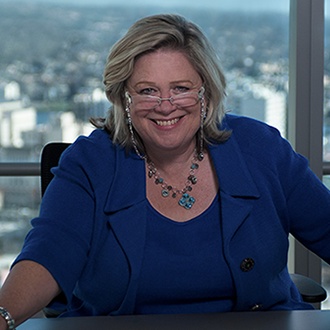
Moss spent seventeen years in private-sector community relations leadership and eight as a local elected official. She graduated from Wellesley with an urban studies degree, then moved into political and communications consulting in 1999. These are useful qualifications for a business in which the person explaining a proposal may face people who remember the last proposal rather too well.
Clifford came through Berkeley, the State Capitol and a CORO fellowship, followed by graduate study in law at Berkeley and public policy at Princeton. He practiced public law and litigation at Bingham McCutchen for six years. His biography also lists Spanish and Marathi. A consultancy concerned with how different communities hear a message has a practical use for that range.
Principal Amanda Clifford adds another route into the same work. She worked for a Labour Member of Parliament in Britain, studied political science and psychology, and earned her law degree in 2009. Grassroots organizing and legal training recur across the team. The combination suits assignments where the wording of a proposal and the conversation at someone’s door both matter.
The product is the work before the vote
CliffordMoss sells professional services to public agencies, community organizations, candidates and businesses. Its territory includes school bonds, parcel taxes, local revenue measures and public affairs. A client can buy help assessing feasibility, explaining a funding need, engaging influential residents or organizing an election campaign. The deliverables can be as tangible as a mailer or as judgment-dependent as advice about timing.
The firm’s emphasis is California’s local and regional public decisions. That puts it in a narrower market than a general advertising agency. Its customers are often asking residents to authorize something that will outlast a campaign: better facilities, continuing services or infrastructure investment. The communications have to make a complicated institutional need intelligible to people with other things to do.
“People support what they help create.”
CliffordMoss’s stated operating principle
One revealing example is Panama-Buena Vista Union School District. CliffordMoss describes an extended engagement effort before the district placed a bond on the ballot. The work included repeated mail and online listening, and conversations with opinion leaders over years. The Kern County Taxpayers Association ultimately endorsed Measure I. The interesting detail is the order: seek input while the decision is still being prepared.
A bond is a promise with a long memory
The firm lists work on BART’s $3.5 billion Measure RR bond among its projects. Before that measure reached voters in 2016, BART held more than 300 community meetings about its infrastructure needs. The agency faced aging equipment and a growing rebuilding backlog. Public explanation was part of preparing the decision.
The bond passed. Its money supports track replacement, electrical infrastructure and other work that passengers may never admire but will certainly notice when it fails. In its 2026 account of the program, BART lists 164 supported projects, including 62 completed projects. Those are the agency’s delivery figures, not a scorecard for its consultant.
Bond authorization for rebuilding the system. Public infrastructure funding, not CliffordMoss revenue.
This is a useful distinction when reading a political firm’s portfolio. The consultant helps with a public decision. The agency, its workers and contractors must then deliver. Credibility has a life after Election Day.
What the listening costs
Carpinteria’s July 2025 council materials make the business model unusually visible. Staff recommended a CliffordMoss agreement capped at $100,000. The attached proposal quoted an $8,000 monthly retainer, plus approved expenses, with separate program costs. Its first four-month phase carried a $46,000 budget.
Proposed phase total $46,000
Budgeted amounts, not a record of actual expenditure. Bars share a zero baseline and scale to the $32,000 services line.
The proposal relied heavily on existing city communications to contain costs. The implication for a prospective client is straightforward: clarify who will write, distribute, translate and follow up. A smaller outside budget can leave more work with the organization’s own staff. Compare complete assignments, not just monthly fees.
Listening also means sharing the decisions
An independent Innovation Network evaluation of Measure A found tension between community organizations and the campaign’s consultants. Parent Voices Oakland participants felt pushed toward a peripheral role as the effort shifted from policy development to election work. Consultants described a collaborative campaign but acknowledged that roles could have been defined earlier. The report offered several possible explanations for the loss, rather than a single proven cause.
The practical lesson is to settle decision-making before the deadline takes over. Who can change a message? Who can question targeting? Inviting someone to volunteer is a different offer from inviting them to shape strategy. A campaign needs to be clear about which invitation it is making.
Sometimes the calendar needs a no
CliffordMoss is one option in a competitive consulting market. Moorpark’s records describe interviews with both CliffordMoss and TBWB Strategies for outreach work in 2014. City staff considered both qualified. But the local circumstances complicated the purchase: polling support was marginal, and the timetable was short.
The committee and staff concluded that the moment was unsuitable for proceeding with the proposed tax measure. They favored a longer communications effort. The document is a useful antidote to the idea that selecting a consultant settles whether a proposal is ready.
For a client, the takeaway is to make room for an inconvenient answer. A process built to test feasibility needs permission to recommend delay. If every research result must end with “launch,” the client has already decided what the research is allowed to mean.
Four thousand responses are the beginning
Ventura offers a more recent view of the machinery. The city approved a CliffordMoss engagement in November 2025; council materials set a $304,350 ceiling. The scope combined public information, engagement and research. CliffordMoss subcontracted with TrueNorth Research for polling.
By June 2026, the city reported more than 4,000 responses to a separate voluntary Essential Services Survey, available in English and Spanish. About 41% of those respondents ranked streets and roads as the top priority. Voter polling presented in May indicated 51% support for a proposed one-percent sales tax. These are different measurements: voluntary feedback identifies what participants say matters; a voter poll estimates electoral support.
Identify needs and objections.
Examine support and feasibility.
Proceed, revise or wait.
That distinction captures the value of the work. A public agency needs more than an appealing sentence. It needs to know what residents understand, what they object to and whether its proposal is ready for a consequential decision.
For anyone borrowing from CliffordMoss’s approach, start earlier than the publicity plan. Put an actual choice in front of people. Budget for the work their answers create. Give collaborators a defined role. Then leave enough room in the process for the answer you did not hope to hear.