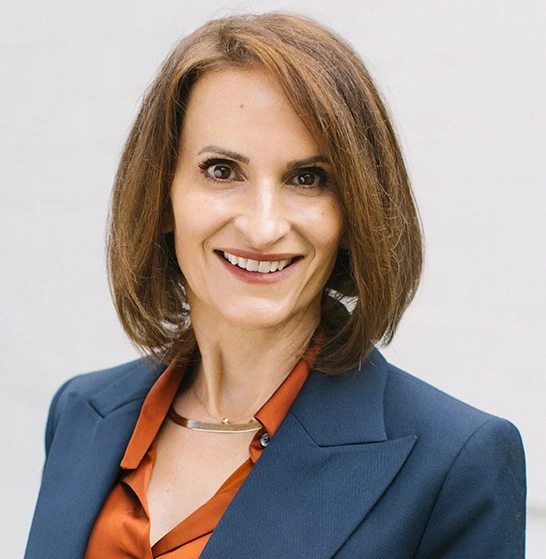
The polite question to ask any CEO is the one about strategy. With Leticia Galyean Sturtevant, the more useful question is about tenure. She joined Seneca Family of Agencies in 2001 as a counselor. She became its Chief Executive Officer in 2021. The org chart between those two facts has thirty rungs, and she climbed all of them in the same building.
Most nonprofits her size are run by people recruited from somewhere else. Foundations love an outside hire; boards love a fresh deck of slides. Seneca picked the counselor. The decision says something about Seneca, and a great deal more about her.
Seneca Family of Agencies, formerly Seneca Center, was founded in 1985 as a single Bay Area residential and day treatment program for kids no one else would take. The pitch was unconditional care - a phrase the field uses casually and Seneca uses operationally. It meant the agency would not give up on a child when a child became, by every conventional measure, ungivable-up-on. Forty years later that mandate covers more than 200 programs across California and Washington, reaching more than 18,000 youth and families a year. The headcount sits at roughly 1,900. Annual revenue runs near $193 million. The unconditional part has scaled. The care part is harder.
Sturtevant is a Licensed Clinical Social Worker. She holds an MSW from UC Berkeley. Both credentials sit on her CEO bio in 2026, which is rarer than it sounds. Most nonprofits of Seneca's size are eventually steered by people whose last clinical hour was a long time ago. She kept the title because she kept the practice mindset. When Seneca talks publicly about the work, it talks like she does: trauma-informed, evidence-based, culturally responsive, system-aware. The vocabulary is borrowed from clinical social work. The fluency is borrowed from twenty years of using it.
The story arc she inherited in 2021 was unkind. The pandemic had cracked open every fault line in the children's services world at once. Foster placements shrank. School-based mental health blew up. Residential beds were closing across the state. County contracts were getting harder to renew. The state of California started rewriting how it pays for and oversees behavioral health for kids. A new CEO of a quiet Oakland nonprofit became a person whose phone, suddenly, had to be answered by Sacramento.
It is. The Governor appointed her to the California Child Welfare Council. She sits on the California Behavioral Health Task Force. She is on the board of the California Alliance of Child and Family Services. Three different chairs around the same table, all of them now staffed by the person who used to sit across from one kid at a time. There is a pattern here that policy people miss. When you put a clinician at the policy table, the policy table gets a clinician's questions. What does this mean for one kid? What happens at intake on a Tuesday morning?
Seneca's portfolio is the hard stuff. Crisis response. Adoption. Foster care. School-based services. Residential. Juvenile justice. Permanency. Family finding. Mobile crisis. Wraparound. CSEC intervention. Each is a category in which the work is hard, the funding is awkward, and the political climate flips every other administration. Sturtevant's job is to keep all of them open at once, in two states, while the people who staff them remain humans with the normal complement of human breaking points. Run an org chart through that filter and most CEOs would simplify the portfolio. Seneca, under her, has not simplified.
Instead, it has invested in adjacencies that look small until you map them. Cultural humility training. Trauma-informed school practices. Foster family recruitment that actually looks like the kids being placed. Family-centered permanency. Public policy advocacy that translates clinical reality into legislative shape. Each of those is a refusal to treat the agency as a vendor and a decision to treat it as an institution.
The unconditional-care line, again. It is not the marketing. It is the constraint. If you decide as an organization that you do not give up on the kid, then your operations team has to find space and money and staff for the kid, no matter what the kid's last placement said. That is hard for a 200-bed program. It is harder for a 200-program institution.
The personal style is steady. Public appearances - panels, association talks, leadership-team videos - read clinical, not corporate. She speaks the way social workers speak: in systems and in people, not in metrics. The press release from Seneca when she became CEO leaned on language about strengthening systems of care, particularly for those impacted by childhood trauma. Five years in, that is still the through-line.
The biographical details are spare on purpose. There are no podcast tours. There is one LinkedIn account showing one employer. There is no founder myth, because she did not found the place. She joined it. Then she stayed.
What is interesting about Sturtevant is not a triumphant arc. It is the choice to make the same arc twenty-five times. The first foster youth she counseled in 2001 is forty years old in 2026. The 1,900 people who work at Seneca now are part of an institution whose CEO once did their job, in the building they still work in. Institutional memory at that depth is itself an asset, and most nonprofits do not have it. Seneca does, because she did not leave.
Ask any line worker at Seneca what unconditional care actually means and you will get a hundred answers. Ask the CEO and you will probably get a clinical one. That is the point.