Dispatch
The quiet scale story in Oakland
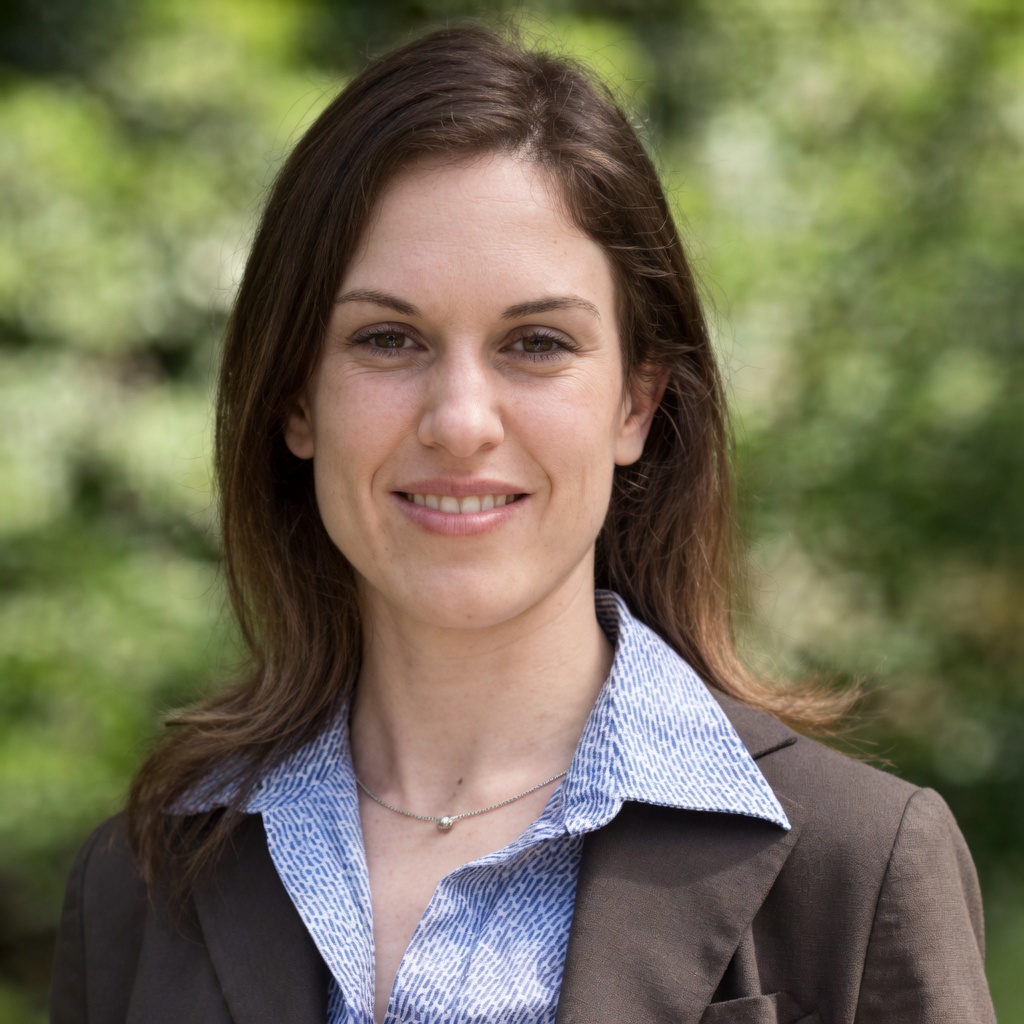
The most interesting thing about Jamie Almanza is the spreadsheet. She has run Bay Area Community Services since 2010, and in the years since, the agency has gone from a quiet mental-health shop on Oakland Avenue to a 520-person operation moving roughly $124M a year through housing, prevention, wellness centers, and supportive services across Northern California. Twenty-thousand people pass through BACS programs each year. Twenty-five new programs opened in her first nine years. None of this came with a Series A.
If you've heard her name, it was probably attached to the sprint. In a single seven-month stretch, BACS and Kaiser Permanente moved 515 aging unhoused Oakland residents indoors. Not into shelters. Into housing. That number is the kind of thing politicians put on signs and journalists write features about, and both happened. What gets less coverage is the part Almanza obsesses over: the operating model that made 515 a normal Tuesday instead of a once-in-a-decade press release.
She is, by training, an MBA. Mills College, full ride through the Goldman Sachs 10,000 Women scholarship, the global program designed to seed women leaders in places where the leadership pipeline is thin. Plenty of nonprofit executives come up through social work. Almanza came up the other way - and the difference shows in how she talks. She talks about contracts. About reform. About infrastructure. About what she calls "the scale at which communities experience true social impact." It does not sound like a fundraising letter. It sounds like an operations review.
Prevention is the punchline
Her 2019 TEDxOakland talk - "How to create a world where No One Lives Outside" - is the cleanest statement of the Almanza thesis. The argument is small and obvious and almost no one acts on it: you do not end homelessness by responding to homelessness. You end it by stopping it from happening in the first place. Eviction defense. Rental assistance. Behavioral health that arrives before the crisis. The math of prevention is better than the math of rescue, and the math of rescue is what most of the system is built around. BACS' Keep Oakland Housed program is the name she has given that line in the sand.
Almanza has been blunt about a quieter crisis inside the visible one: aging homelessness. She points out, often, that someone on the street at 55 is physically closer to a housed person at 75. The chronic conditions stack. The recovery curves flatten. The shelter system, designed around younger bodies and shorter stays, isn't built for it. Reframing "the elderly" to include people in their 50s sounds like rhetoric until you look at what BACS funds because of it - and what funders fund because of Almanza's reframing.
The Project Reclamation move
In 2020, the State of California handed BACS $10 million through Project Homekey to do something most nonprofits don't do: buy houses. Single-family homes in Oakland, converted into permanent supportive housing for people with complex needs. The model is unsexy on paper - a nonprofit acquiring real estate, holding it, operating it - and the unsexiness is the point. Almanza's bet is that the housing crisis ends when nonprofits stop being grantees and start being landlords. Project Reclamation is that bet in concrete form.
The same logic shows up in BACS' newer policy work. In February 2025, Almanza co-authored a California Policy Lab brief on regional homelessness prevention across the Bay Area - a document arguing for moving money upstream, coordinating across counties, and treating prevention as a measurable category instead of a slogan. It reads, again, like an ops doc.
The senator, the staff, the email
In late 2020, State Senator Nancy Skinner named Almanza Woman of the Year for District 9. Skinner's line at the ceremony was direct: "Jamie, everyone in this district owes a debt of gratitude to you." Skinner was talking about the pandemic year - shelters running, staff burning out, housing placements continuing while everything else closed. Almanza, characteristically, redirected the credit to the BACS workforce. Then she went back to her email. She still answers it herself, which is the kind of detail that makes the 520-person org chart make sense.
What she actually changed
It is fashionable, in 2026, to talk about nonprofits the way people talked about banks in 2008 - too sclerotic, too risk-averse, too dependent on a funding model that no longer matches the problem. Almanza was making that argument in print in 2017, in Generations, the American Society on Aging's journal. She wrote what amounted to a survival guide for nonprofits about to be swallowed by managed care contracts: redesign your back office, renegotiate your relationships with payers, build contingency in writing. Her line: it is not only possible, but reinvigorating, for an agency, its staff, its consumers, and its funders. That essay reads now like a prologue to everything BACS has done since.
The Almanza era at BACS can be measured a few different ways. By head count - five-hundred-plus, up from a fraction of that. By budget - nine figures, in a sector where eight is rare. By program count - 25 net new in the first decade. By the small political fact that, when state agencies want to pilot something in Alameda County, BACS gets the call. None of these are the metric she leads with. The metric she leads with is the one most nonprofits don't track: people who never became homeless because of something her team did upstream.
The shape of the operator
She is not loud. She is not on cable. She does not run a personal brand. The Twitter handle attached to her organization belongs to the org, not to her. Her LinkedIn is a working tool, not a stage. What she has built instead is the boring, durable kind of reputation - the one held by line staff, county supervisors, hospital partners, and the housing case managers who get her on the phone at 9pm because the lease fell through and someone needs to sleep indoors tonight.
That is the texture of the Almanza story. Not the talk, not the award, not the press hits. The texture is in the operating cadence - the daily, weekly, monthly clockwork of moving people indoors and keeping them there. The texture is in the choice, twenty years deep, to keep doing it from a 629 Oakland Avenue address rather than scaling up and moving downtown. The texture is in a CEO who reads contracts before she reads quotes.
What's next
The shape of BACS' next few years is already legible in the things Almanza is publicly arguing for. More prevention dollars, allocated regionally rather than city-by-city. Aging-specific housing models that treat 55 as 75. Nonprofit ownership of real estate as a permanent feature of the housing stack, not a one-time pandemic experiment. A workforce model that doesn't burn out its frontline staff in 18 months. If she gets those, the next 515-in-7-months won't be a press release. It will be Tuesday.
The thing to know about Jamie Almanza is the thing she has been quietly proving for sixteen years: at scale, the only difference between a slogan and a system is whoever decides to build the system. She decided.