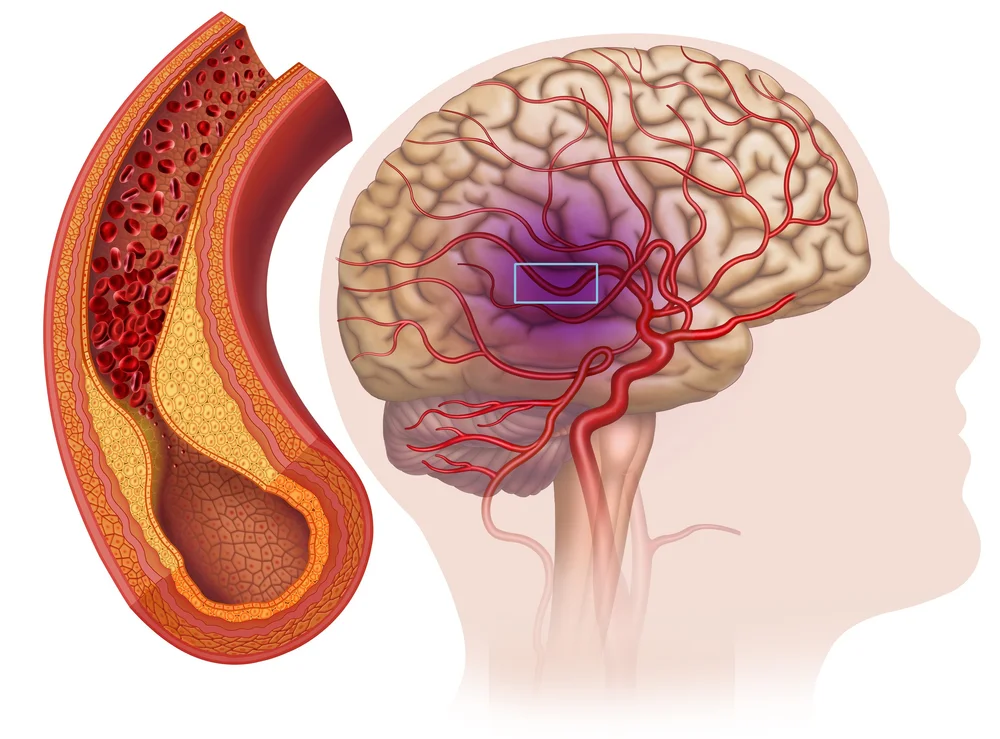
Somewhere right now, a doctor is threading a wire thinner than a coffee stirrer up through an artery toward a clot lodged in someone's brain. The clock on the wall matters more than almost anything in medicine. The tool in the doctor's hand may well have been engineered in a quiet building in Arcadia, California, by a company most people have never heard of.
The quiet shop behind the catheter
Nventric, Inc. does not make headlines in the way a flashy consumer startup does. It makes vascular devices - stent retrievers, balloon catheters, drug-eluting stents, ablation tools - the unglamorous, exacting hardware of modern medicine. The kind of thing you only think about when you, or someone you love, urgently need one.
Two things are true about Nventric at once, and the company seems comfortable with the tension. It is a contract development and manufacturing organization (CDMO), the partner other device companies hire to turn an idea into a sterile, regulated, mass-produced product. And it is an inventor in its own right, with a branded neurovascular line aimed squarely at one of medicine's hardest deadlines: acute ischemic stroke.
Headquartered in Arcadia with a second operation in Seoul, the company employs around three dozen people in the United States and runs lean. Gmail, Slack, a Squarespace site. The glamour, such as it is, lives entirely in the engineering.
Most companies in this business build other people's devices. Nventric does that - and then builds its own.- The Nventric paradox, in one line
Inside the body, there is no room for error
Vascular disease is a navigation problem. Strokes, coronary blockages, heart-rhythm disorders - treating them means moving a device through a branching, twisting, unforgiving network of vessels, sometimes a meter long, often less than a few millimeters wide, all without tearing anything. Getting there is hard. Working once you arrive is harder.
The devices that do this are spectacularly difficult to make well. A stent has to be flexible enough to follow a vessel and strong enough to hold it open. A catheter has to be visible on an X-ray without being bulky. A stent retriever has to grab a clot and not let go on the way out. Every one of those requirements pulls against the others.
And there is the deadline. In stroke, the saying is "time is brain." Every minute a large-vessel clot sits in place, millions of neurons die. The device either works the first time, fast, or it does not really matter how clever it was.
Why this is genuinely hard
Nventric's proprietary "Arch-1" platform processes ultra-micro tubing as a single tube to preserve structural integrity, and integrates the radiopaque markers - the bits a surgeon sees on X-ray - directly into the stent struts. Tiny engineering, in service of a very large stakes outcome.
People who had already shipped, betting they could do it leaner
Nventric was founded in 2019 by engineers who had spent careers inside the giants. CEO and co-founder Sungwoo Min came out of Abbott Vascular, where he moved from R&D engineer to group lead to global product manager, with a stint at Johnson & Johnson as a program director in R&D. Co-founder Don Ngo runs engineering and operations. These were not outsiders guessing at the problem. They had built and launched vascular devices at scale, and they had opinions about how the work could be done with less overhead and more speed.
The bet was that a single, focused team could take a device from a sketch through prototyping, testing, regulatory strategy, and into ISO 13485-certified manufacturing - without the product getting lost between a dozen vendors and departments. Do the whole arc under one roof, and you compress both the timeline and the number of ways a precision device can quietly go wrong.
Concept to commercialization is a nice slogan. Doing it for a device that has to survive inside a human artery is the entire game.- On the gap between the brochure and the bench
The short, busy historyMilestones
One company, the whole vascular map
Nventric organizes its work across the places blood goes wrong. The breadth is unusual for a company this size, which is either ambitious or reckless depending on how you feel about focus. So far it looks like the former.
Neurovascular
ULTRIVA stent retriever and thrombectomy system, EVOGLIDE distal access catheters, aspiration and balloon guiding catheters - the toolkit for acute ischemic stroke.
Coronary
Drug-eluting stents, balloon catheters, guide extension catheters, and scoring balloon catheters for coronary artery disease.
Electrophysiology
Pulse field ablation catheters, ablation catheters, and high-density mapping catheters for heart-rhythm disorders.
Accessories
Hemostasis valves - Superior DHV, Flex DHV, Flex RHV rotating valve - and PICC lines, the supporting cast of any procedure.
CDMO / OEM services
R&D, design optimization, prototyping, verification and validation, regulatory strategy, clinical trial support, and scalable manufacturing.
Arch-1 platform
Single-tube processing for ultra-micro tubing, with radiopaque markers built straight into stent struts for X-ray visibility.
Regulators, revenue, and a road to public markets
A medical device company can talk all it wants. Regulators are where talk stops. In January 2026, Korea's MFDS cleared the EVOGLIDE distal access catheter. In June 2026, it cleared the ULTRIVA stent retriever. Together, those two approvals gave Nventric something it did not have before: a complete, market-ready lineup for treating cerebral infarction.
The money followed the clearances. In June 2026 the company closed a pre-IPO round of roughly KRW 34.5 billion - about US$22.6 million - and appointed Kiwoom Securities to underwrite a planned KOSDAQ listing. The investor base skews heavily Korean institutional, the kind of backers who tend to want a public exit and a clean cap table.
The numbersWhere Nventric puts its energy
Relative emphasis across product and service lines. Illustrative, based on Nventric's public product portfolio - not audited figures.
With ULTRIVA's clearance, completion of our full portfolio for cerebral infarction treatment is now within reach.- Nventric leadership, on the 2026 MFDS approval
Standards, not slogans
Nventric describes its mission as pushing the boundaries of medical technology by developing high-quality devices that meet unmet clinical needs and redefine standards in vascular disease treatment. Its stated vision is a future where precision devices let clinicians treat complex vascular conditions with real efficacy, and where that translates into better patient outcomes.
Strip away the corporate phrasing and the point is simple. Make the devices better. Make them more visible, more navigable, more reliable when a clock is running. The mission and the engineering are, refreshingly, the same thing.
This investment reflects the market's confidence in Nventric's technological capabilities and growth potential.- Nventric leadership, on the 2026 pre-IPO round
The deadline is not going away
Stroke is not getting rarer. Aging populations, more vascular disease, more procedures - the demand curve for these devices points up, steadily, and not in a way anyone wishes were true. The companies that can design and manufacture them well, and quickly, will matter more, not less.
Nventric is betting it can be one of them: small enough to move fast, integrated enough to control quality from sketch to sterile package, and credible enough to take its own brand public. Whether the KOSDAQ listing lands as planned is the open question. The engineering, for now, keeps clearing the bar regulators set.
Back in that procedure room, the doctor pulls the device out. The clot comes with it. Blood moves again. The patient, in the best case, will never know the name of the company that made the tool - and that, oddly, is exactly the outcome Nventric is built to deliver.