community-banks
(29)
Neal Wilson and the fine print that moves money
Raised in a family of schoolteachers, Neal Wilson found his way into finance through securities law. At EJF Capital, he has spent two decades studying how a change in the rules can change who gets the capital.

Narmi’s bet: fix the software, keep the bank
The local bank knows your name. Its app should know what it’s doing. Narmi sells the digital plumbing that helps community institutions compete without becoming somebody else.
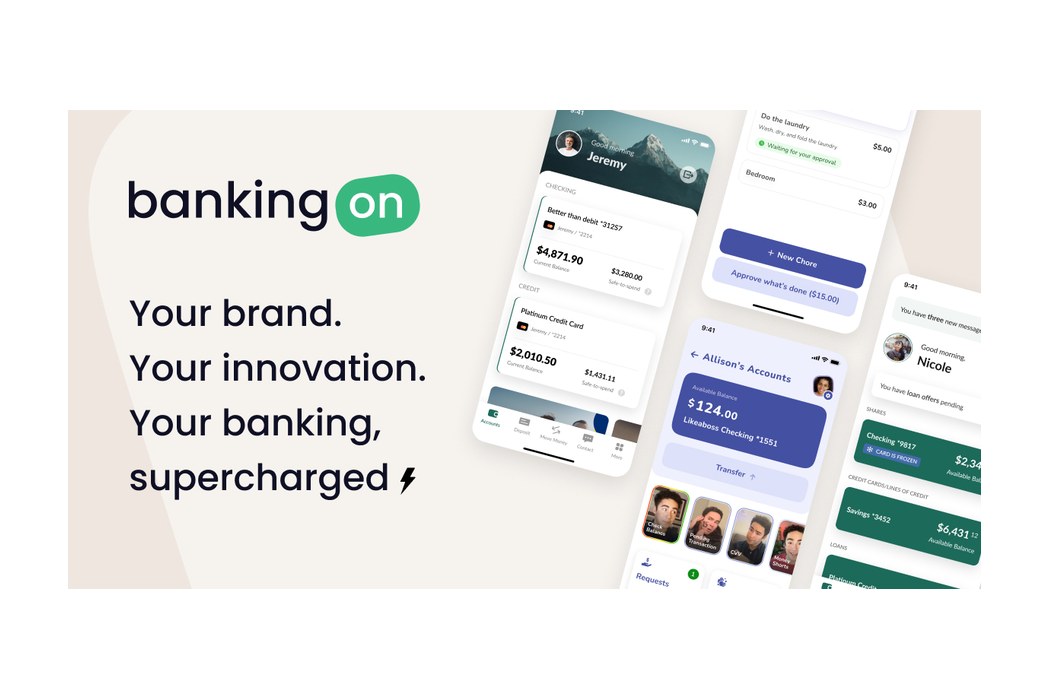
BankingON wants your bank to survive the allowance
The Austin fintech builds banking apps that wear someone else’s name. Its wager: the institution that handles a child’s first allowance should still be there for their first paycheck.
Malauzai bet on the phone. Its customers kept the desktop.
The Austin software maker gave community banks the tools to bank by camera. Its more useful discovery was that customers wanted the same experience on every screen.
LoanStreet makes the loan sale the beginning of the story
A loan can change hands in days and demand attention for years. LoanStreet connects the marketplace to the machinery that keeps lenders, investors, and borrowers on the same page.

Lumin Digital: The customers bought in. Literally.
Banks usually buy software. Lumin Digital persuaded some to buy a piece of the company, too. Its wager: better banking comes from changing the relationship behind the app.
Tyfone and the art of listening to the wrong question
A stolen-laptop problem led Tyfone toward payments. A credit union sent it toward banking. Now the company is helping local financial institutions keep the digital conversation close to home.

The Bank With the Five-Cent Name Had a Million-Dollar Problem
FMS found a narrow business hiding inside a broad profession: help community banks discover the story they already possess, then make the name, lobby, ad and employee live up to it.

Keith Floen Has Spent Four Decades Keeping the Bank’s Name on the Card
Long before fintech learned to speak fluent API, Keith Floen was asking a stubbornly human question: does a card program make a bank’s customer relationship stronger? His career is a quiet history of how that question survived four decades of new technology.

CorServ Built the Credit-Card Business Small Banks Were Told to Give Away
For years, a community bank had two bad choices: hand its card customers to a bigger issuer or build an expensive operation from scratch. CorServ found a third door - and more than 40 financial institutions have walked through it.

The $400 Million Bet to Give Small Banks a Megabank Brain
Alkami spent years perfecting the banking app. Then it paid $400 million to own the moment before the first login - and turned a useful utility into a growth machine for community finance.

The Banks That Got Tired of Their Tech Vendor - So They Bought the Company
COCC runs the unglamorous machinery behind 175 community financial institutions. Its clever twist is structural: the customers own the vendor, sit on its board and help decide what gets built next.

Abrigo’s Quiet Bet: Make 2,400 Community Banks Move Like the Giants
Community banks cannot outspend the giants. Abrigo’s answer is to package the unglamorous machinery of lending, fraud, compliance and risk into one operating layer - then let smaller institutions automate the work that used to eat their week.

Baker Hill Turned a Banker’s Spreadsheet Problem Into a $7 Billion-a-Month Lending Machine
Baker Hill has spent four decades turning tax returns, ticklers and credit memos into software. Its next act is an AI-era platform for community lenders - and a reminder that automation only works after a bank cleans up the way it works.

Nymbus Found a Smarter Way Into Banking: Build the New Bank Beside the Old One
Replacing a bank core can feel like changing an airplane engine in flight. Nymbus offers a less theatrical first move: launch a focused digital brand on a modern sidecar, prove the demand, and only then decide how much of the old machine to replace.

Arcady Lapiro’s Second Act Is a Box of Banking Legos
After helping build a European digital bank through the dot-com bust and 9/11, the French-born founder is trying to give community banks a way around the software they cannot afford to replace.

Brent Jackson Put the Corporate Card Inside the Bank
He began with a better card for small businesses. Then customer conversations led Torpago toward a quieter, more consequential job: helping banks issue modern cards under their own names.

Torpago Quit Chasing Ramp - and Turned the Banks Into Customers
Brent Jackson built a credible corporate-card challenger, then decided he was fighting in the wrong arena. Torpago's sharper bet is to give community banks the software, controls and operational muscle to run modern card programs under their own names.

How KlariVis Turned the Community Bank's Spreadsheet Mess Into a 150-Bank Growth Engine
Community banks were drowning in reports but starving for answers. A former bank CFO built KlariVis to clean the mess, put daily decisions on one screen, and give smaller institutions a fighting chance.
The $625 Million Bet on Making Payments Feel Personal
Celero Commerce assembled a top-tier non-bank payments platform one acquisition at a time. Its sharper idea was to pair the machinery of modern commerce with something the industry keeps automating away: a person who answers.

The 40-Year-Old Fintech Hiding Behind Your Credit Union App
Access Softek has spent nearly four decades building the digital front door for community financial institutions. Its unusual edge is not a flashy consumer brand, but a founder-owned platform designed to make a local credit union feel as capable as a national bank.

The $2.4 Billion Fintech You Use Without Knowing Its Name
Jack Henry powers the institutions that still know their customers by name. Its next act is moving five decades of banking infrastructure into an open, cloud-native future without asking community banks to surrender the relationship.

Agora gives old banks a new gear
Agora Financial Technologies puts modern banking products beside legacy systems. Its bet: a community bank can change what customers get without first changing everything underneath.

Illuma
Illuma (Illuma Labs) is a Plano, Texas fintech that secures phone conversations for credit unions and community banks. Its flagship product, IllumaSHIELD, uses AI-powered passive voice biometrics to verify callers in seconds - replacing security questions and PINs - while a dedicated deepfake-detection engine and layered multifactor checks defend contact centers against synthetic-voice and social-engineering fraud.

MeridianLink
MeridianLink is a California-based financial technology company that builds cloud software helping banks, credit unions, and consumer reporting agencies originate loans, open accounts, and verify credit data. Its flagship platform, MeridianLink One, connects consumer lending, mortgage origination, account opening, data verification, and collections into a single system used by roughly 2,000 financial institutions. Founded in 1998, the company went public on the NYSE in 2021 and was taken private by Centerbridge Partners in a roughly $2 billion deal completed in October 2025.

American Bankers Association
The American Bankers Association (ABA) is the largest financial trade group in the United States, representing banks of every size and charter in Washington. Founded in 1875 in the wake of the Panic of 1873, ABA lobbies on behalf of the roughly $24 trillion U.S. banking industry and provides its members with professional certifications, training schools, research, conferences and community. Its members range from small community banks to the largest money-center institutions and together account for the overwhelming majority of the industry's assets and employees.

Clockout
Clockout is a fintech company that lets banks and credit unions offer earned wage access (EWA) directly inside their own mobile and online banking apps, so customers can tap a portion of their pay before payday without waiting on their employer. Founded in 2022 by childhood friends from Venezuela, Clockout started as a traditional EWA service for South Florida restaurant groups, then pivoted in 2024 to become the embedded infrastructure layer - often described as the 'Zelle for earned wage access.' The platform connects to more than 1,600 payroll systems and plugs into major core banking providers including Q2, Jack Henry, Alkami and Candescent, letting an institution launch EWA in roughly ten days. Clockout closed a $2 million seed round in June 2025.

Darragh Buckley
Darragh Buckley is the founder and CEO of Increase, an enterprise-grade banking API company that lets technology businesses programmatically store, move, and reconcile money by connecting directly into the Federal Reserve's payment rails. He was Stripe's first employee, joining the Collison brothers - fellow natives of Limerick, Ireland - in 2010 to build the banking and money-movement foundations of the company. After leaving Stripe in 2016, he founded Increase (YC Summer 2020), which now processes well over $100 billion a year with a famously tiny team. A contrarian who believes in the staying power of community banks, he has personally acquired stakes in small Washington-state banks, including a 10%-plus position in Twin City Bank that triggered Federal Reserve disclosure.

Margaret Hartigan
Margaret Hartigan is the founder and CEO of Marstone, a Providence-based digital wealth management platform that banks and financial institutions white-label to deliver investing and planning tools to clients of all means. A former top-quintile Merrill Lynch financial advisor, she launched Marstone in 2013 to demystify and humanize finance, raised a Series B in 2024, and was named Innovator of the Year at the 2025 US Fintech Awards.