A teenager wants a card. A parent wants a spending limit. A small business owner wants an employee to buy supplies without borrowing the boss’s debit card. Each request exposes the distance between the bank a customer uses and the bank that customer wishes existed. Agora Financial Technologies has built its business inside that distance.
The company sells modular banking software to banks, credit unions, fintechs and brands. The buyer is an institution; the person using the eventual app may never encounter Agora’s name. That separation makes the product harder to spot than a consumer neobank, but it explains why branding and operational plumbing both matter. Its central proposition is architectural: put new capabilities beside an existing core banking system, or connect them to it, instead of making every new product wait for a wholesale replacement. For a banker, that changes the decision from “Shall we rebuild the bank?” to “Which customer problem shall we solve first?”
Here is the proposition in plain English:
- Modern accounts, cards and payments for banks, fintechs and brands.
- Prebuilt teen and small business products, with controls for parents and employers.
- A side-core option for launching beside a legacy system.
Two customers, two kinds of permission
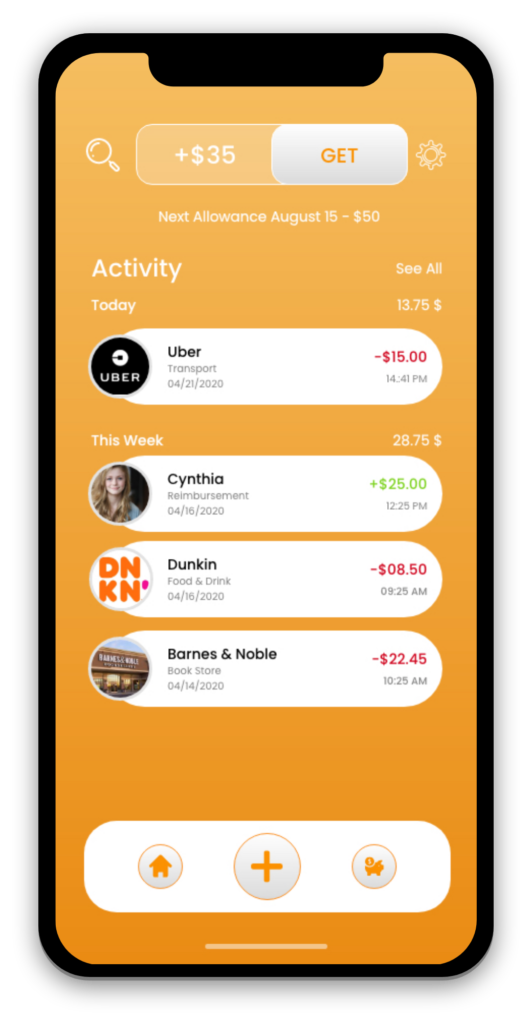
Agora’s prebuilt products make the idea tangible. Its teen banking offering lets parents preopen an account, monitor activity and manage a child’s access to money. The company’s 2020 launch materials described spending notifications and controls for ATM, online and point-of-sale transactions. The appeal is wonderfully domestic: independence for the teenager, fewer surprises for the adult.
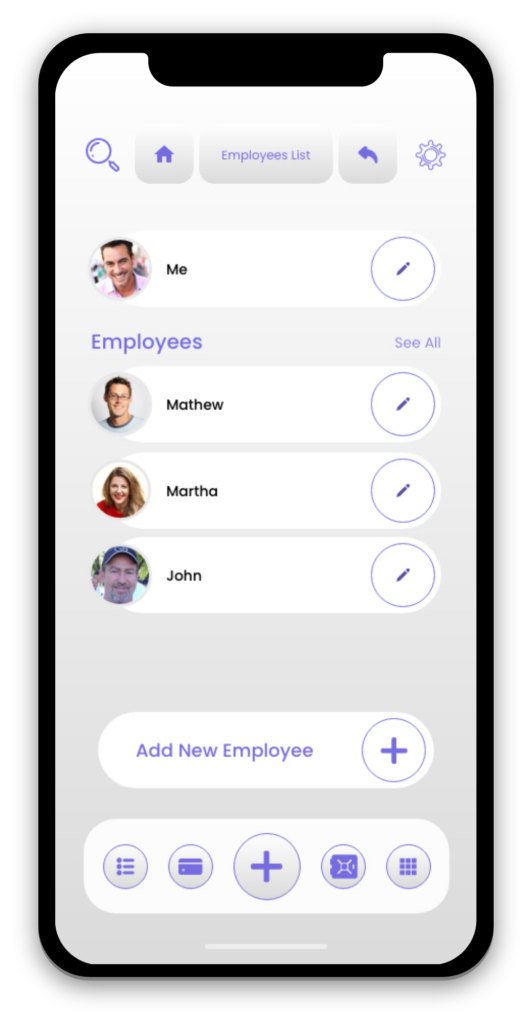
Agora SMB applies related controls to a different household: the workplace. Its small business offering combines banking accounts with employee expense management. Physical and virtual cards, receipt handling and subaccounts were among the features described at launch. An employer can give staff access to spending without treating the business account as a communal wallet.
The similarity matters. Both products involve one person granting another person limited financial freedom. That makes account structure, notifications and card controls more than items on a feature checklist. They become the product’s working parts. Agora’s choice of niches shows how the same banking machinery can serve quite different relationships.
The old engine stays in the car
On its bank-facing site, Agora describes three routes: launch products without touching the legacy core; integrate to improve existing products; or replace the core to build a digital-first bank. The first route is the intriguing one. A side core gives a bank somewhere to put a new proposition while its established business keeps running.
Underneath, Agora describes cloud-hosted microservices built with Node.js and PostgreSQL. Its published feature set includes ledgers and subledgers, account opening, card issuance, money movement and compliance tools. Its technology page also describes segregated for-benefit-of accounts for B2B customers, established with sponsor banks, and reconciliation between Agora’s records and banking partners’ systems.
Those details explain its place in the market. Agora supplies infrastructure and packaged customer experiences; it is not itself a bank. Its site says partner banks provide banking services and issue Visa debit cards. A good-looking app is therefore only one layer of the arrangement. The ledger, verification services and banking relationship have to work together.
A $5,000 invitation to try
Agora’s April 2021 announcement offered financial institutions with less than $500 million in assets an unusually concrete starting point: an Agora-branded platform from $5,000, including front-end and back-end implementation, the first 100 cards and three months of service. Afterwards, the company described an average $600 monthly minimum for the first year. These were historical launch terms, not a current price list.
The same announcement promised deployment in five weeks and said the teen and SMB products were then in beta, with launch scheduled for June. That distinction is useful. A promised delivery window tells us how Agora sold the proposition; it does not establish what every customer experienced. The commercial idea was to make a bounded experiment affordable enough for a small institution to consider.
Its business model is B2B software and services rather than selling consumer accounts directly. The bank buys capabilities and offers a banking experience to its customers. Agora gets paid for the platform relationship. In March 2020, reporting put its seed funding at $2 million, mostly driven by founders, with ICBA identified as an earlier investor.
The machinery gets a supporting cast
Arcady Lapiro, Agora’s founder and CEO, had previously helped build Fortuneo, the French digital bank. That background helps explain the emphasis on complete banking experiences. In the 2020 funding coverage, he put the problem bluntly: “Banks have to move beyond a website, a standard app or mobile check deposit.” A mobile icon alone does little for an awkward account-opening process.
Agora added partners around those awkward processes. Its 2021 i2c partnership addressed digital issuing and processing. Integrations with IDology and Middesk addressed individual and business identity verification. Finastra’s FusionStore offered another distribution route for the teen banking app. These are specific jobs in the banking workflow, rather than a collection of fashionable logos.
A named customer makes the value clearer. In November 2021, Menta selected Agora to power a credit-builder platform aimed at underbanked consumers. Menta cofounder Karen Jeffley described help with product definition and strategy, beyond the provision of account and card technology.
“They have assisted us in the definition of our products as well as strategy”Karen Jeffley / Menta / 2021

Start with the request, then buy the software
A Seattle Bank discussion published in Agora’s newsroom offers a revealing change-of-mind story. The bank described its PPP lending experience as proof that technology could bring it new customers. According to the episode summary, 95% of its PPP borrowers were new to the bank. That figure belongs to Seattle Bank’s lending experience; it is not an Agora acquisition result.
The discussion also warned about early-stage fintechs claiming to do twenty-plus things. That is a useful counterweight to any infrastructure company’s long menu. Agora’s inclusion in the 2023 AIFinTech100 adds recognition, but a buyer still needs a particular customer, a particular friction and a particular measure of success.
The lesson a reader can borrow is sequencing. Choose a narrow banking problem, give it a defined product, then decide which systems need to change. The approach depends on a workable banking partner, reliable reconciliation and an institution willing to operate the new service. If those conditions fall away, the attractive app becomes the easy part. The difficult part is still the bank.