Arcady Lapiro explains his arrival in America with the cheerful imprecision of someone who knows that a better story can be truer than an itinerary. He was, he once said, a French guy who “got lost” in New York’s Lower East Side. Then came a New Yorker wife, a permanent move and three children, whom he calls his three hobbies. A banking career crossed the Atlantic in the bargain. The old problems came along too.
Those problems live deep below the polished surface of an app. A customer sees a balance, taps a card control and moves money before breakfast. The bank sees a thicket of ledgers, processors, identity checks, compliance rules and software old enough to have strong opinions about COBOL. Lapiro had spent years learning how much work hides beneath a simple screen. In New York, he discovered that the machinery had aged but the argument had barely moved.
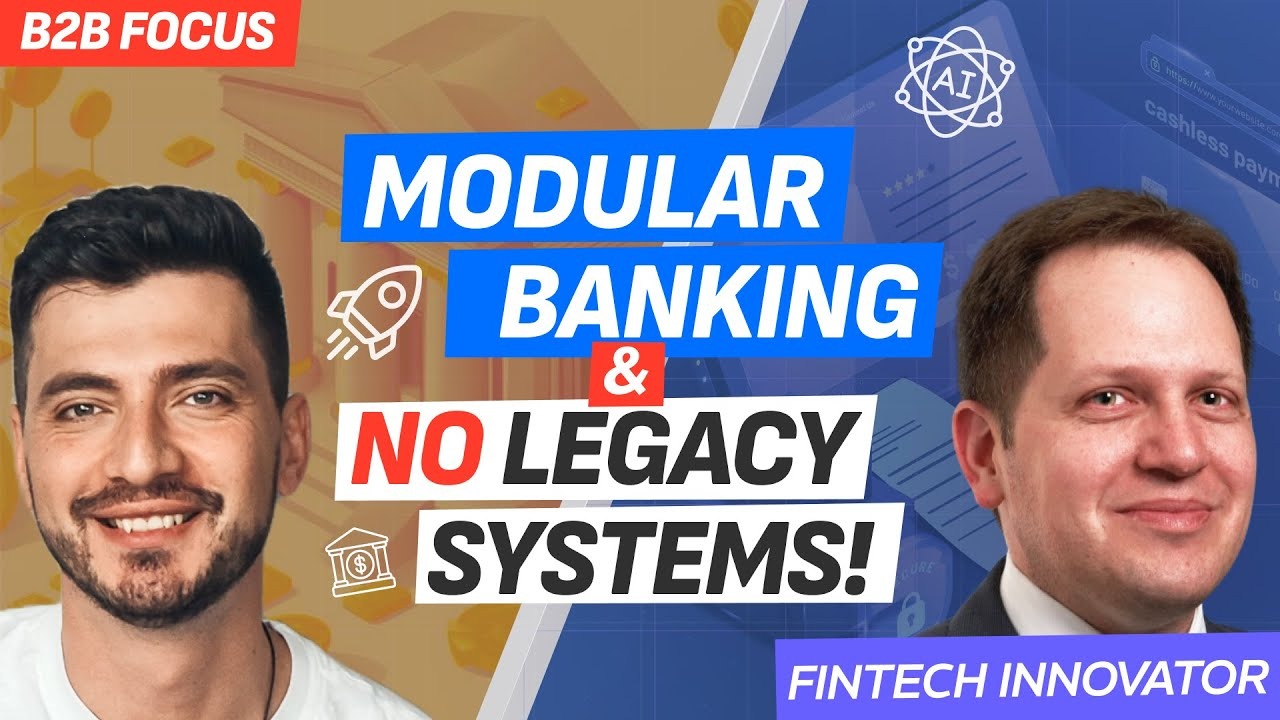
His response was Agora Financial Technologies, founded in 2018. The company’s premise is less dramatic than demolishing a bank’s technology stack and more useful because of it: leave the core where it is, break newer capabilities into modules, and connect the pieces through APIs. Lapiro calls it a “Lego box.” The metaphor is childlike. The underlying sale involves executives, auditors and the sort of migration plan that can turn a calendar grey.
The education of a cautious builder
Lapiro studied banking and finance law at Paris 1 Panthéon-Sorbonne, completing a master’s degree in 2000. That same year, he joined the founding and management team behind ProCapital and Fortuneo in France and Belgium. His brief was unusually broad: compliance, legal, risk, internal controls and part of business development. In startup mythology, the exciting person ships features. In financial services, the exciting person also knows why the feature might invite a regulator to lunch.
The group built an online bank and a securities-services operation while the dot-com bubble burst and, a year later, the attacks of September 11 shook markets and businesses. Lapiro remembers agility as the survival mechanism. The operation grew from scratch to hundreds of thousands of retail customers, while its institutional platform held tens of billions of dollars in custody. Crédit Mutuel Arkéa acquired the group in 2006. Lapiro stayed through 2008.
This first chapter matters because it made regulation and infrastructure part of his product education. At ProCapital, he has recalled, compliance was not pasted onto a finished machine. The company was new enough to design controls and technology together. He later appeared among the finance professionals interviewed by a French markets working group on shareholder voting rights. The rulebook, to him, was not scenery. It was a material.
“What excited me was how we could define new infrastructures ahead of the market.”Arcady Lapiro, on the ProCapital years
He also collected scar tissue. Lapiro says he managed more than 40 core conversions. His verdict on the experience is blunt: “a real pain.” Replacing the central system that records a bank’s accounts can promise efficiency, but the procedure is expensive, slow and operationally delicate. For a community institution, modernization can resemble elective open-heart surgery performed while every teller window remains open.
A transatlantic second act
After moving to New York around 2011, Lapiro worked as a consultant and adviser to banks, investors and fintech companies. He built relationships across Europe, the United States, Canada and Israel. Public profiles have connected him with BlackFin Capital Partners and advisory positions at payments provider BNT Soft, conversational-banking company Finn AI and identity-management platform Scanovate. He described such board work as an “amazing source” of market intelligence.
The intelligence kept returning the same message. Institutions wanted new products, but their incumbent systems made change slow and costly. Large banks could throw people and money at the delay. Smaller banks and credit unions could not. Meanwhile, consumer fintech companies were teaching customers to expect instant onboarding, virtual cards and interfaces that behaved like the rest of their phones.
Agora emerged from that mismatch. It initially offered white-label products for groups that local institutions were at risk of losing, including teenagers and small businesses. The teen product emphasized shared accounts and controls. The small-business offering included employee cards, receipt management and subaccounts. In 2020, Agora announced a $2 million seed round, largely backed by its founders, and worked through programs associated with ICBA and Mastercard.
The diagram is neat. Banking is not. Each module still has to negotiate data, security, compliance and the temperaments of other vendors. Agora’s distinction is architectural rather than magical: microservices can be selected, changed and scaled without treating the entire bank as one indivisible application. The platform can also support a digital bank built from the ground up. In both cases, the wager is that smaller pieces make change easier to price, govern and survive.
Lapiro’s advice to B2B founders follows the same logic. Partner with banks instead of declaring them obsolete. The United States has thousands of community banks and credit unions that need technology but lack the resources to build every component in-house. They possess charters, compliance expertise, customers and local trust. A fintech can bring speed and product depth. The relationship works when each party avoids pretending to be the other.
“Banks don’t need placebo or a patch, they’re running for the long run.”Arcady Lapiro, on cosmetic digital change
Pragmatism before spectacle
There is a useful severity to Lapiro’s test for new technology. First ask whether it solves a real problem. Then calculate cost, benefit and side effects across the business. Consider whether it reduces effort and improves maintainability. Build a proof of concept. Only after it works should it reach production. This is less exhilarating than attaching “AI” to a pitch deck. It is also how software gets permission to touch money.
His view of artificial intelligence is similarly grounded. He expects immediate value in fraud detection, anti-money-laundering work, quality assurance, transaction monitoring and better analysis. He is more cautious about fully automated consumer banking. Financial decisions carry trust and regulatory burdens that a clever interface cannot wave away. The likely revolution, in his telling, begins in repetitive work that customers rarely see.
In a 2025 industry cloud report, Lapiro argued that legacy arrangements scatter data and complicate work with outside providers. Cloud systems can make that data more coherent, but only if integrity, security and privacy travel with it. The former compliance chief remains visible inside the founder. Innovation is welcome; the controls should already have a chair.
- 2000Joins the founding and management team behind ProCapital-Fortuneo.
- 2006Crédit Mutuel Arkéa acquires the growing digital-banking group.
- 2011Begins the New York chapter and advises banks, funds and fintechs.
- 2018Founds Agora to build modular banking infrastructure.
- 2025-26Pushes the argument into AI, cloud, stablecoins and embedded finance.
The founder after hours
Lapiro’s public persona has a dry streak that helps the technical medicine go down. His F6S biography says, “I built one of the biggest online bank - Fortuneo Bank, no seriously ;)”. Asked for the best business idea he would never use, he replied that a genuinely good idea would probably be used, so he would keep it to himself. He rises early and works late to arrange the next day, a schedule that sounds less like a productivity hack than an armistice with time.
Before marriage, children and another startup, he enjoyed walking, reading history and meeting old friends. Now spare hours go to museums and birthday parties with his children, the rituals he jokingly calls “New York Life.” The detail places the infrastructure evangelist in a more familiar queue: holding a coat, checking the time and waiting for cake.
His recent writing has widened from modular cores to the rails around them. In 2025 he wrote about stablecoins and the transfer of wealth between generations. In 2026 he argued that the stablecoin-versus-tokenized-deposit debate misses the infrastructure and user experience beneath both. He also warned that fintech competition now threatens the whole customer relationship of community institutions, not merely one product.
The subjects change; the thesis holds. The valuable layer is often the one nobody notices until it fails. A bank does not need to replace its identity to change its capabilities. It needs a path from what works today to what customers will expect tomorrow. For a smaller institution, the quality of that path can decide whether an ambitious product reaches customers or remains trapped in a committee deck. Lapiro has spent a quarter-century watching that distance open and close. Agora is his attempt to turn the crossing into a sequence of manageable steps, one block at a time.