The most important company in your banking life may be one whose name you have never seen. Open a credit-union app to deposit a check, move money or apply for a loan, and the logo belongs to the institution. Beneath that familiar badge, however, the software may come from Access Softek, a company founded when “mobile banking” would have sounded like a branch on wheels.
Chris Doner started Access Softek in Berkeley, California, in 1986 as a custom financial-software shop. It began specializing in mobile banking in 2005, before the iPhone existed, and gradually assembled a much broader system. The company now calls Chicago its headquarters and says it serves more than 400 credit unions and community banks. Its flagship, Access Digital, is the digital layer customers actually touch: online and mobile banking, account opening, loans, payments, security, service conversations and, in some deployments, investing or crypto.
The product is the absence of seams
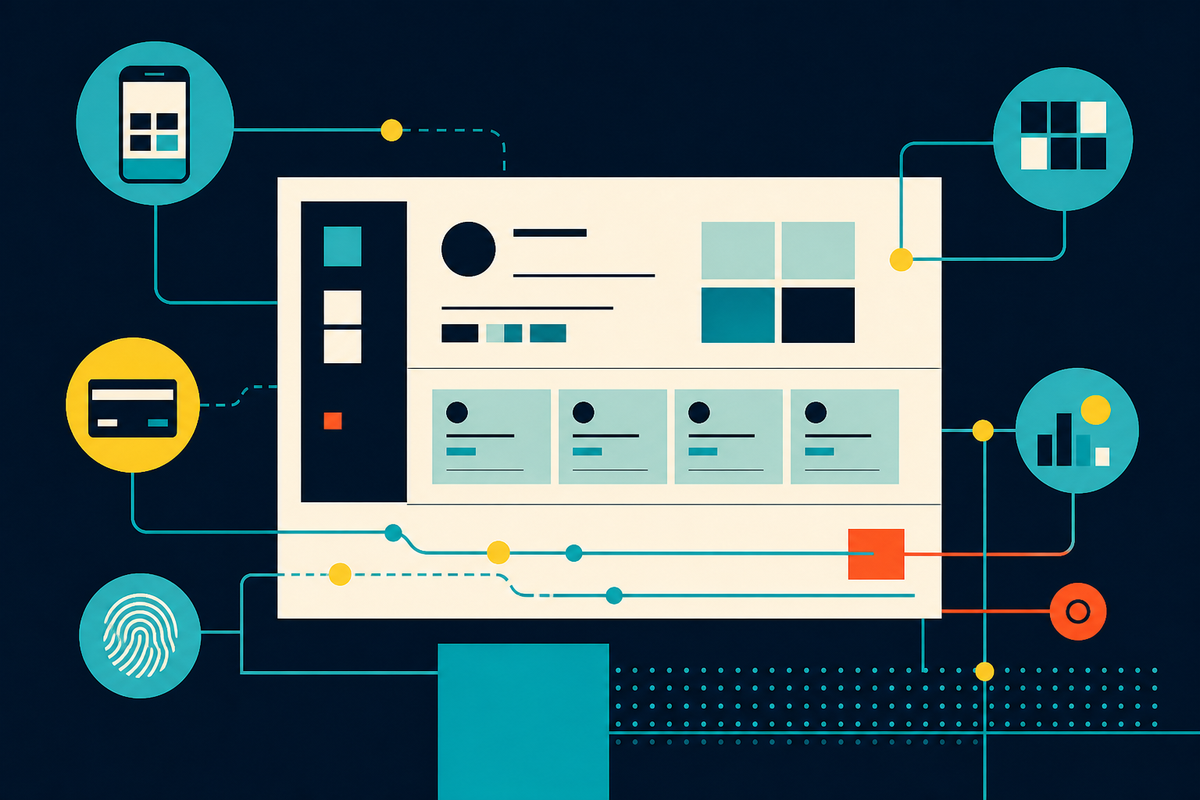
Consumers do not care which company supplies bill pay, which network moves an instant payment or which service checks an identity. They notice when a screen looks bolted on, a password stops working or an application asks for information they already entered. Access Softek sells the opposite experience: a configurable front end that pulls many specialist systems into the institution's brand.
That makes integration less like a technical footnote and more like inventory. The company lists more than 160 possible connections across core processors, cards, wallets, loan systems, data providers and marketing tools. Plaid can connect outside accounts. Alacriti can carry a payment over FedNow or the RTP network. Corelation's KeyStone can serve as the account system underneath. DeepTarget and Larky can personalize offers and messages. The pitch is not that Access Softek invented every rail. It is that the rails arrive in one station.
The buyer is usually a credit union or community bank with an awkward assignment: deliver the polish customers associate with Chime, SoFi or a national bank, but do it with a smaller technology team, a legacy core, strict regulation and a deeply particular set of workflows. Access Digital can be used largely out of the box, then tuned through more than 5,000 settings, drag-and-drop workflows and a software development kit. The company says that SDK carries no extra licensing fee or royalties. A typical implementation takes five to eight months - a reminder that replacing a bank's front door is closer to moving a kitchen than changing a screen saver.
A banking suite with some odd drawers
The breadth is more interesting at the edges. EasyVest puts automated portfolios or self-directed investing inside online banking. A customer can move money from checking into an investment account without adopting another app or password. EasyCoin applies the same white-label idea to cryptocurrency. Biometric Authentication Manager, cheerfully shortened to BAM, extends identity checks from the phone to web banking, the call center and even the branch.
These are not random extras. Each responds to a leak in the customer relationship. If a member leaves the credit union app to invest, buy crypto or verify an external account, another company gains attention and data. Access Softek helps the institution keep that activity inside its own environment. For smaller banks, that can create fee income and richer engagement. For customers, it can reduce account sprawl - though each institution decides which modules to offer.
“We only answer to you, we like it that way.”Access Softek on remaining founder-owned
That line is the company's sharpest piece of positioning. Access Softek says it has never sought venture capital and remains privately owned by Doner. In financial software, where acquisitions can abruptly redirect road maps and support teams, ownership becomes part of the product promise. A founder-controlled vendor can argue that it has no outside investor demanding a sprint toward an exit.
The trade-off is less visible. Private companies reveal little about revenue, margins or product adoption by module. Access Softek does not publish pricing, either. Its business is conventional enterprise software: institutions sign platform agreements, pay for implementation and support, and choose optional capabilities. The relationship can last years because switching a digital-banking system is expensive, delicate and public. In May 2026, University Credit Union signed a new five-year deal and planned a move onto Access Digital - the kind of renewal that says more than a splashy app-store launch.
Security that tries not to be annoying
Bank security often arrives as friction: a forgotten password, an inscrutable quiz, a code that expires while you search for it. Access Softek's approach is to decide when friction is deserved. Its real-time fraud control analyzes behavior during a session and looks for activity outside the user's established pattern. Suspicious behavior can trigger a challenge; ordinary behavior can pass. The ambition is not simply to catch more fraud but to bother fewer legitimate customers.
The company was early to biometrics, introducing a selfie-and-ID approach for digital account opening in 2015, according to Doner. BAM later won a CUNA Technology Council Best of Show award. Today the platform runs on AWS infrastructure, and Access Softek says it follows FFIEC guidance, uses third-party SOC 2 audits and develops with web-accessibility guidelines in mind. Those claims matter because its customers inherit both the convenience and the risk of the interface.
The activation time Access Softek advertises for BAM, its cross-channel biometric authentication system.
Where it sits in a crowded market
Access Softek competes in a busy middle layer. Fiserv, FIS and Jack Henry can bundle digital banking with core processing. Public companies such as Alkami and Q2 sell broad cloud platforms. Apiture, Narmi, Lumin Digital, Bankjoy and Backbase chase overlapping customers. Then there are point products for onboarding, lending, fraud and engagement, each promising to be best at one task.
Access Softek's answer is specificity. It knows credit unions, supports many cores, develops and supports its product in-house, and lets institutions configure rather than surrender their identity. In a 2014 Federal Reserve survey, it was already the second-most-cited mobile banking vendor among responding credit unions. At Finovate in 2018, it reported more than three million monthly mobile end users and said most of its 300-plus employees worked in R&D. Those figures are historical, but they show this is not a recent wrapper around a few APIs.
Bundle or assemble
- Buy digital banking from the core vendor
- Choose a broad venture-backed platform
- Stitch together specialist products
Configure the middle
- Keep the institution's brand in front
- Connect to more than 160 providers
- Add modules without rebuilding the channel
There is also evidence of a current sales cycle rather than a legacy installed base coasting on contracts. Great Erie Federal Credit Union selected Access Digital in July 2025. Arkansas Best FCU and Illinois State Credit Union followed with platform announcements in January 2026. Illinois State's planned package reads like a diagram of the business: consumer banking from Access Softek, payments through Alacriti, data connectivity through Plaid, engagement through DeepTarget and Larky, credit insights through SavvyMoney, plus fraud controls and Intuit connectivity.
The patient fintech
The company's longevity creates its own comic contrast. Access Softek was writing financial software when Windows 1.0 was new; it now holds an annual conference about AI in banking. Its product catalog contains both OFX connectivity, a protocol with 1990s roots, and behavioral fraud models designed for real-time sessions. That is what bank modernization actually looks like: the future rarely replaces the past on schedule. It learns to talk to it.
Custom code. Access Softek opens in Berkeley as a financial-software developer.
Before the iPhone. Mobile banking becomes a company specialty.
One login, more money. EasyVest and real-time fraud control appear at Finovate.
Faster rails. Alacriti brings RTP and FedNow into the integration map.
New contracts. Three credit unions announce selections or renewals.
For a bank executive, the practical appeal is leverage. Access Digital can replace separate mobile and online experiences, automate account and loan applications, add real-time payments, reduce password-reset work and create room for new services. For an end user, the benefit is quieter: fewer handoffs, familiar branding and the ability to finish a financial task where it began.
The company is not trying to become the next consumer bank. It sells the machinery that lets hundreds of existing institutions remain useful as banking moves onto a screen. That makes Access Softek a peculiar kind of fintech: old enough to remember when software arrived in boxes, current enough to put investing and biometric identity inside a credit-union app, and comfortable staying behind the logo. In infrastructure, invisibility can be proof that the product is working.
Keep exploring
See the platform in its own habitat, follow company updates, or watch the 2018 product demonstration that paired robo-investing with live fraud controls.