A bank’s core system is the bit customers never see and executives lose sleep over. It keeps the ledger, moves money, applies rules and supplies the back office with something resembling the truth. Replacing one is often compared to open-heart surgery. Engine by Starling offers a more cheerful metaphor: take the machinery from a bank that already works, configure it for the local market and keep moving.
The company is the software arm of Starling, the British digital bank founded in 2014. Its product is not a white-label Starling app. It is a managed, cloud-native banking platform that spans accounts, savings, cards, payments, customer journeys, fraud operations and employee tools. A client can take the broad package to launch a new bank, choose modules for a new proposition, or use it to replace an elderly core.
That breadth is the point. Newer rivals such as Thought Machine, Mambu and 10x Banking also sell cloud-era cores; established suites from Temenos, FIS and Oracle occupy the other side of procurement tables. Engine argues that a ledger alone leaves a bank with too much integration work. Its answer includes mobile experiences and a Management Portal for everything from onboarding and card disputes to financial-crime alerts and customer chat. The software comes with hosting, upgrades, incident management and people who have operated a bank.
The product began as an answer to office tourism
Engine did not begin with two founders sketching boxes on a napkin. It began inside Starling, where engineers had built proprietary systems since 2014 and the platform had powered the bank since 2016. By the time Starling was profitable and scoring well in customer-service surveys, executives from foreign banks were turning up in London with a recurring question: how did you do it?
Sam Everington, an early Starling engineer who pressed the button when the bank first went live, and product chief Victoria Newton formed Engine’s original two-person team in 2022. Their first uncomfortable question was commercial rather than technical: would a bank adopt somebody else’s proven processes, instead of asking a vendor to bend the software around every inherited habit?
“The big question when we started Engine was: would anyone be willing to adopt proven processes?”Sam Everington, CEO, Engine by Starling
There was also a strategic turn behind the launch. Starling had pursued a European banking licence as the route to international growth, then dropped that plan. Selling software let the group travel without becoming the regulated bank in every country. Local institutions could keep their licence, brand and customer relationship. Starling would supply the engine and collect fees as usage grew.
Salt turned the sales pitch into a stopwatch
The first convincing answer came from Romania. Salt Bank, backed by Banca Transilvania, wanted a digital retail bank in 12 months. Engine configured its platform for Romanian regulation and payments, embedded staff in Bucharest and worked with GFT on the app and integrations. AWS supplied the cloud foundation. Consultancy Kearney helped Salt sharpen the proposition before launch.
Salt opened in April 2024 with accounts in Romanian lei and 16 foreign currencies, automated onboarding with a manual route for marginal cases, card controls, spending insights, savings spaces and in-app Apple and Google Pay provisioning. It also kept humans conspicuously present: real agents staffed a 24/7 care centre, while Engine’s portal gave employees one view of each customer.
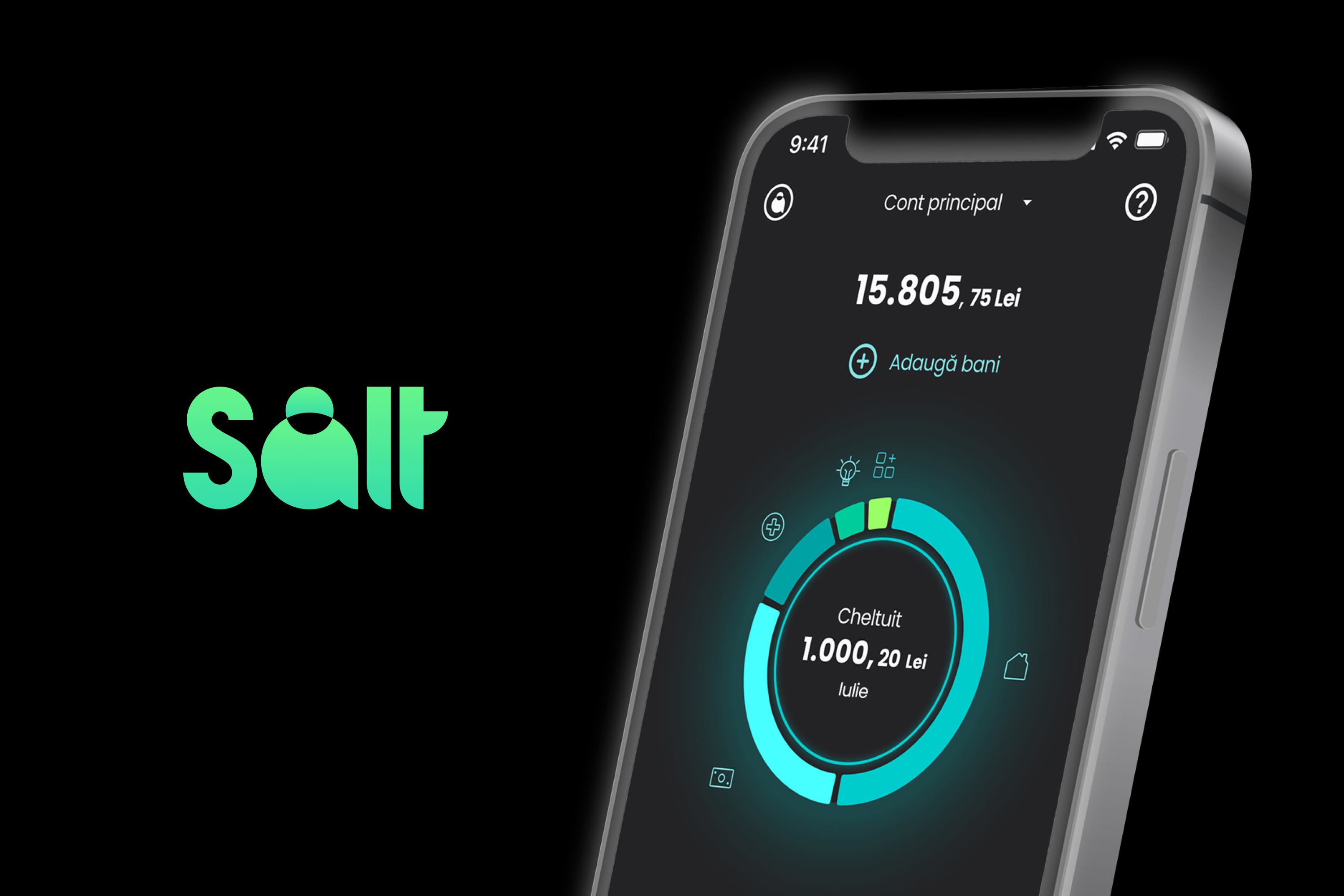
Before the doors opened, 80,000 people had enrolled as “Founders.” Salt passed 100,000 customers soon after launch and reached 500,000, or roughly 4 percent of the Romanian banking market, by its first anniversary. The contract price has not been itemised publicly, but the mechanics are known: Engine charges according to customer volumes, so its revenue climbs when its clients attract and retain more users.
What went wrong first? Not the software. The early strain was coordination: several organisations, multiple countries and an immovable clock. Engine responded with people on the ground, rapid decisions and an insistence on a documented system rather than bespoke invention. The lesson is less romantic than “move fast.” It is to remove decisions that do not make the local bank meaningfully different.
Australia copied the rhythm, not the accent
AMP Bank GO repeated the 12-month pattern on the other side of the world. The project began in October 2023 and reached staff, friends and family in October 2024, before opening publicly in February 2025. Its target was Australia’s small and micro businesses, including sole traders who often do their banking after conventional support teams have gone home.
The programme was divided into six eight-week increments, each split into two-week sprints. At the end of every sprint, working elements were demonstrated directly to AMP, including its leadership. Engine built the mobile app and localised the platform; PwC coordinated the wider programme and helped connect it to AMP systems; AWS again provided the cloud. A team worked in Sydney while colleagues in Britain handled the day that begins when Australia’s finishes.
At launch, personal and business customers received digital onboarding, spending insights, card controls, savings spaces, round-ups and 24/7 in-app support. Numberless physical debit cards added a pleasing bit of theatre: the digits disappeared from the plastic while remaining available securely in the app. It was a market first for Australian business banking and a useful reminder that infrastructure matters most when it makes a visible product decision possible.
The speed has a price: conformity
Engine’s difference is easy to admire and easy to misunderstand. It does not make bank-building effortless. Salt still needed a proposition, regulatory work, local rails, identity checks, an implementation partner and its own capable team. AMP still needed six programme increments, executive attention and a new operating model. Cloud software removed repeated construction; it did not remove banking.
Nor is every institution an obvious fit. A buyer determined to preserve dozens of peculiar workflows, commission exotic products or treat the project as an IT swap will blunt the benefit. The 12-month examples were greenfield propositions with firm deadlines and leaders willing to adopt established patterns. A migration involving millions of existing accounts, data histories and tangled dependencies is a sterner test. Tangerine’s announced move, covering more than 2 million Canadian clients, will therefore reveal something Salt and AMP could not.
The economics are still young but no longer invisible. Starling reported £8.7 million in Engine fee revenue for its 2025 financial year, up £6.4 million, or 283.8 percent. Engine does not disclose a separate valuation or a date for profitability. Its parent funds continuing development, and the same code base keeps running Starling. That relationship gives Engine a patient owner, a production test bed and a potential tension: the product must serve outside banks without neglecting the bank that built it.
The useful parts are boring enough to copy
By 2026, Engine said it had more than 400 employees across six locations and roughly 30 nationalities. Its customer map stretched from Romania and Australia to Canada and New Zealand. PwC, GFT and Mastercard expanded the implementation and network ecosystem. Gartner placed Engine as a Challenger in its 2025 European retail core-banking assessment. None of that guarantees the next migration. It does establish that this is more than Starling merchandise.
Engine’s most interesting claim is not that cloud computing can modernise a bank. That argument is settled. It is that a bank can package its technology and institutional memory without turning every client into a copy of itself. Salt looks nothing like Starling. AMP Bank GO speaks to Australian tradies, not London freelancers. Underneath, however, both borrowed years of solved problems.
This is where Engine fits in the market: between a narrow core and a consulting-led rebuild, offering a pre-integrated bank plus the people to localise it. The model works when a client knows which parts of its identity are precious and which parts are merely old. The machinery can travel. The courage to retire familiar processes cannot be delivered as an API.