A rowing shell is a wonderfully impatient management consultant. It reports bad timing immediately. One athlete can pull harder, another can rush the catch, and the boat will answer with a shudder. Progress requires strength, certainly, but strength synchronized. David Barone learned that lesson at Syracuse University, where he moved through freshman, junior-varsity and varsity boats. During the 2005-06 season, his varsity eight went undefeated in dual competition. Years later, his work in banking technology still circles the same practical question: how do you get talented people, ambitious institutions and complicated systems to pull in one direction?
Barone is now Chief Strategy & Marketing Officer at Nymbus, a banking technology company that works with banks and credit unions on digital brands, core platforms and managed operations. The title joins two functions that companies often separate with a wall and a calendar invitation. Strategy decides where to go. Marketing explains why anyone should care. His career suggests that the interesting work happens in the seam between them.
The boat before the bank
At Syracuse, Barone studied advertising at the S.I. Newhouse School of Public Communications and minored in marketing. He also spent four years rowing. His official athletics record is unusually specific: the five seat, the one seat, the championship eight, the varsity four, the Head of the Charles, the Intercollegiate Rowing Association championship. It records an athlete learning different jobs inside the same machine. It also records wins over Rutgers, Navy, Cornell, Boston, Virginia, Temple and Dartmouth during that undefeated dual season.
The quieter line may be more revealing. Barone made the Athletic Director's Honor Roll in every one of the six semesters listed in his biography. Training and study did not take turns. They had to coexist. The habit sounds familiar in his later career, where brand promises, technology choices and operational follow-through cannot politely wait for one another to finish.
Three strokes in Barone's public playbook
Advertising came first. After internships in media buying and account management, Barone began a long run at Saatchi & Saatchi. His roles advanced from assistant account executive to account director, with chapters in New York and London. Agency work gave him a close view of another many-oared vessel: client, account, strategy and creative teams trying to arrive at one useful idea without capsizing in meetings.
A former colleague later described Barone as someone who uncovered consumer, business and market truth, connected integrated teams and could work across international markets and cultures. The recommendation opens with a plainer endorsement: he would have your back. In an industry fond of decks about trust, the sentence lands because it describes behavior.
“If GenAI is the brain, MCP is the bridge.”David Barone, on connecting AI to banking operations
The marketer enters the machine room
After agency life, Barone moved closer to the products and customers he had once advised. He led marketing at Home Credit US, then held consumer and digital marketing roles tied to Security Benefit and Everly Life. In 2021, he joined Nymbus as senior vice president of brand strategy. That move placed an advertising-trained operator inside an industry where the product can be invisible, the vocabulary intimidating and the stakes stubbornly real.
A bank's core system is not the sort of object customers admire over breakfast. It keeps accounts, transactions and processes moving beneath the interface. Yet its limits can reach all the way to the customer. Slow product changes, fragmented data and awkward onboarding eventually become human experiences. Barone's contribution has been to keep the machinery connected to a market proposition: whom is this institution trying to serve, what does that group need and how will the platform make the promise operable?
From message to operating model
That logic appears in Nymbus's work on niche digital banks. A focused brand can let a financial institution serve a defined group with tailored language, products and experiences. The seductive part is the identity. The demanding part is everything beneath it: acquisition economics, onboarding, compliance, support, data and the daily operations that decide whether the idea survives contact with customers. A niche without an operating model is merely a well-dressed generalization.
Barone's own banking anecdote makes the point personal. He has said that his first relationship with credit unions came as a customer in Kansas City. The sense of community felt tangible enough that he called himself an “incredibly sticky member” who expected to remain. Loyalty, in this telling, is less a program than a result. The institution earned it by feeling connected to its place and people.
Launch day is the opening stroke
Barone's progression inside Nymbus tells its own strategic story. After brand strategy came strategic accounts, then client growth, then the wider strategy and marketing remit. The sequence moves steadily past launch. A name and proposition can open a door. A durable client relationship has to keep producing useful outcomes after the launch photographs, platform migration and first campaign.
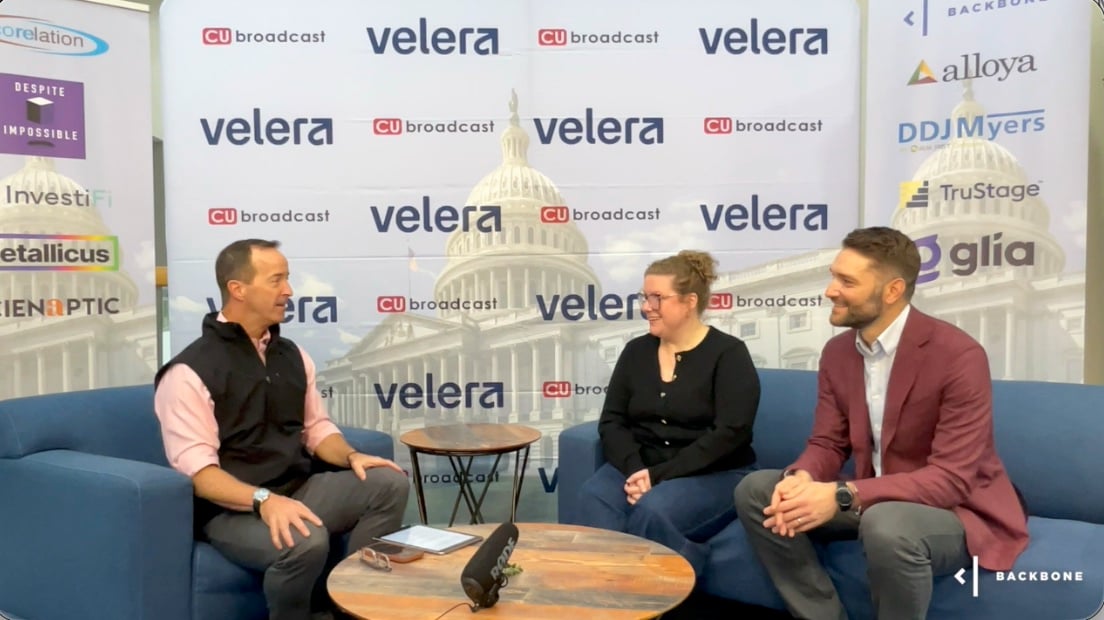
In a Nymbus video conversation about client growth, Barone described a function concerned with the period after clients go live. That is not glamorous territory, which makes it commercially important. Growth may depend on improving acquisition, refining a proposition, adding capabilities or solving the small frictions that compound into customer indifference. The vendor cannot retreat into a service ticket system while the institution wonders why the future looks suspiciously like the past.
Who owns the outcome six months after go-live?
If the honest answer is “the implementation team has moved on,” the partnership has confused delivery with progress.
This is the substance behind Barone's phrase “accountable partnerships,” the subject of an essay he published in 2024. Partnership is among business language's most polished pieces of furniture. Nearly everyone has one in the lobby. Accountability gives it weight. Roles must be clear. Results must be visible. Both sides must be able to discuss what is not working before ceremony hardens into avoidance.
The same preference for optionality appears in his co-authored argument for a multi-core, or sidecar, strategy during financial-institution mergers. Instead of forcing every acquired customer immediately onto existing legacy infrastructure, an institution can establish a modern digital core beside it. The approach can preserve a brand, reduce immediate dependencies and phase change more deliberately. It is an argument for movement without unnecessary drama, which is usually how difficult change gets completed.
A bridge for the brain
By 2026, Barone's public work had moved directly into artificial intelligence. Onstage at American Banker's Digital Banking conference, he presented three uses for Nymbus's Model Context Protocol server. A business owner could query transactions, create and issue an invoice, then act without leaving digital banking. A consumer could receive education shaped by an actual financial footprint. A banker could examine portfolio health and important accounts through conversational interaction.
The memorable line was architectural and human at once: “If GenAI is the brain, MCP is the bridge.” A brain that cannot reach approved data and actions remains conversational ornament. The bridge matters because banks cannot trade control for novelty. Permissions, auditability and the boundary between suggestion and action are part of the product, not paperwork to be added after applause.
Barone also made a point of crediting the Nymbus product and technology teams behind the demonstration. “I'm just the one lucky enough to show it off,” he wrote. It was a small sentence with an old rowing rhythm inside it. The person facing the audience is not the whole crew. Visibility and contribution are different currencies, and mature leaders know the exchange rate.
A modern bank is built twice: once in the architecture, and again in the habits of the people operating it.The lesson running through Barone's work
Keep the hull moving
Barone completed an Executive MBA at Rockhurst University while already working in senior brand strategy. The degree added an operating lens to a career that began with advertising craft. Today, his remit sits where narrative, product, technology and client economics collide. It is a complicated intersection, though perhaps no stranger than eight rowers trying to make power look like grace.
His public themes are consistent. Choose customers with precision. Treat a digital brand as a business rather than a campaign. Make technology useful inside the work. Stay accountable after launch. Credit the crew. None of these ideas requires a novelty vocabulary. Their difficulty lies in practicing them together, especially when an institution has old systems, regulated obligations and no appetite for an avoidable splash.
The aim is not speed at any price. In rowing, frantic motion can slow the boat. In banking, piling new interfaces onto old constraints can do the same. Barone's more measured proposition is coordinated progress: a clear market, a capable platform, an operating partner and a team willing to adjust the stroke. The shell still reports bad timing. It also rewards people who listen.