pittsburgh
(30)
Benchmark IT Solutions and the trouble with a green light
A test can pass while the application is down. Benchmark IT Solutions builds software, AI and the checks that help businesses tell the difference between a reassuring dashboard and a working system.
Level Agency asks a better question: which leads matter?
A busy sales funnel can hide an expensive mistake. Level Agency builds its marketing around the people most likely to become customers - then teaches the ad platforms to find more of them.
Koppers makes wood outlast the weather
A railroad tie looks like a block of wood. Koppers sees a chemistry problem, a logistics problem, and a business that can last for decades.
Federated Hermes puts waiting money to work
Most investors talk about where money goes next. Federated Hermes built its business around what money does while it waits - then bought its way into a much longer game.

PPG sells paint. The payoff is time.
A coating is a thin layer with a long job description. PPG’s bet is that better chemistry, paired with better tools, can save customers far more than the price of the paint.
PNC Is Betting $2 Billion on Showing Up
PNC moved millions of customers onto a new online platform. Now it is building more than 300 branches. The apparent contradiction explains how this Pittsburgh bank plans to grow.
Wesco makes the cloud a little more physical.
Behind every server rack is a less glamorous problem: getting power, parts and people into place. Wesco has spent a century learning how to solve it.
Carnegie Learning bets on the next step
An algebra mistake can tell a teacher more than a correct answer. Carnegie Learning built a business around noticing the difference - and helping schools act on it.
Gecko Robotics goes where the data isn't.
A wall-climbing robot makes a good entrance. Gecko Robotics’ bigger bet is that measuring the physical world can change how we repair it, finance it, and build it again.

Niche Wants Colleges to Make the First Move
The school-review company spent years helping students choose. Now it helps colleges choose them - with acceptance and scholarship offers arriving before an application.
Bridgeway Capital bets on the businesses a balance sheet can miss
A childcare center, an old factory, a grant that pays too late. In the industrial towns around Pittsburgh, Bridgeway Capital finances the awkward gaps between a useful idea and a working business.
Innovation Works bets on the part after the invention
Pittsburgh has plenty of people who can build something clever. Innovation Works helps them answer the more expensive question: who will buy it?
PITT OHIO and the business of fewer surprises
A family freight company built its name on next-day delivery. Its more revealing work happens around the truck: protecting pallets, counting carbon, and learning which new ideas can carry their weight.
Argo AI taught cars to drive. Then its backers changed direction.
Ford and Volkswagen backed a machine that could navigate city streets. Argo’s harder assignment was reaching a profitable business before its investors ran out of patience.
Seegrid and the art of being boring
A warehouse robot earns its keep by making the same journey uneventful, thousands of times. Seegrid has built a business around that modest ambition - and survived a rather less uneventful journey of its own.

Grant Street Group and the art of making government boring
A Pittsburgh bond auction put Grant Street Group on the map. Its more revealing invention came later: software that lets a tax office spend less time arguing with its own systems.

The Most Expensive Part of Marketing Is the Handoff
A Pittsburgh agency has spent nearly four decades making a quiet bet: the fewer times an idea changes hands, the better chance it has of changing minds.
Pipitone Built a Big Agency by Learning to Love Small Details
The Pittsburgh shop grew from an attic design desk into an integrated agency by becoming fluent in the things most advertisers skim past - specifications, stakeholders and the stubborn details between attention and action.
Brunner’s Most Famous Ad Failed Twice. Then 92,000 People Applied.
Fox rejected the ending. The website buckled under the audience. Brunner’s 84 Lumber campaign still produced 92,000 job applications - a useful lesson from an agency built to turn expensive surprises into measurable action.

The Radio Rep Who Switched Sides
Shea Murtaugh began with one automotive client, no capital and an awkward discovery: the best way to protect an advertiser from the media business was to leave the selling side of it. Two decades later, her agency still treats a client’s budget as if it came from its own pocket.

The Marketing Agency That Began as a Volunteer Habit
A mentor asked Andrew Exler why the work he did for free was not already his job. Six years later, the answer had become a full-service agency built for organizations too small for a giant marketing department and too ambitious to wing it.
The Agency That Treats Attention Like a Crime Scene
Most agencies sell messages. Gatesman studies the moment a person hesitates, clicks, registers or walks away - then rebuilds the message around that evidence.
Keith & Co. makes a place easier to read
A confusing hallway, a neighborhood under construction, a museum finding its voice. Keith & Co. turns the practical business of getting people oriented into graphic design with a public life.

The Startup That Read 400,000 Truck Crashes So Your Fleet Doesn't Become the Next One
Idelic turned a trucking company's in-house safety tool into a machine-learning platform that predicts crashes before they happen. In April 2026, Descartes bought it for up to $40 million.
Say It With Your Eyes
Tobii Dynavox turns eye movements into speech for people who have lost their voice. Here is how a Pittsburgh-and-Stockholm company built the tools that let hundreds of thousands of people be heard.
The 90-Year-Old Vitamin Shop That Refuses to Sit on the Shelf
From a Depression-era yogurt counter in Pittsburgh to a global supplement empire of roughly 14,000 people, GNC keeps rewriting the same question: what does a vitamin store look like when the customer shops on their phone?
F.N.B. Corporation
F.N.B. grew from a bank run out of a Pennsylvania house into a $51 billion regional institution. Its next contest is subtler: making relationship banking work at digital speed without losing the local knowledge that built it.
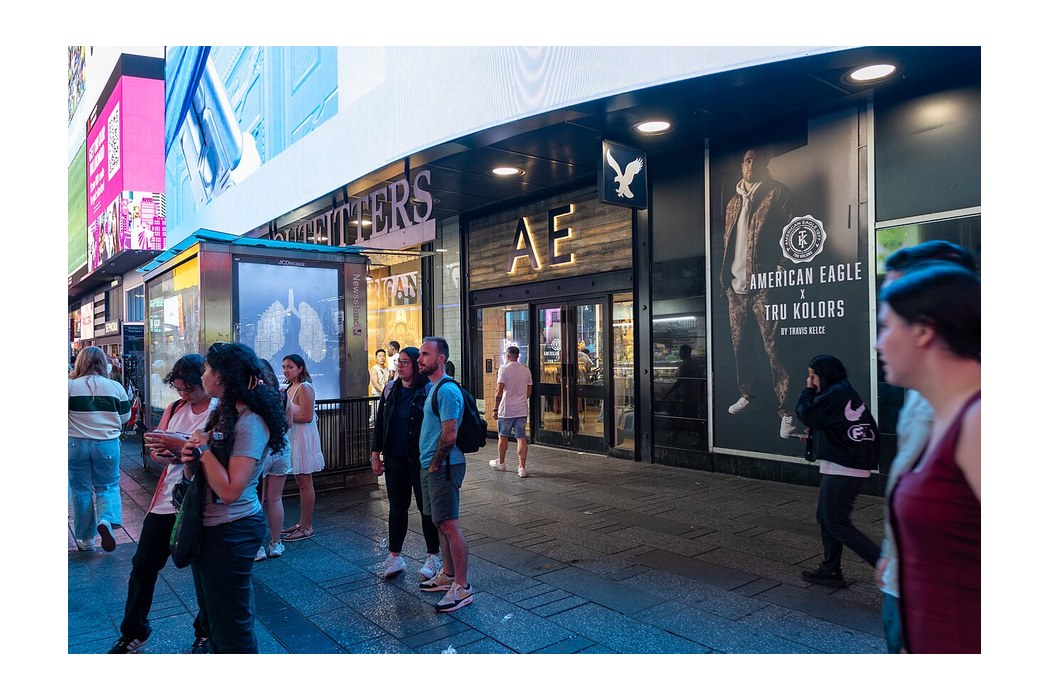
American Eagle Outfitters Inc.
American Eagle Outfitters, Inc. (NYSE: AEO) is a Pittsburgh-headquartered specialty apparel retailer that has spent nearly five decades selling jeans to teenagers and young adults - and, more recently, learning how to sell a great deal more than jeans. Founded in 1977 by brothers Jerry and Mark Silverman, the company now runs a five-brand portfolio: the namesake American Eagle denim and casualwear label; Aerie, the intimates and swim brand built on unretouched imagery; OFFLINE by Aerie in activewear; Todd Snyder in premium menswear; and Unsubscribed, a slow-fashion experiment. Fiscal 2025 revenue reached roughly $5.5 billion across about 1,168 company-operated stores, 357 internationally licensed locations, and a digital business spanning ae.com, aerie.com and toddsnyder.com. The company describes its flagship as the leading jeans brand for US shoppers aged 15 to 25. Its recent story is one of divergence: Aerie crossed $2 billion in trailing-twelve-month revenue and posted 25% comparable-sales growth in the first quarter of fiscal 2026, while the American Eagle brand has been flatter - even after the widely debated Sydney Sweeney denim campaign of July 2025 delivered what management called unprecedented new-customer acquisition.
Noveome Biotherapeutics, Inc.
Noveome Biotherapeutics is a Pittsburgh clinical-stage biopharmaceutical company built around ST266, a multi-targeted secretome of hundreds of biologically active proteins harvested from a novel population of amnion-derived cells. Rather than transplanting cells, Noveome delivers the healing signals those cells secrete - aiming to modulate inflammation, protect nerves, and accelerate tissue repair. Its lead program treats necrotizing enterocolitis, a devastating gut disease in premature infants, with additional pipeline work spanning ophthalmology, neurology, and dermatology.
Skild AI
Skild AI is a Pittsburgh-based robotics company building the Skild Brain, a single general-purpose foundation model designed to control any robot - quadrupeds, humanoids, tabletop arms, mobile manipulators - across many tasks without bespoke retraining. Founded in 2023 by former Carnegie Mellon professors Deepak Pathak and Abhinav Gupta, the company trains on a mix of large-scale simulation, internet video, teleoperation and real-world deployment data. After a $1.4B Series C in January 2026, Skild AI is valued at over $14 billion.