On September 12, 2022, Argo AI introduced a product suite with the reassuring completeness of a well-packed suitcase. There was driving software, a laser sensor, detailed maps, dispatch interfaces, fleet support and analytics. Forty-four days later, the company was shutting down. The suitcase was ready. The trip had been cancelled.
- Argo built the driving system and operating tools; Ford and Volkswagen supplied vehicle partnerships.
- Lyft rides and Walmart deliveries gave the technology a route toward customers.
- Driverless operation arrived in 2022. A profitable business at scale remained further away.
- Its backers withdrew. Public research datasets and experienced engineers carried on.
That interval makes Argo a useful company to study. A startup can move closer to a working product while moving farther from the business its investors want to fund. The two journeys share a laboratory, a payroll and a press release. They do not necessarily share a timetable.
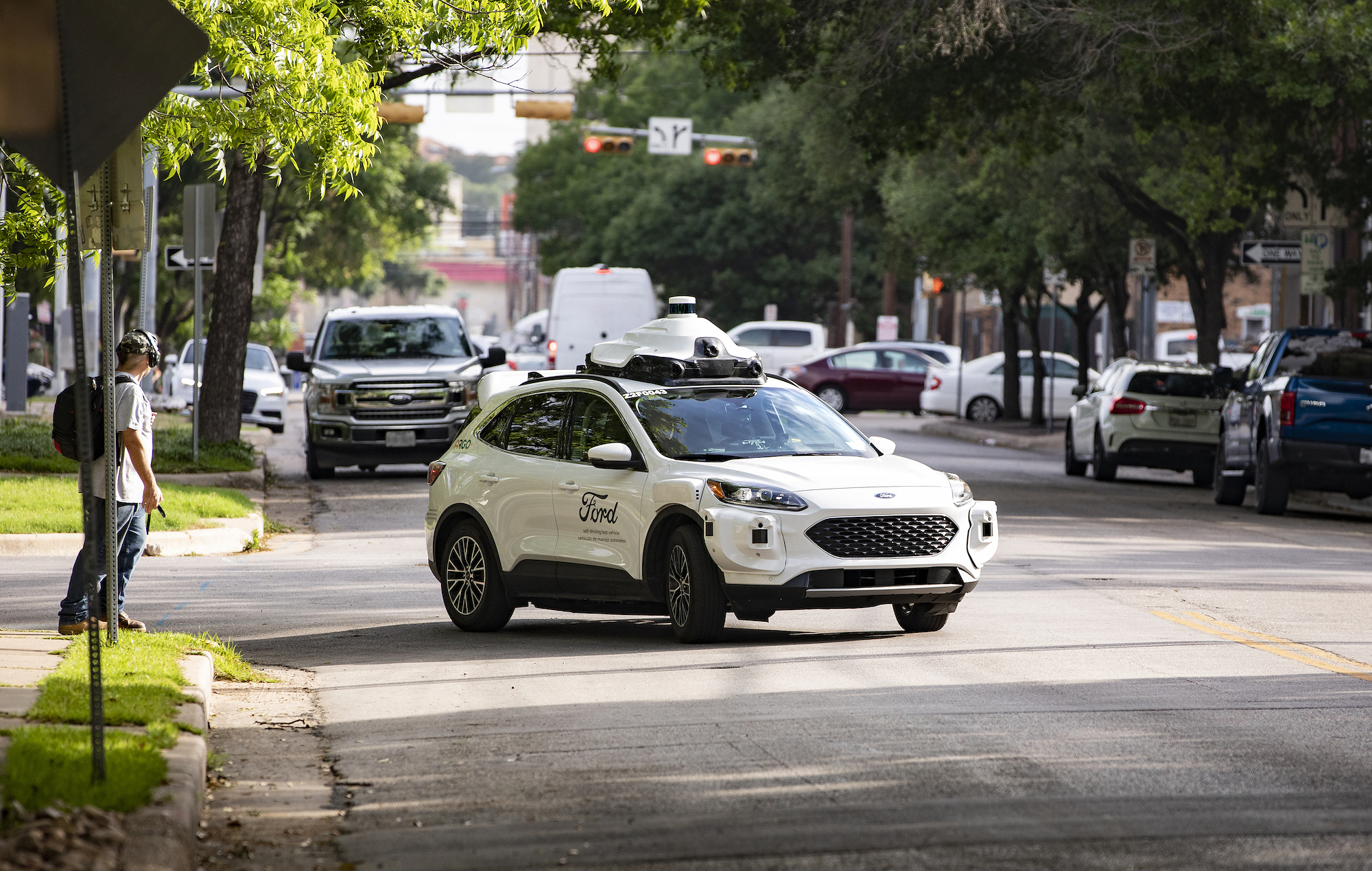
A driver, supplied separately
Argo was founded in Pittsburgh in 2016 by Bryan Salesky and Peter Rander. Both had worked at Carnegie Mellon’s National Robotics Engineering Center. Salesky came from Google’s self-driving program; Rander from Uber’s. These were people who understood how much trouble a perfectly ordinary intersection could contain.
Ford announced a $1 billion investment commitment over five years in February 2017. The original assignment was a virtual driver for an autonomous Ford vehicle expected in 2021, with the possibility of licensing the technology to other companies. Ford brought vehicle development and manufacturing experience. Argo brought robotics, artificial intelligence and the specialized work of teaching a machine to drive.
Volkswagen later joined the arrangement. Its deal brought money and its Autonomous Intelligent Driving business, or AID, into Argo. The attraction was straightforward: two automakers could use a common driving platform while integrating it into their own vehicles. Argo occupied the complicated territory between a software supplier and an operator of experimental transport fleets. It was neither a showroom brand nor simply an app.
That distinction matters to the customer. A carmaker needed a system it could integrate. A ride-hailing company needed trips it could dispatch. A retailer needed deliveries it could schedule. Argo’s business depended on making those different requirements meet at the curb.
Three businesses inside one proposed ride.
The roof gets the attention. The depot gets the work.
The conspicuous part of an Argo vehicle was its sensor assembly. In 2017, Argo acquired Princeton Lightwave. In May 2021, it introduced the resulting Argo Lidar, claiming a 400-meter sensing range and the ability to detect single photons. The company emphasized a decidedly unglamorous target: dark objects, including black-painted vehicles that return very little light.
That is an illuminating choice of sales pitch. The hard object is not always exotic. Sometimes it is a car painted a fashionable color. Argo’s sensor work aimed to give the driving system more time and detail with which to make decisions. The range was a company claim about the sensor, not a blanket guarantee of safety in every driving condition.
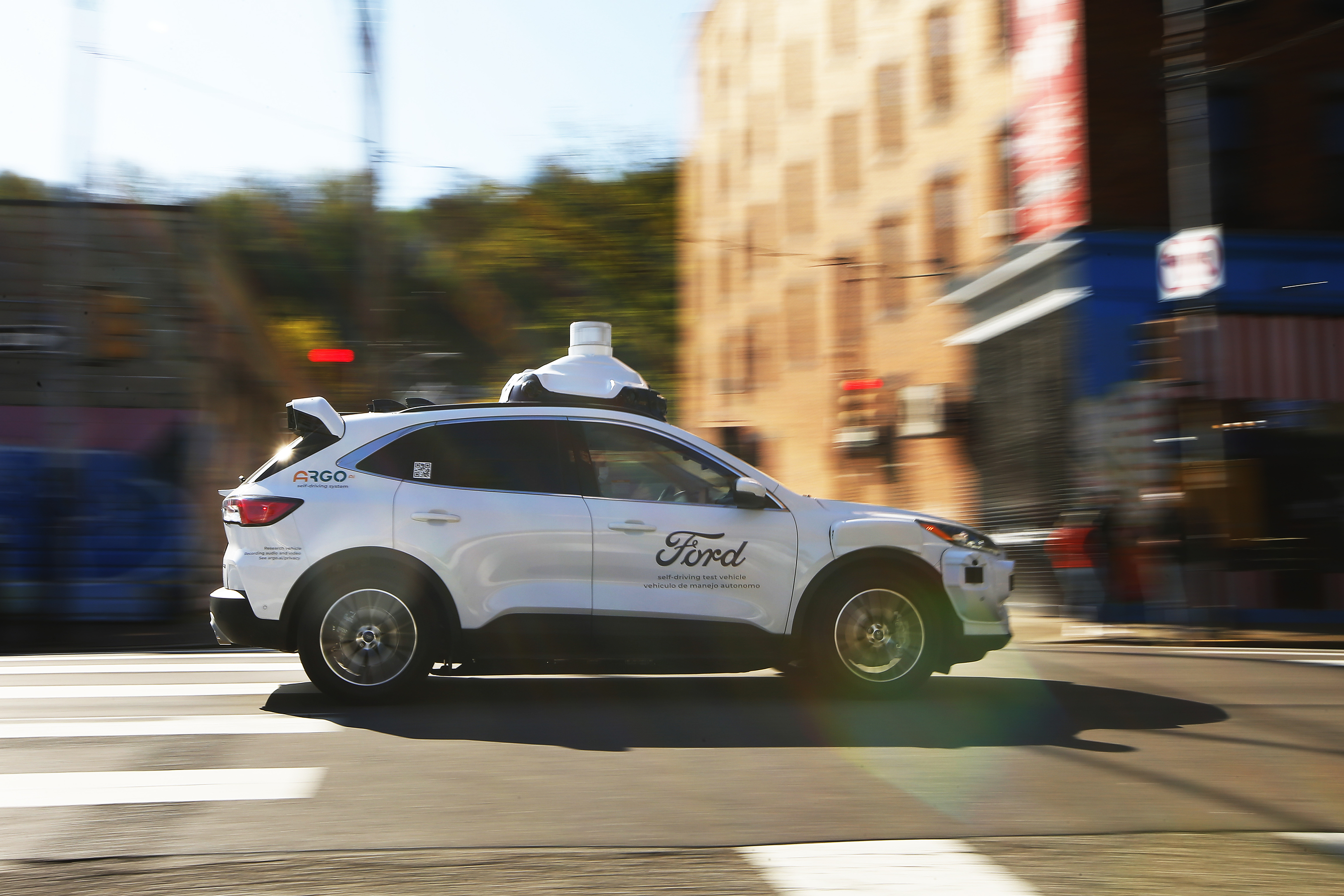
By its final product launch, Argo had given names to the less photogenic parts of autonomy. Drive handled the driving system. Map supplied detailed road information. Hub supported vehicles through cloud tools, including remote guidance and troubleshooting. Connect linked customer systems to vehicle requests and dispatch. Operations and Fleet addressed field support and depot work; analytics offered visibility into performance.
A fleet also needs calibration, maintenance, scheduling and customer service. Those tasks make a useful distinction between a vehicle that performs a demonstration and a service that can be operated repeatedly. Argo’s product architecture acknowledged that difference. The prospective buyer was purchasing access to an operating system for a transport business, with the car as its most visible component.
The cyclist is part of the specification
In December 2021, Argo and the League of American Bicyclists published six technical guidelines for sharing the road. They included treating cyclists as a distinct object class, expecting typical cycling behavior, mapping cycling infrastructure and local laws, driving consistently, slowing for uncertainty and continually testing cyclist scenarios.
The interesting part is the decision to ask the people outside the vehicle. A cyclist is not merely a smaller car. A system must account for how people actually move through a city, including situations where their behavior does not resemble an idealized traffic diagram. Argo’s guidance turned an advocacy conversation into engineering requirements.
Its safety report also described simulation, closed-course testing and public-road work. This supports a picture of an organization concerned with systematic validation. It does not establish that every challenge had been solved. The distinction is especially important in a field where one successful journey can look, to a passenger, like proof of universal competence.
The money had several meanings
Argo’s finances are easy to exaggerate by adding numbers that measure different things. Ford’s $1 billion was an announced five-year commitment. Volkswagen’s $2.6 billion transaction included $1 billion in funding and an AID business valued at $1.6 billion. The 2019 deal announcement put Argo’s valuation above $7 billion. A valuation is a price attached to ownership, not money available to pay engineers.
Announced 2017
Announced 2019; completed 2020
Third quarter 2022
Different measures. These figures should not be summed into a lifetime spending total.
The Lyft agreement added another kind of number. Lyft was to receive 2.5% of Argo’s common equity under licensing and data-access agreements. Ford and Argo would deploy vehicles with safety drivers on the network. The announced ambition was at least 1,000 vehicles over five years. That number belonged to the plan, rather than an accomplished fleet.
Walmart offered a different use case: groceries and other goods delivered through a collaboration announced for Miami, Austin and Washington, DC. In Pittsburgh, a Parkhurst Dining and 412 Food Rescue pilot transported prepared meals to partner agencies. These programs gave autonomy specific jobs to do. They did not, by themselves, establish the economics of a large commercial operation.
Two timetables, one company
In May 2022, Argo announced driverless operations in Miami and Austin during daytime business hours. Its test vehicles included Ford Escape Hybrids and Volkswagen’s electric ID. Buzz. That technical milestone should be kept separate from customer-facing pilot rides using safety personnel. “Driverless testing” and “a public driverless service at scale” describe different achievements.
Within the historical robotaxi field, Argo competed with developers such as Waymo, Cruise, Motional and Zoox. Its distinguishing proposition was the combination of automaker relationships, multiple vehicle types and integrations into existing customer networks. It did not have to persuade every rider to download an Argo app. It did have to coordinate a demanding set of partners and operational dependencies.
By October, Ford had changed its capital allocation. The automaker said Argo had been unable to attract new investors and that profitable Level 4 commercialization would take longer than anticipated. Ford shifted emphasis toward internally developed L2+/L3 driver-assistance technology. Volkswagen also withdrew backing, and Argo closed.
“profitable, fully autonomous vehicles at scale are a long way off”
Jim Farley, Ford CEO · October 2022
Ford’s $2.7 billion impairment recorded the reduced value of its investment. It was a non-cash accounting charge, separate from the question of how much Argo had spent. Ford’s explanation points to financing and commercial timing as the immediate failure. It does not identify a sensor, algorithm or single road encounter as the thing that brought down the company.
The lesson for another founder is to make the customer chain explicit. Identify who buys the system, who runs it, who brings demand and who pays while the economics remain uncertain. Argo made the operational pieces unusually visible. Its closure shows why that map needs a funding timetable alongside it.
This approach is hardest to sustain when the operating territory must remain limited, support costs stay substantial and revenue arrives later than investors expect. Level 4 autonomy works within defined operating conditions; a successful route cannot simply be assumed to cover every road or weather condition. Expansion is another engineering and operating assignment, with another bill attached.
The useful things left behind
Argo’s closure scattered expertise rather than erasing it. In March 2023, Ford announced Latitude AI and said it had hired about 550 former Argo employees. Later that year, Salesky, Rander and former Argo CTO Brett Browning launched Stack AV, a separate autonomous-trucking company backed by SoftBank.
For a reader who wants something usable today, the more direct inheritance is Argoverse. Its public datasets pair driving scenes with detailed maps, supporting research into perception and prediction. Argoverse 2 includes 1,000 annotated sensor scenarios, 20,000 lidar scenarios and 250,000 motion-forecasting scenarios.
Researchers can use its data and APIs to examine how machines detect objects and anticipate movement, subject to the applicable terms and licenses. These are research materials, not a ready-made driver to install in a family car. Argo’s company story ended with a withdrawal of backing. Some of its most useful work still begins with a download.