Consider the last few feet between a delivery truck and a server rack. Somewhere in that distance, equipment has to be unpacked, identified, assembled, connected and tested. The invoice may call it a delivery. The contractor sees a list of jobs. Wesco’s expanding business lives in that gap between owning the right components and having something that actually works.
- The work: electrical, communications and utility equipment, plus the services around it.
- The turn: move assembly and coordination earlier, before they become jobsite problems.
- The catch: more orders can tie up more cash.
The cloud has a loading dock
Wesco is a distributor, a word that makes the business sound simpler than it is. Its customers include electrical contractors, manufacturers, utilities, telecommunications providers and technology companies. They need products, certainly. They also need those products in usable quantities, in the right order, at locations where expensive people are waiting to install them.
That explains the range of services around Wesco’s catalog: procurement, warehousing, inventory management, transportation, kitting and labeling. Kitting means gathering components into a package for a particular task. It sounds modest. But moving preparation away from an installation crew changes who does the work, where they do it and how much uncertainty reaches the site.
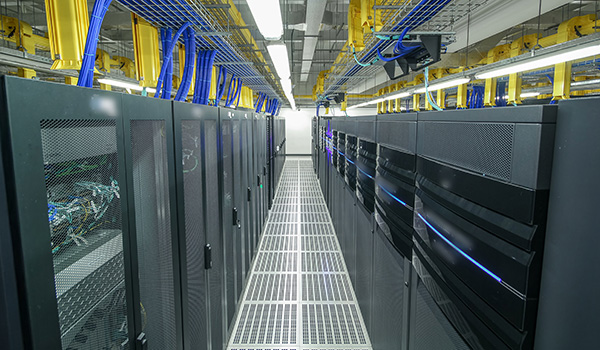
The company organizes its business into electrical and electronic solutions; communications and security solutions; and utility and broadband solutions. A data center can need all three. Power arrives from the grid, travels through building infrastructure and reaches computing equipment. Wesco’s argument is that a customer should be able to coordinate more of that journey through one supplier.
Seven tunnels, then a much bigger bet
This is familiar territory for a company founded in 1922 as Westinghouse’s distribution arm. In 1940, Wesco was contracted to light seven tunnels on the Pennsylvania Turnpike. The technologies have changed; the practical assignment still involves making infrastructure usable. Its history even includes selling televisions and refrigerators, a reminder that corporate identities are often less tidy than their current websites suggest.
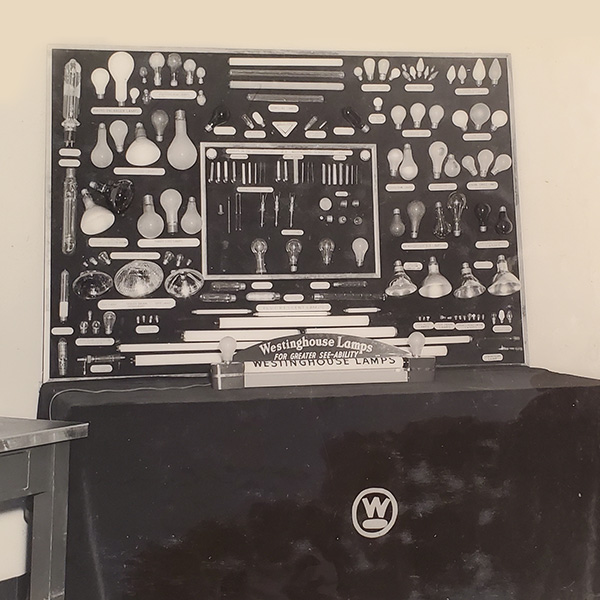
Independence came in 1994. A public offering followed in 1999. The consequential modern combination arrived in June 2020, when Wesco completed its merger with Anixter, adding substantial communications, security and utility capabilities. The deal had been announced before COVID-19 disrupted the world in which it would have to operate.
In a 2024 McKinsey interview, chief executive John Engel described a share price falling from about $60 at announcement to below $20 that March. Confidence cracked before the transaction closed. Management pressed ahead. Engel said the subsequent leadership team mixed people from legacy Wesco, legacy Anixter and outside hires. The lesson is useful: combining catalogs also requires deciding who gets to make decisions.
Sell the next step, too
Wesco’s later purchases make its intentions unusually legible. In December 2024, it acquired Ascent for $185 million. Ascent brought data center facility management: staffing, maintenance, critical repairs, emergency services and liquid-cooling expertise. Supplying a facility could now lead to helping operate it. A customer’s next problem became another potential assignment.

“focus on what you can control”John Engel · Ayna Insights · September 2026
In 2026, Newark Engineering extended the cooling business into Southeast Asia. Then, in October, Wesco opened a technology deployment center in Irving, Texas. It offers assembly, configuration, integration and testing before equipment leaves for the customer. The immediate attraction is straightforward: a rack that arrives ready to connect leaves fewer tasks for people working against a construction schedule.
Wesco earns money selling products and providing services around them. Graybar, Sonepar, Rexel and specialist distributors compete for overlapping budgets. A broad catalog alone makes an incomplete argument. Wesco’s more interesting proposition combines product access, technical assistance and project execution. Whether that combination earns its price depends on how much coordination a particular customer needs.
Growth needs cash before it pays cash
Here is the complication. In 2025, Wesco reported $23.5 billion in sales, including $4.3 billion from data centers. Yet operating cash flow fell to $125 million from about $1.1 billion in 2024. Management pointed to increased working capital investment as strong late-year sales raised receivables. The company could book more business while collecting much less cash during the year.
The sales momentum continued into 2026. Second-quarter revenue reached approximately $6.7 billion; data center sales were $1.5 billion, up about 45% from a year earlier. Those figures show demand. They leave the operational challenge intact: growing a distribution business requires financing the interval between paying for goods and getting paid by customers.
The economics explain why customers should look beyond a unit price. A component can be inexpensive while the process around it is costly: repeated handling, extra purchase orders, storage and an installation crew waiting for the last item. That is an analytical way to assess the offer, rather than a claim that Wesco always produces the lowest total bill.
Buy around the work
For a buyer, the useful question is where a project loses time. If crews keep searching for components, consider kitting. If deliveries overwhelm a site, examine staging and sequencing. If rack integration consumes scarce onsite labor, investigate preassembly. These are ways to evaluate Wesco’s offerings, not promises that every project will save money.
The fit weakens when an order is simple, a local supplier already meets the schedule, or the buyer has effective procurement and integration teams. Added services must earn their cost. Nor can a distributor manufacture a missing grid connection into existence. Coordination helps within physical constraints; it does not abolish them.
Before committing, ask a supplier to specify exactly what arrives, what has been tested, who handles exceptions and which work remains onsite. Compare that proposal with the cost of doing the same tasks internally. The revealing number is the cost of getting a working installation, including the people and time required to finish it. A delivery receipt only tells part of that story.
Wesco’s evolution suggests a practical habit worth copying: study the work that happens after the sale. The customer may have received every box and still be a long way from finished. There is a business in shortening that distance.
Keep following the cable
Explore Wesco, its data center offerings and Knowledge Hub. Read company updates or the John Engel interview.
Watch Wesco’s conversation on data center construction and Rob Macchi on scaling data centers. Find Wesco on LinkedIn, X, Instagram and Facebook.