Consider the pallet. It has no patience for corporate ambition. If it arrives late, a production line may wait. If it freezes, the customer may receive something technically delivered and commercially useless. Freight looks simple from the motorway. At the loading dock, simplicity is the result of somebody having thought about the exceptions.
- Shared trailer space for businesses shipping less than a full truckload.
- Extra services for deadlines, freezing weather, storage, and port containers.
- A practical experiment in cleaner freight, with the limits left visible.
Three trucks and a useful promise
In 1979, Chuck Hammel and his brothers Bob and Ken bought three trucks and leased a small warehouse with one door in East Liverpool, Ohio. Their father supplied guidance and funding. The initial lane connected Pittsburgh and Ohio. The name was admirably economical: PITT OHIO EXPRESS.
The family already knew freight. Their grandfather had begun Hammel’s Express in 1919 with a horse, a buggy, and one customer. The brothers’ proposition was next-day interstate service. By 1994, the company reported 1,000 employees and 3,500 daily shipments. A narrow promise had become a network.
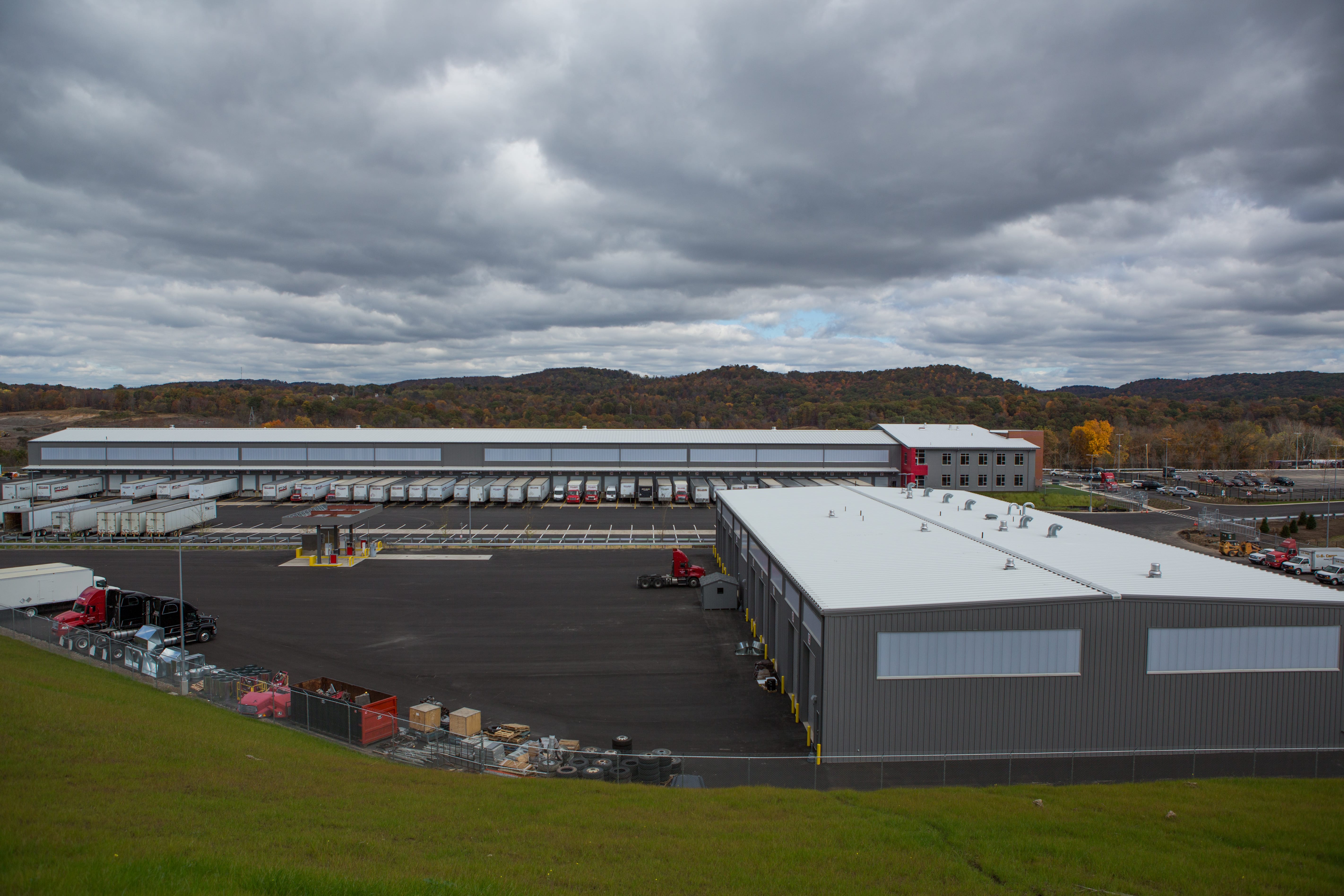
Its core remains less-than-truckload, or LTL. Several customers share trailer capacity rather than each buying a whole truck. For a manufacturer, distributor, or retailer with a few pallets to move, that distinction matters. PITT OHIO sells the organisation required to collect, combine, transport, and deliver those shipments predictably.
Selling the exceptions
Once customers trust the ordinary delivery, they bring the awkward one. Fast Track offers expedited, guaranteed service tailored to a delivery day or time. Heat Track addresses freight vulnerable to freezing. Warehousing gives customers room when their own buildings cannot. Dedicated fleet management supplies transportation without requiring the customer to recruit and manage every driver.
Heat Track makes the business unusually tangible. Heated trailers, blankets, portable heaters, and warm terminal storage protect eligible shipments. The published season runs from October 1 through April 30, with a surcharge above normal freight charges. A shipper must specify the requirement; winter protection is a service to book, with terms to check.
- 01Pickup
- 02Sort
- 03Linehaul
- 04Delivery
The company’s logistics site offers a telling customer example. Weaver Materiel Services needed warehouse space to expand into another region; PITT OHIO secured it. The problem was geography and timing, rather than merely mileage. Another customer, a glove manufacturer, needed help getting a container inland after it was booked only to Los Angeles. Transloading and trucking completed the journey.
The commercial model follows the work: freight charges, specialised service fees, and logistics contracts. Truckload service is described as non-asset-based. Across its offerings, PITT OHIO combines its own regional operation with other providers’ capacity. Buyers can begin with a quote, transit-time lookup, pickup request, and shipment tracking.
Why density beats a bigger map
Against alternatives such as Old Dominion, XPO, Estes, Saia, and ABF, the useful comparison is a particular lane and requirement. A familiar regional driver, a workable deadline, or freeze protection can matter more than the number of states printed on a brochure. PITT OHIO’s regional roots sit alongside wider partner coverage and international logistics.
In January 2025, the PITT OHIO Transportation Group acquired Sutton Transport. Chuck Hammel explained the rationale as “increasing shipment density within our footprint.” More freight inside an existing service area can make routes and terminals more productive. That is a different ambition from accumulating distant addresses.
The same year, PITT OHIO opened a 37-door maritime cross-dock in Norfolk, ten miles from the port. Containers could be unloaded, consolidated, and connected to inland transportation. Its proximity to the Richmond LTL terminal made the proposition legible: shorten the awkward interval between a ship arriving and usable goods reaching their destination.
The carbon number on the bill
A shared truck raises a deceptively difficult question: how much of its pollution belongs to your pallet? Working with Duquesne University, PITT OHIO developed CO2 Track to estimate customer emissions. Its method allocates fuel across pickup, linehaul, and delivery, taking account of how freight uses the network.
In April 2024, it announced electronic invoice integration for these estimates. The placement matters. Carbon information becomes easier to use when it travels with a document customers already process. It remains an estimate, rather than a claim that someone measured the exhaust of each individual shipment.
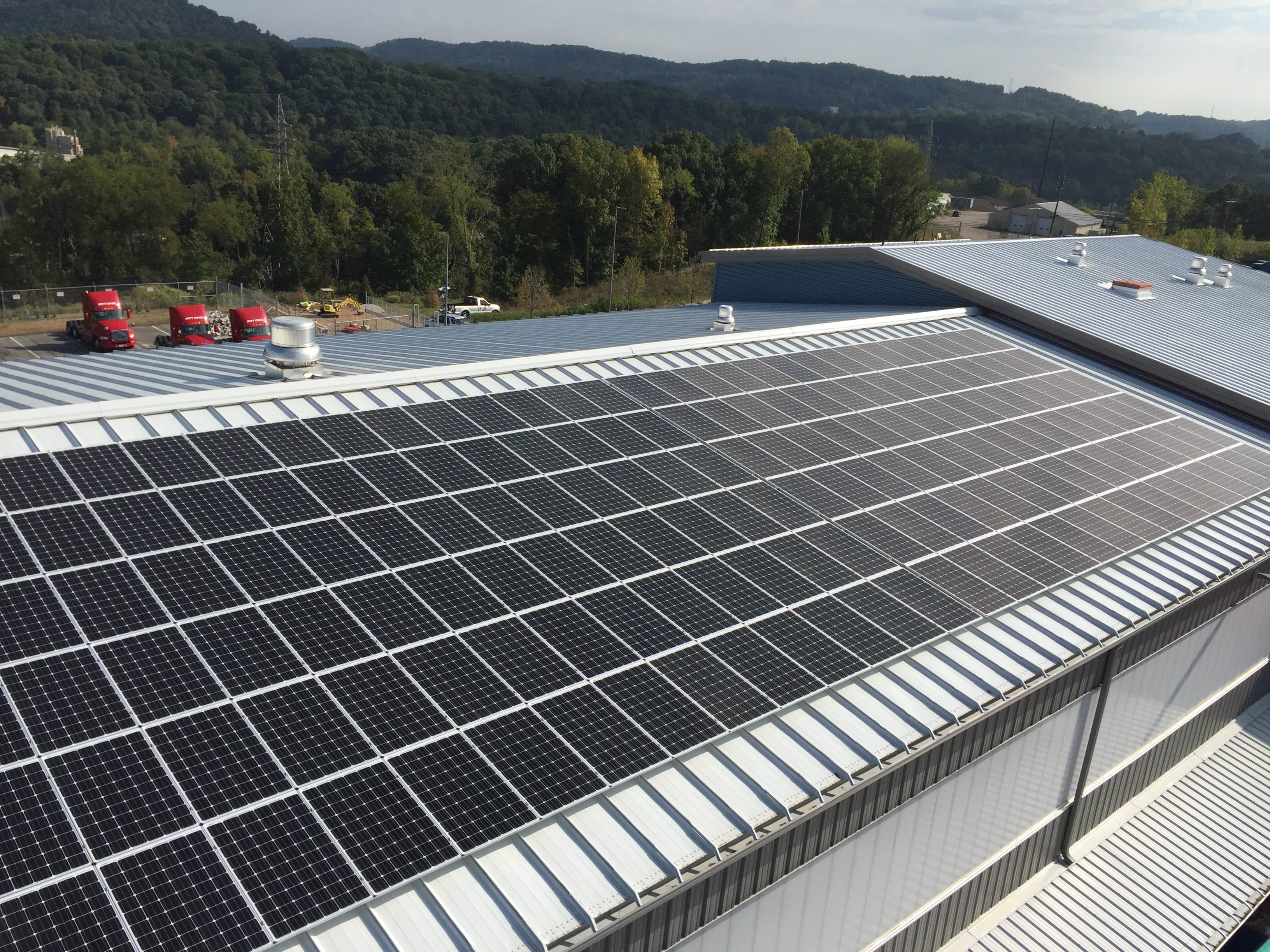
Cleaner facilities do not make growth carbon-free. The company’s 2024 sustainability report records seven acquired terminals, six million additional miles, and a 9% rise in total emissions from the previous year. Keeping that increase visible makes the report useful. Expanding a freight business and shrinking its absolute footprint are separate accomplishments.
+9%Reported year-over-year increase. Index normalises 2023 to 100; it does not show emissions tonnage.
A truck still has to carry the load
In April 2024 congressional testimony, fleet executive Taki Darakos described electric box-truck trials on 100-mile routes. Range and payload constrained deployment; battery weight affected the transition timetable. He cited battery-electric truck acquisition prices of roughly two to three-and-a-half times comparable diesel models before incentives. Those were dated price comparisons, not PITT OHIO’s disclosed project budget.
Charging imposed another clock. A planned three-megawatt upgrade at Harrisburg was expected to take two years. Retail charging sites were awkward places for trucks. The experiment produced a conditional answer: match equipment to suitable routes and arrange the power supply before expecting wider substitution. A short delivery circuit and an overnight linehaul are different jobs.
Equipment is only part of the operation. The company links service consistency to employee retention and describes full health coverage for full-time employees. A University of Pittsburgh study of two terminals found engagement with sustainability even where the facilities were less conspicuously green. Its recommendations centred on clearer communication, useful tools, and role-specific training. For another employer, the implication is practical: ask the people doing the work what they need before choosing the next investment.
The next delay was in the inbox
The newer experiment starts with email. With Vaital, PITT OHIO developed N@TE, a system for automating freight pickup requests within existing workflows. The initiative earned CIO 100 recognition in March 2026. Its appeal is wonderfully unglamorous: reduce the interval between a customer asking for a pickup and an order entering the operation.
“increasing shipment density within our footprint”Chuck Hammel III, on the Sutton acquisition
There is something here for a business without trucks. Choose a recurring nuisance, measure it, and make someone responsible for improving it. PITT OHIO applies that habit to cargo temperature, carbon information, and order entry. The customer need stays concrete. The test stays practical. Does the pallet arrive in a condition, and at a time, that lets somebody else get on with work?