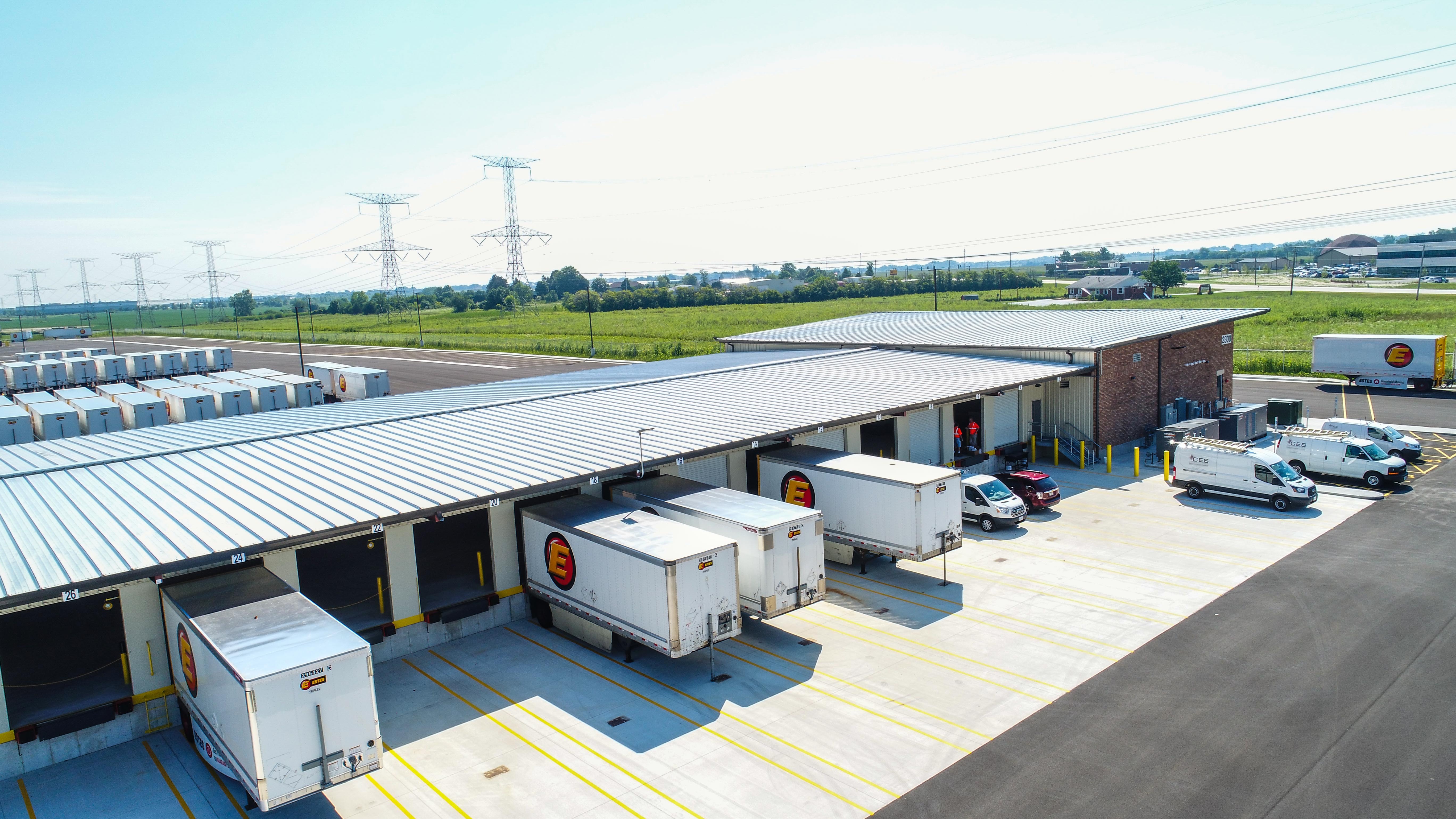
A truck can travel a thousand miles and still spend its most consequential minutes standing still. It waits for a door: the opening through which someone unloads one customer’s freight and loads another’s. To understand Estes Express Lines, start there. In December 2023, the family-owned carrier bought 24 former Yellow properties for $248.7 million in the initial bankruptcy auction. Much of the attraction was quite literally room to work.
- Estes combines customers’ freight in shared trailers.
- Terminals turn those separate shipments into workable routes.
- Buying capacity helps only if people and systems can use it.
The door is the product
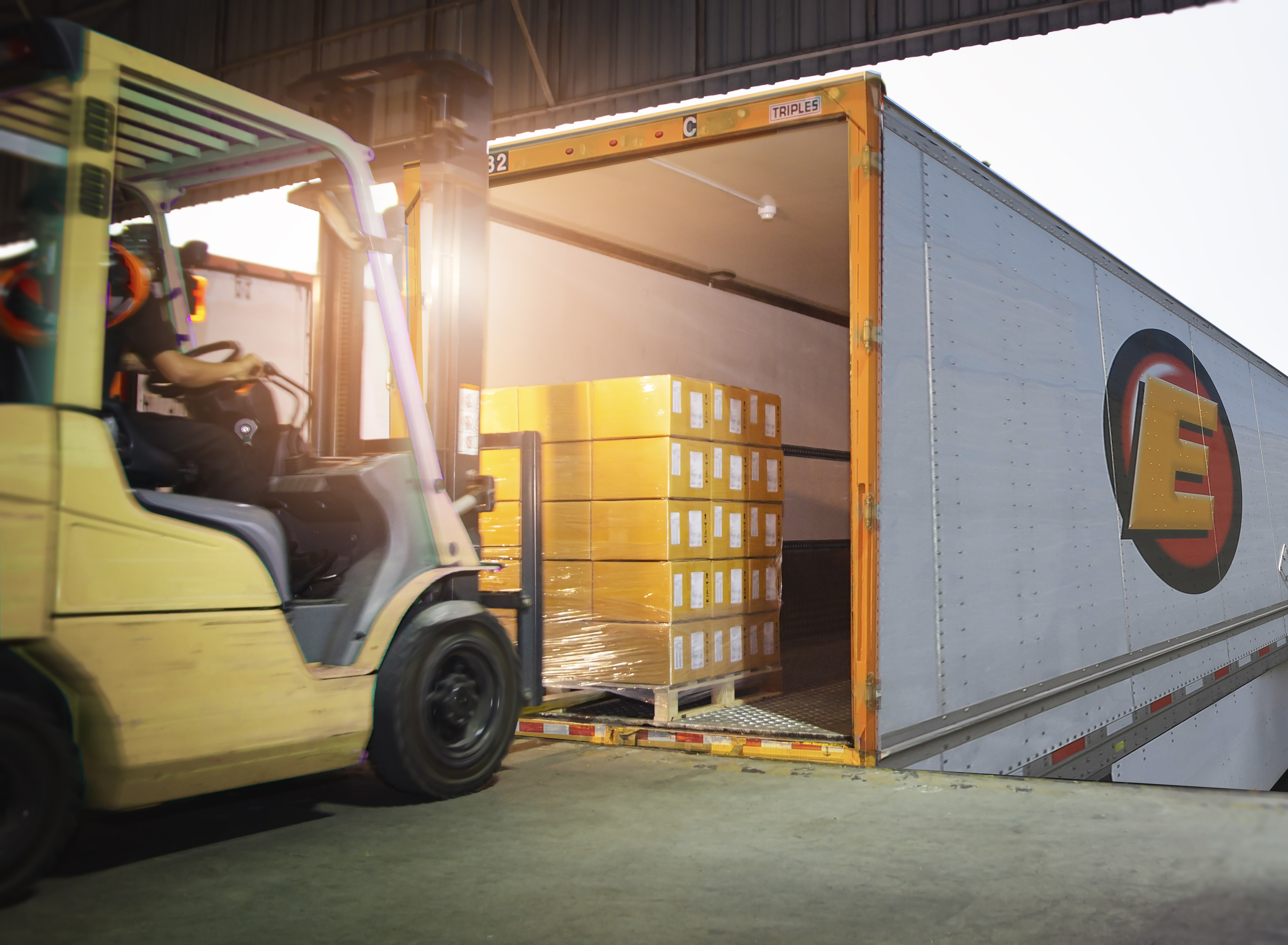
Imagine a manufacturer with three pallets headed to a distributor. Hiring an entire truck would leave a great deal of expensive air around them. Less-than-truckload shipping, or LTL, puts those pallets alongside other customers’ goods. Each customer buys a portion of the journey. The carrier performs the awkward choreography: pickup, sorting, consolidation, line-haul transport, and local delivery.
That is Estes’s central business. It sells transportation through a network of service centers, rather than merely introducing a shipper to a driver. Regional and national LTL sit alongside larger volume shipments, truckload, dedicated logistics, and cross-border service. Subsidiary Estes Forwarding Worldwide, or EFW, adds international air and ocean forwarding. The expertise lies in coordinating movements that look simple only after somebody else has organized them.
Typical LTL flow. Actual routes and handling vary.
The customers include manufacturers, retailers, distributors, and logistics intermediaries. Home Depot’s 2026 National LTL Carrier of the Year recognition provides a named example. These customers are buying dependable movement, but also relief from practical nuisances: missed receiving windows, inaccessible destinations, and uncertainty about where a shipment has gone.
The family had to learn the route
In 1931, W.W. Estes was a Virginia farmer looking for additional income during the Depression. He bought a used Chevrolet and hauled neighbors’ livestock to market. Soon the cargo included supplies and other goods. The first hired driver arrived in 1932; an office followed in 1933. The opportunity was close enough to hear mooing.
The company’s account of those years includes a useful recollection from grandson Rob Estes: “You drove, you dispatched, you loaded.” The founder later made his son Robey work as a driver, office clerk, shop foreman, and terminal manager before becoming general manager. When W.W. suffered a heart attack in 1953, that apprenticeship allowed active management to pass to someone who knew the operation.
Family ownership can be presented as sentiment. Here it also suggests a method: learn the work before directing it. The company remains family-owned, and describes its financial approach as conservative. Virginia Business reported approximately $5.8 billion in fiscal 2024 revenue. The scale has changed rather more than the surname.
A rival’s collapse, a very large receipt
Yellow’s bankruptcy made an unusual collection of freight properties available. Estes offered more than $1.5 billion for the entire terminal network, then bought a smaller set in the initial auction. That difference matters. An opening bid is an attempt to secure assets; the eventual purchases are the investment actually made.
Estes kept adding. In December 2024, a court approved 11 additional terminal acquisitions, comprising seven owned properties and four leased locations. Estes said the additions would bring its purchases to 37 owned and leased terminals, plus 15 Estes-owned terminal leases previously held by Yellow. It also said the expansion had not required taking on debt.
The work did not end at the auction. Properties needed to meet Estes’s operating standards. During 2025, the company reported adding 1,038 dock doors, an 8.7% increase, bringing its rounded count to 13,200. Its forecast of more than 14,000 by the end of 2026 was a target, not an accomplished fact.
The copyable lesson is to identify the constraint before spending. More trucks still need somewhere to unload. More doors still need crews, equipment, and enough freight to justify them. Estes’s investment is an argument for expanding the whole operation together.
The day the screens went dark
Physical capacity offers no immunity from digital trouble. In October 2023, Estes suffered a cyberattack that disrupted its IT systems. Transport Topics reported that the website, My Estes, and shipping applications were operational again by an October 24 update. A freight buyer depends on information as well as movement: tracking and documents help the receiving business plan its own work.
In March 2026, Estes announced an expanded Samsara partnership covering equipment monitoring and connected maintenance. Beyond trailers, asset tags would track smaller essentials such as dollies, pallet jacks, and ramps. The announcement describes a separate investment in visibility, not a demonstrated cure for the earlier cyberattack.
“The best technology makes difficult jobs easier”
Todd Florence / Chief Information Officer / 2026
There is something pleasingly unsentimental about that ambition. A missing pallet jack can be a small object with a large talent for delaying everyone else.
Before you hand over the pallet
Using Estes begins with the shipment, not the sales pitch. Record its weight, dimensions, and freight class; prepare suitable packaging; specify the pickup and delivery addresses. My Estes supports quotes, bills of lading, pickup requests, and tracking. APIs, EDI, and transportation-management integrations can connect those tasks to a shipper’s existing systems.
Service selection changes the bargain. Final Mile covers homes and businesses without docks. The Complete Guarantee offers time-critical, retail-compliance, and white-glove options, subject to the selected service’s terms. Volume LTL can qualify at 5,000 pounds or eight linear feet. A parcel-sized box or a full trailer calls for a different comparison than three pallets.
Old Dominion, XPO, Saia, ABF Freight, and FedEx Freight are alternatives worth comparing on the actual lane. Ask about total charges, handling, delivery access, and required timing. Estes’s distinctive offer combines family ownership, an asset-based network, and a broad service menu. Its value becomes concrete when your freight fits that network - and someone has a door ready when it arrives.